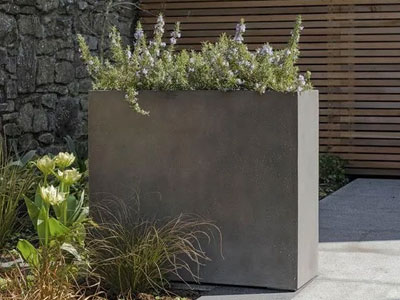
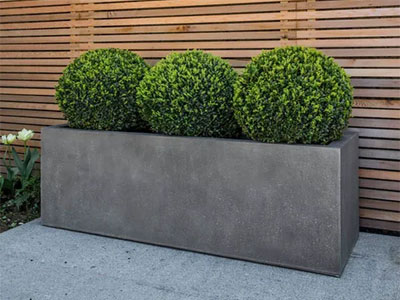
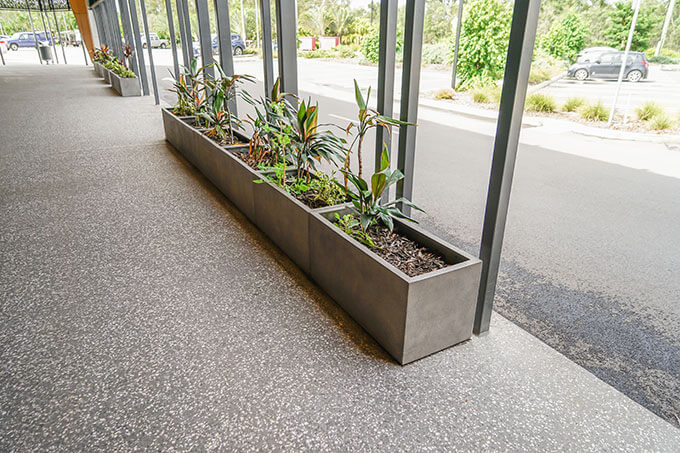
Trough (rectangular) planters are the workhorses of modern landscape design — used to define pedestrian walkways, create green privacy screens, and line balconies and building frontages with clean, linear structure. Their shape gives them a versatility that round and square planters simply can’t match: they read as architectural elements as much as plant containers, capable of drawing a line through a space, screening an unwanted view, or softening a hard-edged façade. Below, you’ll find our guides on choosing, sizing, and styling trough planters for residential and commercial projects — covering everything from privacy screening and apartment-scale solutions to public infrastructure and correct sizing for commercial landscapes.
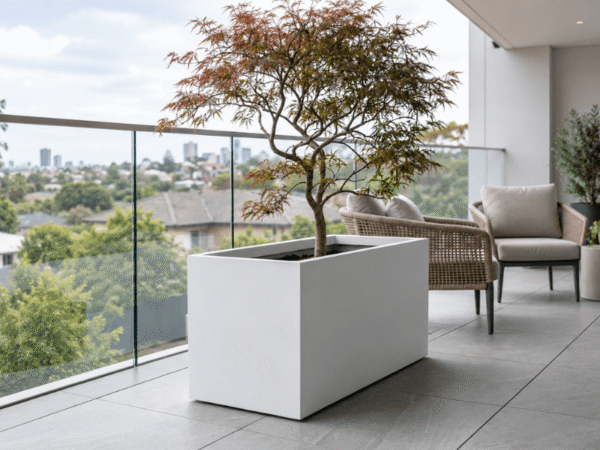
Privacy and Screening
One of the most common reasons trough planters get specified on commercial and high-density residential projects is privacy — and specifically, the challenge of creating it somewhere soil simply doesn’t exist. Rooftop terraces, ground-floor courtyards, narrow balcony corridors, and hotel entry sequences all demand screening, but a typical garden bed isn’t an option when you’re working on a slab, a podium deck, or a paved commercial forecourt. Linear troughs solve this by giving fast-growing screening plants — bamboo being a classic example — a contained, controllable root environment that can be positioned exactly where a sightline needs to be broken.
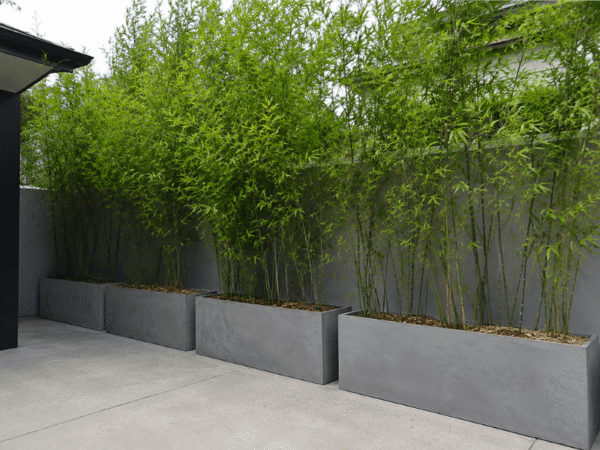
See our guide on growing slender weaver bamboo in linear troughs, which covers species selection, root containment, and how to size a trough run for genuine, long-term privacy rather than a screen that outgrows its planter within a season.
Troughs for Small and Apartment Spaces
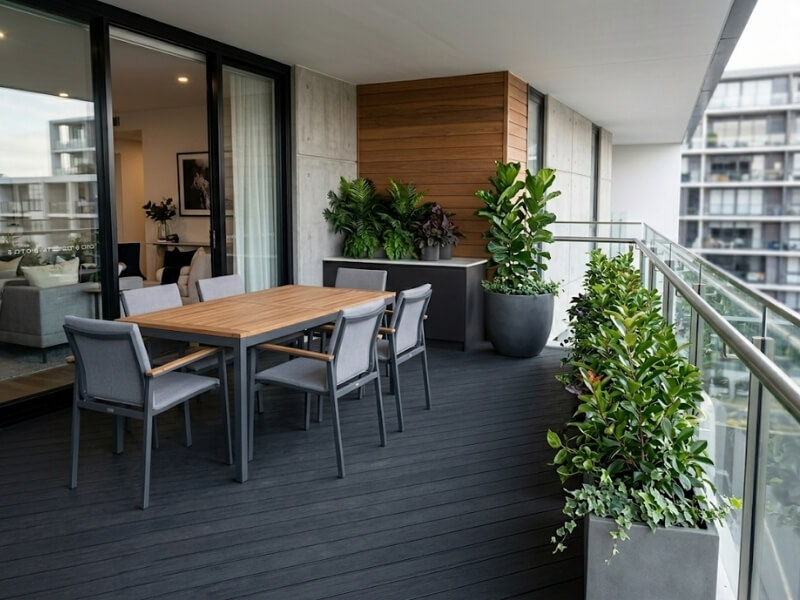
Not every project has the luxury of a generous garden bed or a sprawling courtyard. Apartment developments in particular are built around tight footprints — narrow balconies, shared rooftop terraces, compact entrance gardens — where every square metre of usable space has to earn its place. Trough planters are especially well suited to these conditions because their linear form makes efficient use of edges and boundaries that would otherwise go unplanted, without eating into circulation space the way a bulkier round or square planter might.
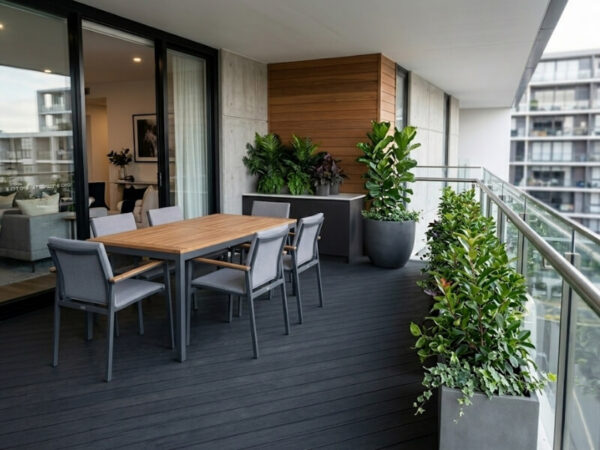
Our guide on rectangle planter boxes for apartment developments covers how to make the most of limited balcony, courtyard, and entrance garden space using this shape, while adding greenery to small, limited spaces extends the same thinking to commercial interiors — hospital waiting areas, hotel lobbies, retail precincts, and corporate offices — where hard surfaces and zero tolerance for mess rule out anything but a fully contained planting solution.
Tall and Vertical Configurations
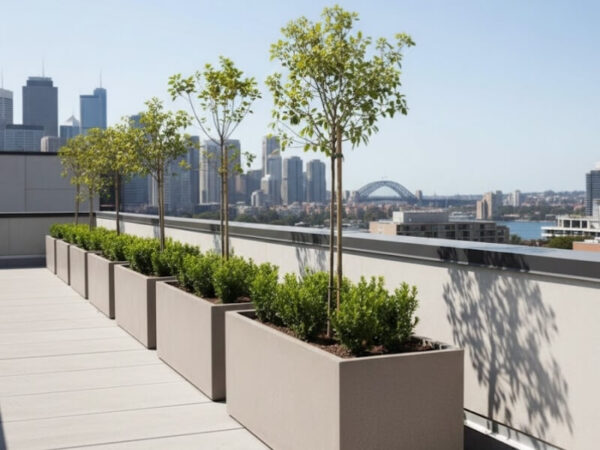
Not every design problem is solved at ground level. The vertical dimension of a space — a blank wall, an underused corner, a sightline that needs breaking above eye level — is often where a project’s real potential sits untapped. Tall rectangle trough planters are built specifically to work in this dimension: taller, narrower profiles that let a planting scheme rise rather than spread, without demanding the floor space a wide, low trough would need.
Our guide on tall rectangle trough planters walks through where and why a tall configuration outperforms a standard-height trough, and what to consider when specifying for vertical impact rather than horizontal coverage.
Design and Styling
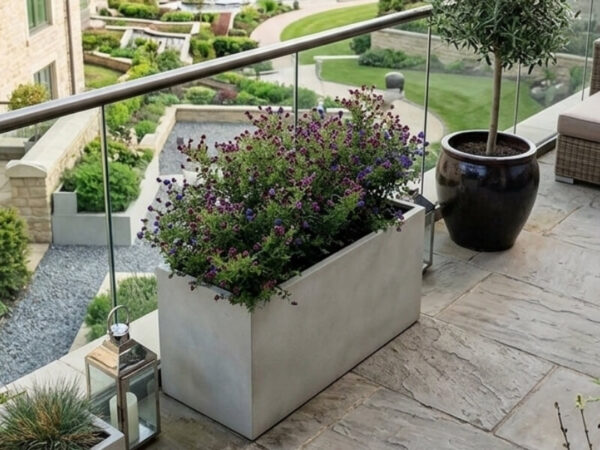
Trough planters are as much a design decision as a horticultural one. Their clean, linear lines give them a natural fit across a wide range of aesthetics — from minimalist, architectural landscaping to softer, more layered planting schemes — but getting the styling right takes more than just picking a shape and a colour. Material finish, proportions relative to the surrounding space, and how the trough is planted (single species versus mixed, dense versus sculptural) all shape the final effect.
Our guide on designing with rectangular trough planters covers how to think through these choices, whether the goal is a cozy indoor corner or a large-scale outdoor statement.
Public and Commercial Applications
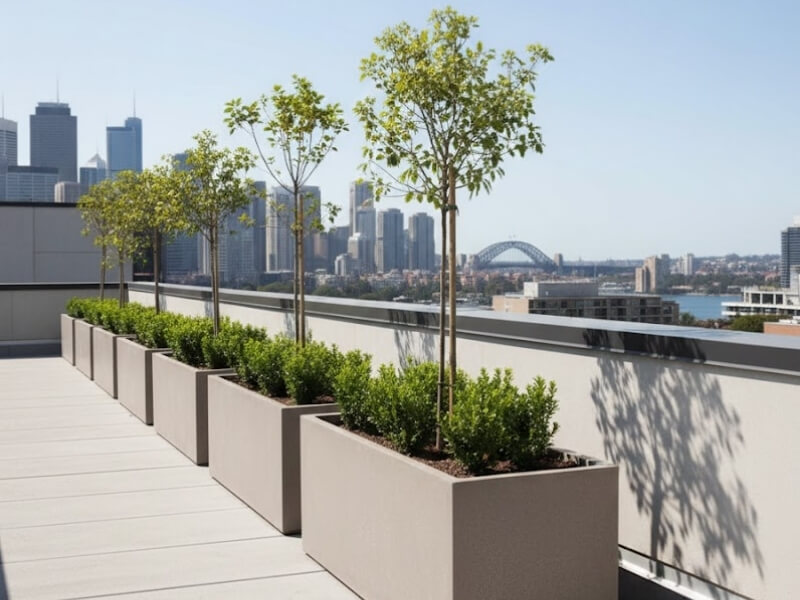
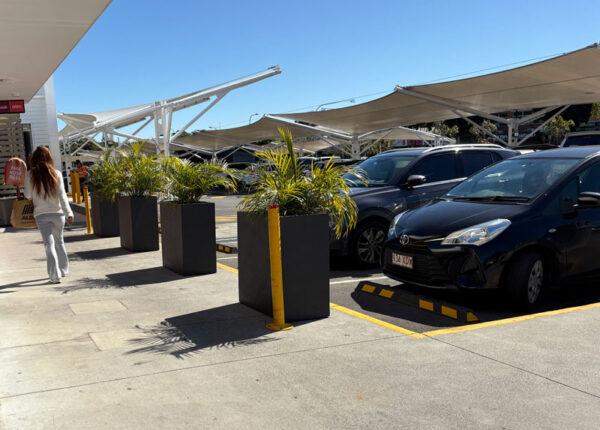
Beyond residential and apartment use, trough planters carry serious weight in public and commercial landscape architecture. Councils, shopping precincts, transport corridors, and commercial developments have relied on rectangular concrete and fibreglass planters for decades, largely because of their durability, their ability to define pedestrian zones and manage foot traffic, and their capacity to soften otherwise hard, utilitarian streetscapes without requiring in-ground garden beds that are costly to install and maintain on public infrastructure.
Our guide on concrete planter boxes as a necessity for public spaces explains why concrete in particular remains a popular material for this use case, while 10 creative ways to use rectangle pots in urban commercial design looks at the shape more broadly — from wayfinding and space definition to seating-adjacent greenery in retail and hospitality settings.
Sizing a Trough Correctly
Of all the mistakes that show up on commercial landscaping projects, incorrect trough sizing is one of the most common and the most expensive to fix after the fact. A trough that’s too shallow won’t support the root systems of mature planting; one that’s undersized relative to the space it’s meant to define ends up looking like an afterthought rather than an intentional design element. Getting the dimensions right the first time — length, depth, and how the trough relates to the scale of the surrounding hardscape — is the difference between a planting scheme that reads as considered and one that looks like it was retrofitted.
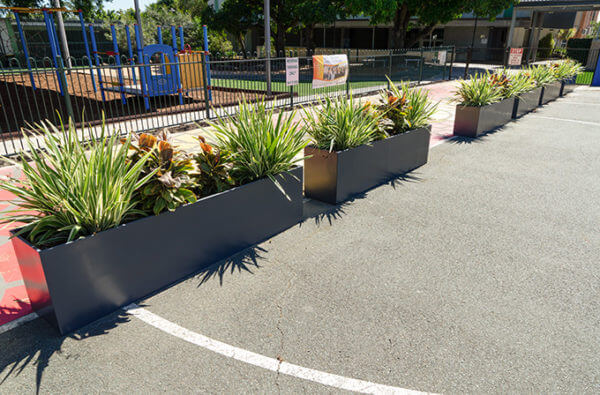
Our guide on how to select the right sized trough planter for your commercial landscape walks through exactly this process, covering the common pitfalls in commercial specification and how to avoid them before an order is placed.
Getting It Right the First Time
Trough planters are deceptively simple — a rectangular box — but the decisions that go into specifying one correctly (privacy performance, spatial constraints, height, styling, material durability, and sizing) compound quickly on a real project. Before finalising a spec, it’s worth working through each of these considerations against the specific site and brief, rather than defaulting to a standard size or material out of convenience.
If you’re specifying trough planters for a project and want to talk through sizing or material options, request a free sample or get in touch — we work directly with builders, landscapers, and architects across Sydney, Melbourne, and Brisbane on projects at exactly this scale.
Below, you’ll find our full library of trough planter guides.