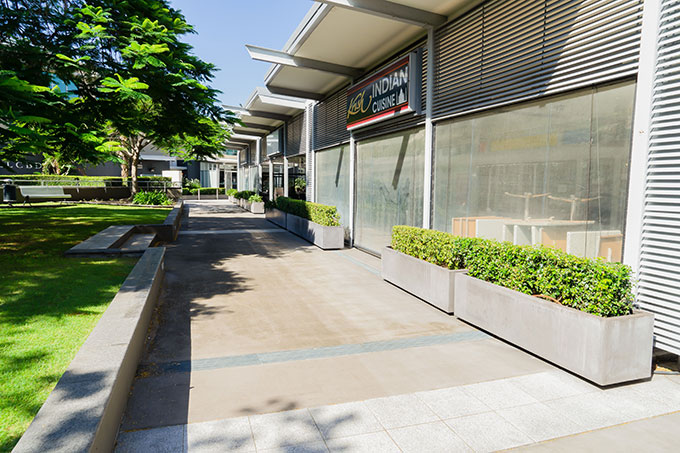
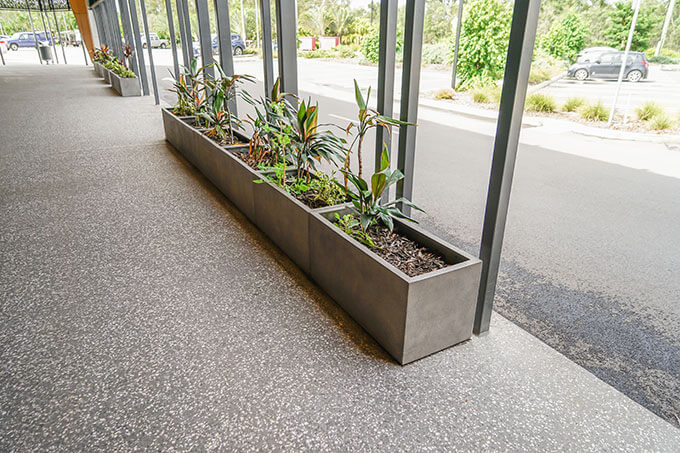
Lightweight concrete, or GRC (glass-reinforced concrete), gives architects and builders the grounded, solid aesthetic of traditional concrete without the weight penalty. It’s become a default specification for commercial and residential projects where a heavier visual presence is wanted at street level, entries, or courtyards. Below, you’ll find our guides on choosing, specifying, and maintaining lightweight concrete planters.

What Is Lightweight Concrete (GRC)?
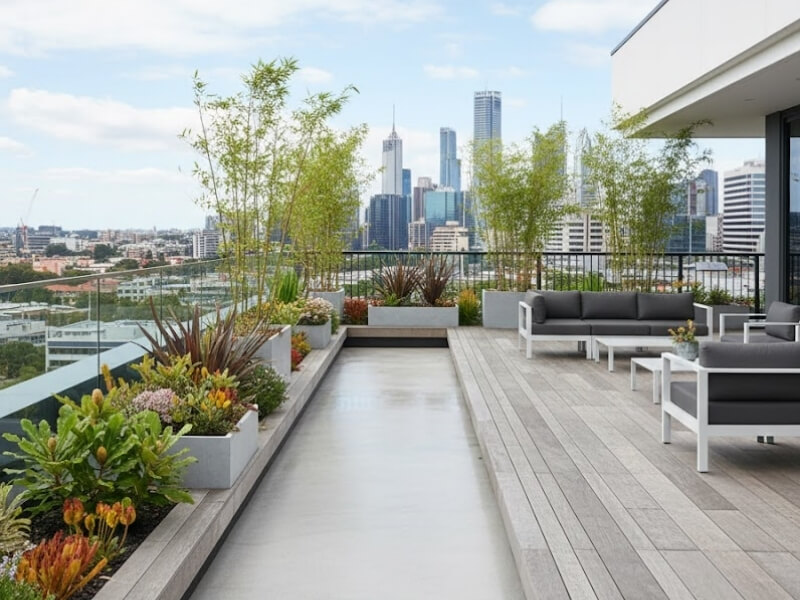
GRC is a composite material — cement reinforced with glass fibres — engineered to deliver the look and surface finish of poured concrete at a fraction of the weight. That weight reduction matters because it opens up GRC for use in situations traditional concrete simply can’t go: rooftop terraces, podium decks, upper-floor balconies, and any site where a structural engineer has set a hard load limit. Our FAQ on concrete pots covers the most common questions we get from specifiers and homeowners about the material.
GRC vs. Fibreglass: Choosing Between Them
Both materials solve the same underlying problem — delivering a large-format planter without a large-format weight — but they lead to different aesthetic and cost outcomes. Our weight guide comparing fibreglass and concrete for structural engineering breaks down the load figures directly, and is the right starting point for any project with a rooftop or elevated installation.

As a general rule: GRC tends to be specified where a heavier, more grounded architectural presence is wanted — entries, streetscapes, formal landscaping — while fibreglass is more often chosen where colour flexibility or a lighter visual profile is the priority. Neither material carries a meaningful weight penalty over the other at comparable sizes, so the decision usually comes down to finish and aesthetic rather than structural constraints alone.
Where GRC Planters Are Used

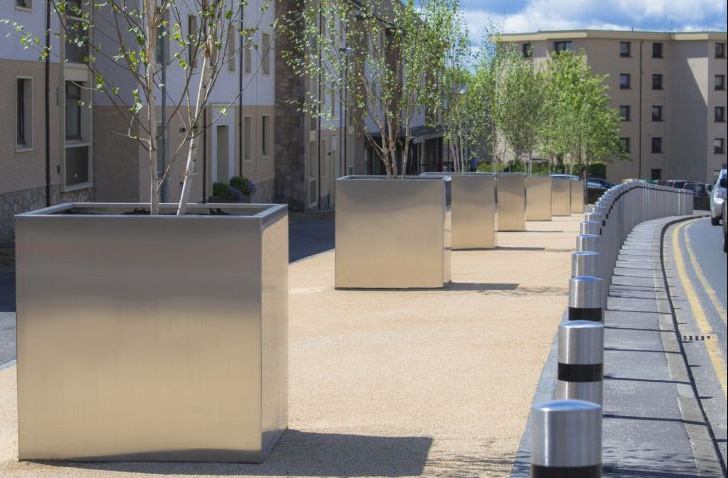
Concrete planter boxes have long been a default choice for public and commercial spaces — plazas, shopping precincts, streetscapes, and transport corridors — because of their durability and visual weight. Our guide on concrete planter boxes as a necessity for public spaces covers why councils and commercial landholders continue to specify concrete over other materials for high-traffic public realm projects.
The Cost Case for Planters vs. In-Ground Beds

For commercial landscaping projects, planters — including GRC troughs and cubes — are increasingly specified instead of in-ground garden beds, particularly on podium decks, retrofits, and sites with limited soil access. Our breakdown on the economics of commercial landscaping: fibreglass planters vs. in-ground beds applies equally to the GRC decision, and is worth reviewing alongside a landscape budget.
Shapes and Ranges
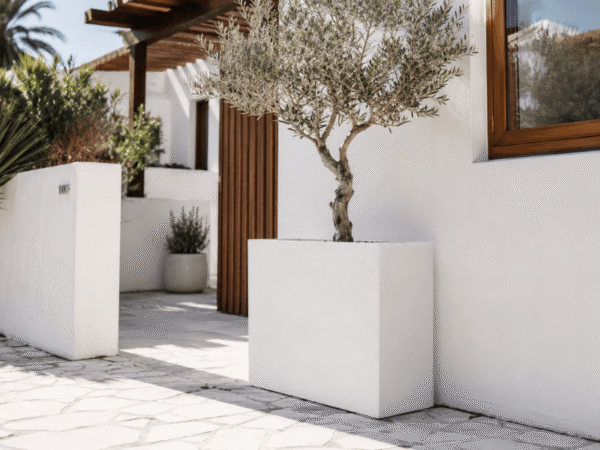
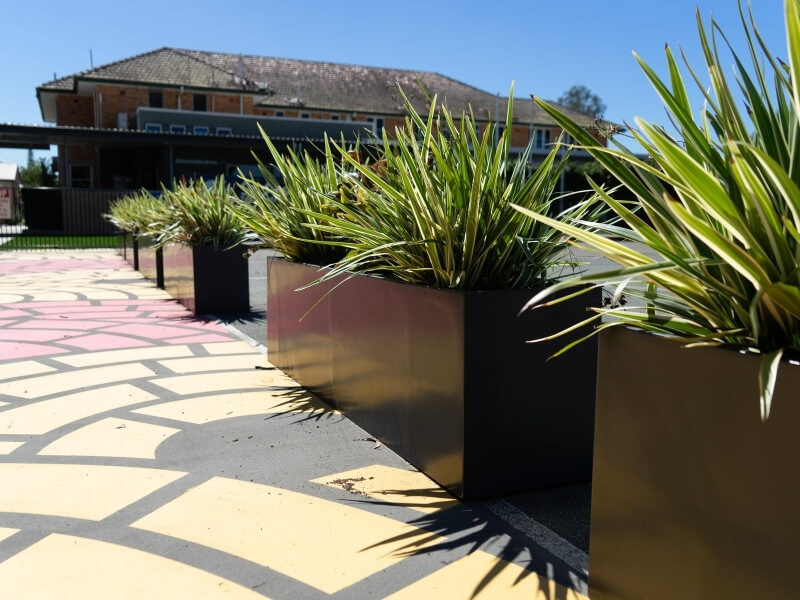
Our lightweight concrete range spans troughs, tall troughs, and round and square configurations, available in a range of finishes suited to both formal and contemporary landscape design — from classic rectangular troughs to sculptural round and cube forms.
Getting It Right the First Time
GRC is a durable, low-maintenance material, but like any large-format planter, getting the spec right up front matters. Before finalising a choice, confirm loaded weight against structural capacity (even though GRC is lightweight, filled weight still adds up at scale), drainage design suited to the planter’s volume, and finish selection appropriate to the site’s exposure and visual context.
If you’re weighing GRC against fibreglass for a specific project, request a free sample or get in touch — we work directly with builders, landscapers, and architects across Sydney, Melbourne, and Brisbane on projects at this scale.
Below, you’ll find our full library of lightweight concrete planter guides — covering material comparisons, public and commercial applications, and practical considerations for specifying GRC on your next project.