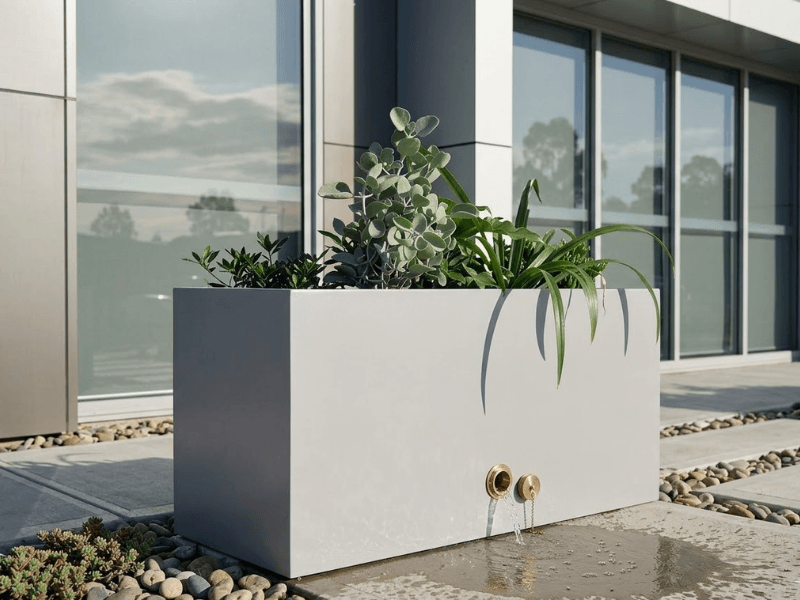
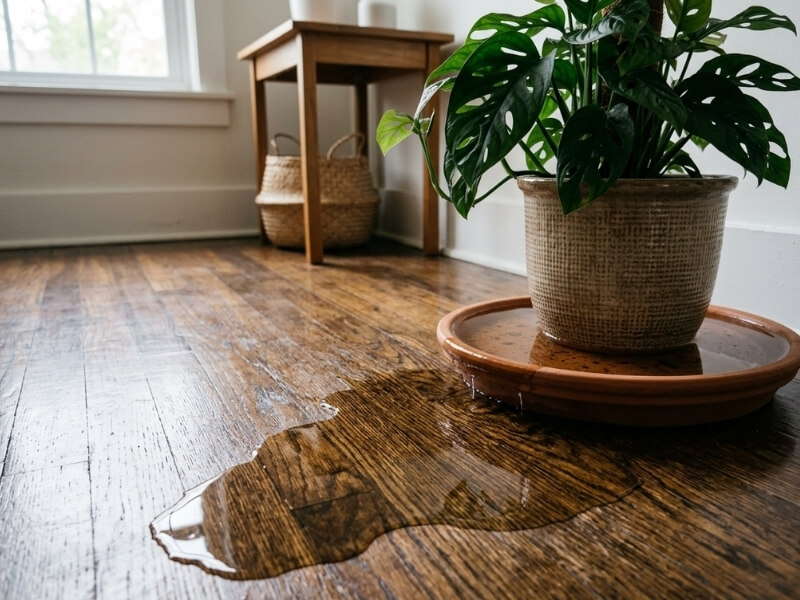
The foundation of a healthy container garden starts with proper water management. Proper hydration is more than just adding water — it’s about creating a balanced environment where roots can breathe. Whether you’re installing a large-scale commercial irrigation system or simply want to stop your balcony pots from waterlogging, this hub covers the technical side of getting drainage and watering right at every scale.
Drainage at Commercial Scale
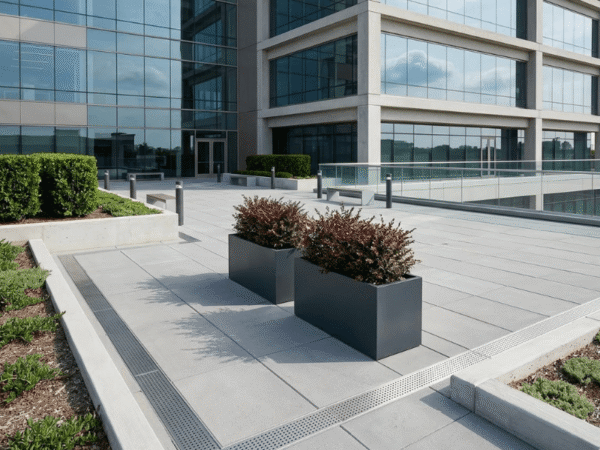
Large planters are complex micro-environments, not just decorative vessels. Their long-term success hinges on a principle that’s easy to overlook until it fails: physics-driven drainage, where water has to move predictably through growing media, drainage layers, and outlets rather than pooling at the base. See our guide on The Invisible Engineering: Solving Drainage in Large Commercial Planters, which covers layering, outlet placement, and the most common failure points on commercial-scale installs.
Should You Crock Your Pots?
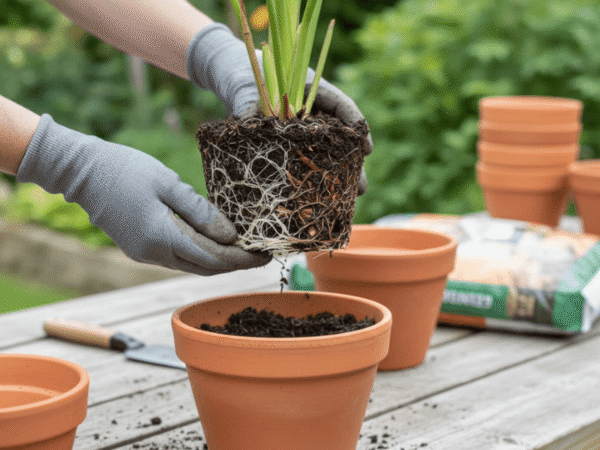
One of the most persistent pieces of gardening advice — put gravel, broken pot shards, or rocks in the base of a pot for drainage — turns out to be more myth than method once you look at how water actually moves through a growing medium. Our guide on Should You Add Drainage to the Base of Your Planters? unpacks where this advice came from and what actually works instead.
The Trouble With Drip Trays

Drip trays are widely treated as a non-negotiable accessory for indoor plants, promising to protect floors and catch runoff. In practice, they can work against the plant they’re meant to protect, trapping excess water against the root zone rather than letting it drain away. Our guide on The Pitfalls of Plant Drip Trays: A Closer Look explains why, and what to use instead.
Automating Irrigation for Australian Conditions
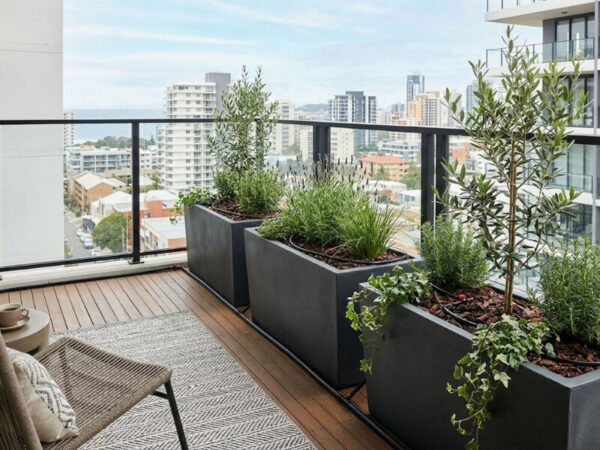
Manual watering doesn’t scale well once a garden grows beyond a handful of pots, and Australia’s climate — scorching heat, unpredictable rainfall, and long dry stretches — makes consistent watering difficult to maintain by hand. Our guide on Drip Irrigation Systems for Garden Pots and Planters gives a clear overview of how drip systems deliver water directly to root zones, reducing waste while keeping plants consistently hydrated through Australia’s harshest conditions.
Choosing the Right Planter for Your Watering Setup
Drainage performance starts with the planter itself — built-in drainage holes, internal sealing, and material choice all affect how well a pot manages water over time. Explore our full Sigma Collection, all of which come internally sealed with built-in feet to support proper airflow and drainage underneath the pot.
Below, you’ll find our full library of drainage and watering guides.