


Moving a heavy, oversized planter isn’t just a two-person job—it’s a logistics puzzle. One wrong move can lead to a smashed pot, a ruined floor, or, worse, a serious back injury. Whether you’re a homeowner with a new statement piece, a landscape designer on a site install, or a commercial contractor fitting out a courtyard, this guide will walk you through the safe and efficient movement of extra-large planters.

A Quick Note on Safety: This guide is for heavy planters that cannot be safely lifted by two people. If you feel any doubt at any stage, stop and call a professional. Your safety and the integrity of the planter are paramount.
For more related resources, please visit our comprehensive Extra-Large Planters Resource Hub.
Step 1: The Pre-Move Assessment (The Most Important Step)
Before you touch the planter, take five minutes to assess the situation. Rushing in is how accidents happen.
1. Weigh the Planter
You can’t manage what you can’t measure.
- Empty Weight: Check the manufacturer’s specifications if available.
- Full Weight: Estimate the weight of the soil, water, and plant. Wet soil can be extremely heavy—often 30-50% heavier than dry soil.
Check for existing cracks, weak points, or fragile features like decorative lips. Identify the strongest parts of the planter (usually the base and the main body) for handling.
2. Plan Your Route
Walk the entire path from start to finish. Look for:
- Obstacles: Doorways, tight corners, low-hanging lights.
- Surface Changes: Moving from grass to pavers, over a threshold, or onto a timber deck.
- Slopes and Stairs: These require specific techniques and extra hands.
3. Clear the Path
Remove trip hazards like garden hoses, mats, and furniture. Protect delicate floors (timber, tiles) by laying down Masonite sheets or heavy-duty cardboard.
Step 2: Gather Your Tools & Equipment
Having the right tools transforms a dangerous chore into a manageable task. You won’t need everything listed, but choose based on your planter’s weight and the complexity of the move.
Essential Safety Gear
- Sturdy Gloves: Protect hands from sharp edges and abrasive surfaces.
- Closed-Toe, Non-Slip Shoes: Steel-capped boots are ideal for commercial work.
- Knee Pads: For when you need to get low.
The Moving Toolkit
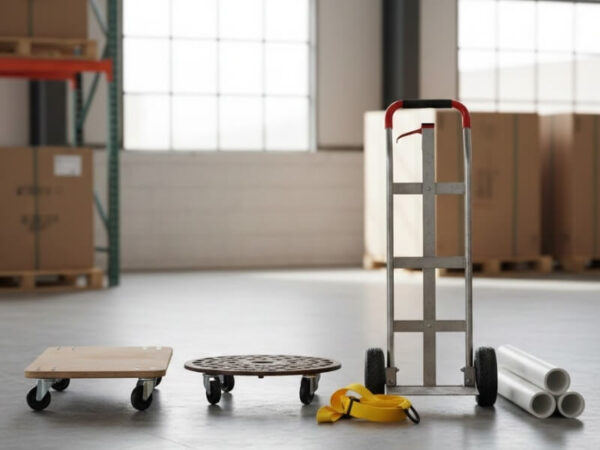
Here is a breakdown of the essential tools for moving extra-large planters, with a guide on what each is best for and a key pro-tip for using it effectively.
| Tool | Best For | Pro Tip |
| Furniture Dollies | Moving planters across flat, hard surfaces such as pavers, concrete, or timber | Always check the dolly’s weight rating before use and choose a model that comfortably exceeds the planter’s total weight |
| Heavy-Duty Plant Caddies | A permanent mobility solution; allows large planters to be repositioned easily for maintenance or layout changes | Install the caddies before filling the planter with soil and placing it in its final position |
| Forearm Forklifts | Two-person lifts on uneven ground or stairs; distributes weight evenly and reduces back strain | Move slowly and communicate constantly—the person walking backwards should guide |
| Appliance Dolly | Transporting tall or top-heavy planters; the safest option for commercial installers | Use the built-in securing straps to prevent the planter from tipping during transport |
| PVC Pipe Rollers | Short-distance DIY moves on solid, flat surfaces | Use at least three to four lengths of sturdy Schedule 40 PVC pipe (25mm diameter or larger) |
For commercial and high-traffic installations where planters are rarely moved, our heavy-duty commercial planters are designed to remain in place permanently—reducing the need for frequent repositioning while offering exceptional durability and stability. Though if you’d like flexibility in moving the planters in the future, you can also read our guide on adding castor wheels to your extra-large planters.
Are you specifying for a large-scale commercial or high-exposure project?
Our Extra-Large Planters are engineered for structural integrity and durability.
Step 3: Preparation – Emptying and Securing
A lighter planter is a safer planter.
- Remove the Plant and Soil: If possible, temporarily remove the plant and as much soil as you can. This can reduce the weight by half or more. Tip: Wrap the root ball in hessian or an old towel to keep it intact.
- Secure Loose Parts: Wrap the planter in moving blankets or bubble wrap. Use strong tape or ratchet straps to hold the padding in place and prevent the planter from shifting. This also protects the planter’s finish.
Step 4: The Move – Choosing Your Technique
Technique A: The Furniture Dolly Method
(Best for Flat, Hard Surfaces)
- Tilt and Slide: With a helper, carefully tilt the planter. Use your foot to block the base from sliding.
- Position the Dolly: Slide the dolly underneath the planter, ensuring it is centred for balance.
- Lower Gently: Slowly lower the planter onto the dolly.
- Move and Secure: One person pushes the dolly while another spots from the other side, guiding and ensuring stability. For slopes, the spotter becomes a brake.
Technique B: The Forearm Forklift Method
(Best for Uneven Ground or Stairs)
- Position the Straps: Slide the straps under the planter, one on each side.
- Lift in Sync: Both people slip their forearms into the handles, squat down, and on the count of three, use their legs to lift.
- Walk Together: Move slowly and communicate constantly. The person walking backwards should guide.
- For Stairs: The person at the bottom takes the majority of the weight. Move one step at a time.
Technique C: The PVC Pipe Roller Method
(The “Ancient Egyptian” Technique)
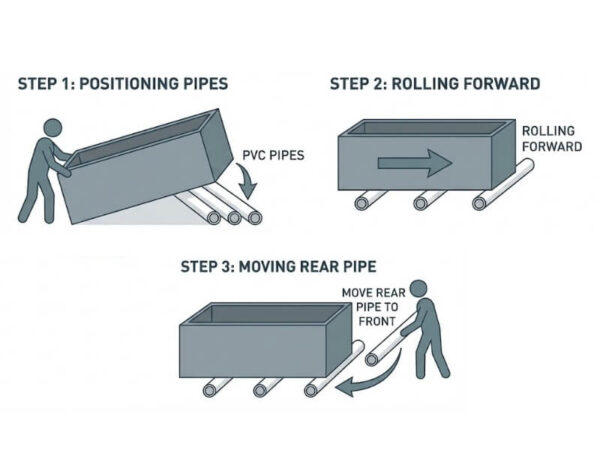
- Lift One Side: Tilt the planter and place 2-3 PVC pipes underneath, perpendicular to your direction of travel.
- Create a Track: As you push the planter, it will roll on the pipes.
- Rotate the Pipes: The rear pipe will be freed as the planter moves forward. Continuously move the freed pipe to the front to create a rolling path.
- Steer Gently: Use a crowbar or a helper’s foot to gently steer the planter on its “track.”
Step 5: Final Positioning and Levelling You Extra-Large Planter
You’ve reached the destination. Now for the fine-tuning.
- Reverse Your Moving Technique: Carefully use your dolly, forearm forklifts, or pipes to lower the planter into its exact spot.
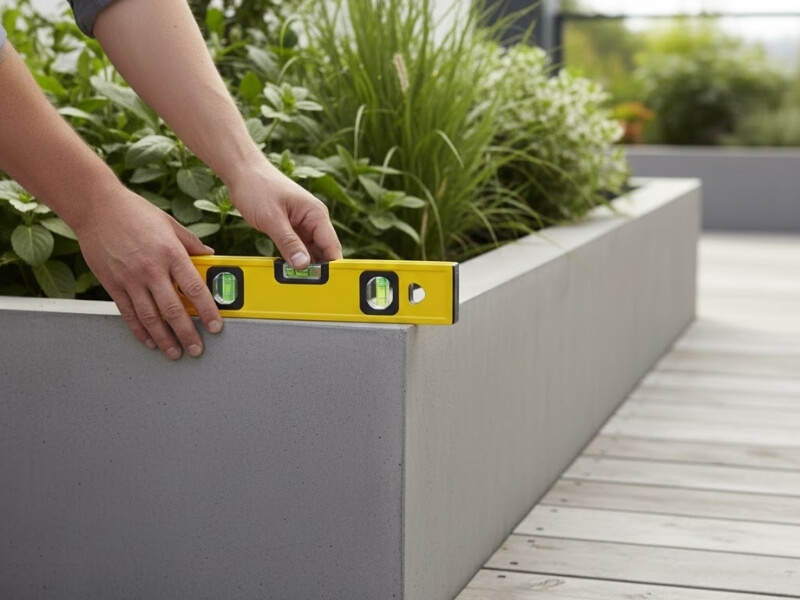
- Check for Level: Place a spirit level on the rim of the planter. An unlevel planter looks unprofessional and can cause water to pool unevenly.
- Make Micro-Adjustments:
- For minor adjustments on pavers or decking, use a pry bar or the tip of a shovel for leverage. Place a small piece of wood under the bar to protect the surface.
- For permanent levelling on soil, dig out the high side rather than building up the low side, as this provides a more stable base.
Step 6: The Final Check
- Remove all moving blankets, straps, and tools.
- Replant your vegetation if you removed it.
- Do a final check of the planter and the surrounding area for any damage.
- Stand back and admire your work—you moved the unmovable!
Safety First: The Golden Rules
- Lift with Your Legs, Not Your Back: Keep your back straight and bend your knees. This cannot be overstated.
- Communicate Constantly: Use clear commands such as “Lifting on three… two… one… LIFT” and “Stopping.”
- Know Your Limits: There is no shame in calling for more help or hiring professionals with the right equipment.
- Secure the Load: An unsecured planter on a dolly is a falling hazard.
- Keep Fingers and Toes Clear: Never place them underneath the planter during a move.
By following this step-by-step guide, you can tackle the job with confidence, ensuring your beautiful extra-large planters are positioned perfectly, without a scratch on them—or on you.

For more detailed safety tips, check out Safe Work Australia: Manual Handling Safety, which offers expert guidelines on moving heavy items safely in the workplace.
0 Comments