


Height is one of the most underused tools in small-space landscape design. On balconies, terraces and commercial frontages, a run of tall rectangular planters can deliver privacy, spatial definition and accessible planting beds in a single move, without the footings, fixings or permanence of a built screen.
For almost twenty years, I have spoken with someone nearly every week about the same problem: how to gain privacy, height or separation in a space where a wall or fence isn’t an option. The conversations vary, but the answer is remarkably consistent. Builders call needing 1000mm-high troughs to satisfy a council screening condition before handover. Apartment owners want to reclaim a balcony overlooked by the neighbours. And only recently, a customer needed a planter tall enough that her dog could no longer use it as a step to reach the top of the balustrade. That is a reminder that height is as much about safety as it is about screening.
This guide covers how to design with tall planters: screening for privacy, defining circulation, buffering car parks, plant selection by climate, balcony and council considerations, and the use of filler to reduce weight and cost. For specification, our tall trough planters are available in heights from 700 to 1000mm across five finishes.
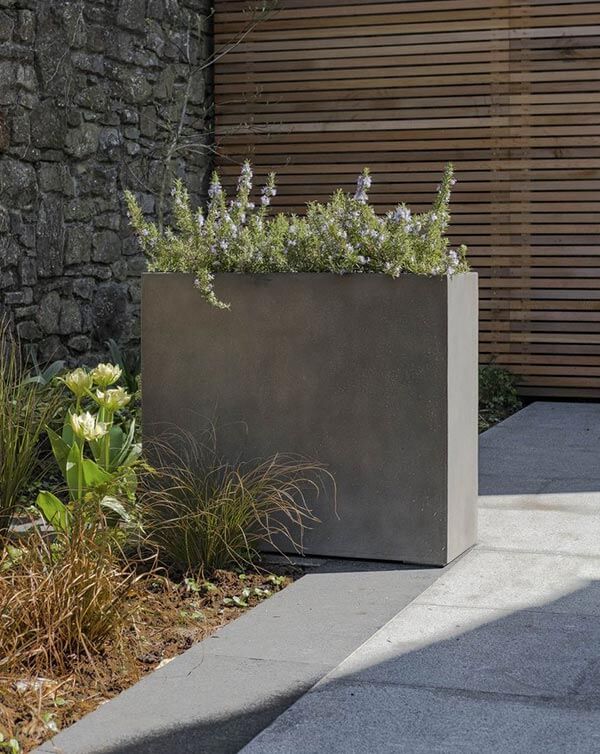
For more posts similar to this one, check out our Trough Planters Guides Resource Hub.
The Vertical Advantage: Elevating Privacy
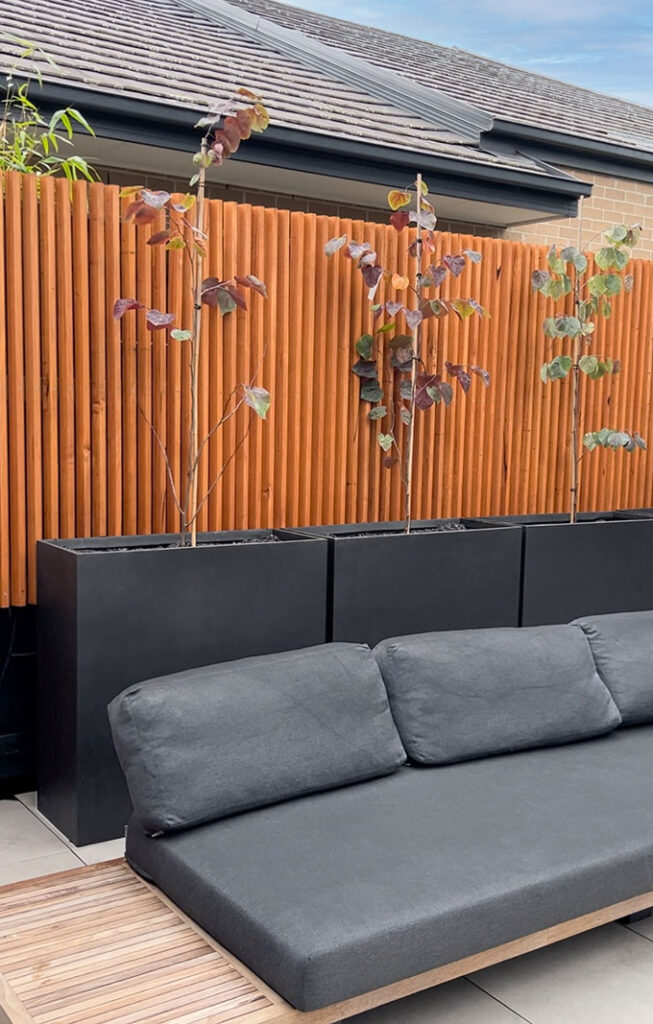
Privacy is a premium commodity, especially in high-density urban areas. Tall rectangle trough planters offer an elegant and effective solution for creating green screens without the permanence and expense of a traditional wall or fence. By selecting the right sized planter along with the right plant species, a dense, verdant barrier can be established that not only shields from prying eyes but also dampens noise and purifies the air.
The height of these planters, typically ranging from 80cm to 100cm, allows for the cultivation of taller plant varieties that can reach significant heights, creating a living wall that feels natural and integrated into the landscape. This is particularly valuable for apartment balconies, courtyards, and rooftop terraces where space is at a premium and a sense of seclusion is desired. The ability to move these planters also offers flexibility, allowing for the temporary reconfiguration of a space to suit different needs, such as a large gathering that requires an open layout or a quiet moment that demands a secluded nook.

Accessibility and the Age-Friendly Garden
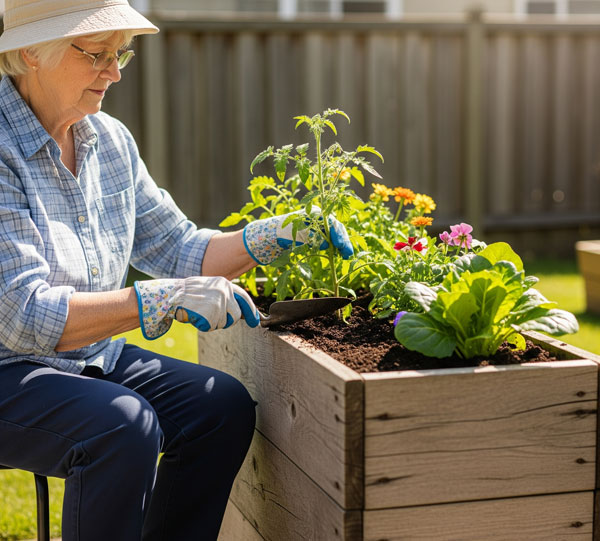
Beyond aesthetics and privacy, the tall rectangle trough planter is a powerful tool for promoting accessibility, particularly for the elderly and those with physical disabilities. Traditional ground-level gardening often requires bending, kneeling, and straining, which can be difficult or impossible for many. The elevated height of these planters brings the garden up to a comfortable working level, allowing individuals to tend to plants from a seated position or while standing upright without excessive bending.
This “no-dig” gardening approach reduces physical strain and encourages a more inclusive and enjoyable gardening experience. For aged care facilities, community gardens, and even private residences, integrating these planters is a thoughtful and practical way to foster a connection with nature, promote mental and physical well-being, and empower individuals to participate in a fulfilling activity. This is not just about convenience; it’s about dignity and enabling independence.
Defining Space: Creating Boundaries and Leading Pedestrians
The inherent linear form of the tall rectangle trough planter makes it an exceptional tool for spatial definition. They can be arranged to create clear, visually appealing boundaries in open-plan landscapes. Whether separating a pedestrian walkway from a seating area, delineating the edge of a communal lawn, or marking the transition between a public and private space, these planters serve as a subtle yet effective visual cue. Unlike solid walls, they maintain a sense of openness and flow while still providing a clear demarcation.
In a commercial or public setting, this function is critical for wayfinding. A series of these planters can be used to lead pedestrians along a desired path, guiding them naturally towards an entrance, a focal point, or around a building. This “soft” form of guidance is more inviting than hard barriers and contributes to a more pleasant user experience. For urban designers, this means creating intuitive and safe environments where people can navigate with ease and confidence.

Buffering Car Parks and Enhancing Streetscapes
The harshness of a car park can be mitigated and transformed by the strategic placement of tall rectangle trough planters. Acting as a green buffer, they can soften the visual impact of asphalt and concrete, creating a more welcoming and aesthetically pleasing streetscape. By placing them between parking bays and pedestrian areas, they not only serve as a physical barrier but also absorb some of the exhaust fumes and noise pollution. This simple addition can significantly improve the user experience for both drivers and pedestrians, turning a purely functional space into a more human-centered environment. At Woolworths Margate, a run of Florence tall trough planters was installed for exactly this purpose, forming a green buffer between the car park and the pedestrian walkway. In a time when urban greening is a priority, these planters offer a scalable and manageable way to introduce vegetation into spaces that would otherwise remain sterile.
Balcony Rules, Council Approval and Minimum Heights
The use of tall planters on balconies is a growing trend, but it’s important to be aware of the regulations that often govern their use.
Many local councils and strata bodies have specific rules regarding the minimum height of a barrier on a balcony for safety reasons. In some cases, a planter is considered an object that could potentially be climbed on, which might compromise the safety of the balcony’s balustrade. However, a tall, heavy planter can also be seen as a way to enhance safety by acting as an additional barrier, provided it is stable and securely placed.
Tall troughs are also frequently specified to satisfy council privacy-screening and landscaping conditions, where a minimum screen height applies to limit overlooking between neighbouring dwellings.
Professionals must consult local council regulations and strata bylaws to ensure compliance. On elevated structures, load is the second consideration: a planter’s dead load must be calculated with fully saturated soil, not dry. Our structural engineer’s guide to rooftop planter installations sets out the calculation in detail.
The use of tall planters, often 80cm or more, can be an effective way to meet or exceed these requirements, creating a safe and beautiful space without compromising on design.
Are you specifying for a large-scale commercial or high-exposure project?
Our range of Tall Trough Divider Planters is engineered for maximum durability at minimum weight.
Plant Recommendations for Tall Trough Planters
The success of a planter lies as much in the plants it holds as in its design. The diverse climate of Australia from the tropical north to the temperate south, requires careful plant selection. Here are some recommendations suitable for tall trough planters in this region:
For Subtropical/Tropical Climates
- Lilly Pilly (Syzygium spp.): A classic for a reason. Its dense foliage and fast growth rate make it an excellent privacy screen.
- Bamboo (Bambusa multiplex ‘Alphonse Karr’): A non-invasive clumping variety that provides a tall, elegant, and fast-growing screen.
- Frangipani (Plumeria): For a touch of tropical beauty and fragrance, these will thrive in a large, well-drained planter.
- Crotons (Codiaeum variegatum): Stunning, colourful foliage plants that add a dramatic flair.
For Temperate Climates
- Coastal Rosemary (Westringia fruticosa): A hardy native that tolerates salt spray and wind, perfect for coastal urban environments.
- Photinia (Photinia x fraseri ‘Red Robin’): Known for its vibrant red new growth, it forms a dense hedge and is very low maintenance.
- Star Jasmine (Trachelospermum jasminoides): A fragrant climber that can be trained to grow up a trellis within the planter, creating a lush green wall.
- Little Gem Magnolia (Magnolia grandiflora ‘Little Gem’): A compact variety of the classic magnolia that performs well in large containers, offering beautiful white flowers and glossy leaves.
For Arid and Inland Climates
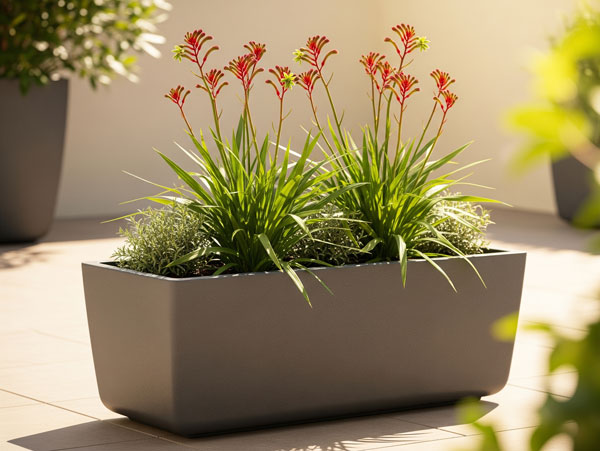
- Kangaroo Paw (Anigozanthos spp.): A tough, architectural plant with striking flowers that adds a touch of the bush to any space.
- Everlasting Daisy (Bracteantha bracteata): Offers a splash of colour and is drought-tolerant, making it a good choice for hotter, drier spots.
- Olive (Olea europaea ‘Tolley’s Upright’): a narrow, upright form well suited to screening. Hardy and elegant, they offer a Mediterranean feel and can withstand dry conditions.
The Smart Use of Filler: Reducing Weight and Cost
One of the logistical challenges of a large planter is the sheer volume of potting mix required. This can be costly and make the planter extremely heavy, limiting its portability. A smart solution is to use lightweight, inert filler for the bottom half of the planter. Suitable materials include:
- Recycled Plastic Bottles or Crushed Pots: A simple, eco-friendly way to fill space and provide drainage.
- Polystyrene Foam Blocks (e.g., from packaging): Lightweight and highly effective for filling the void.
- Lightweight Scoria or Pumice: These volcanic rocks are often used in gardening and provide both drainage and a lighter alternative to soil.
- Cans or Milk Jugs: A truly recycled solution that can be covered with a layer of geotextile fabric to prevent soil from sifting through.
By using filler, you can significantly reduce the amount of expensive potting mix needed, decrease the overall weight of the planter, and improve drainage by creating a void at the bottom. It’s a practical and sustainable practice that makes large-scale projects more feasible and cost-effective.
Designing with Height: Aesthetic Concepts
The design potential of tall garden pots and planters is immense. Here are some concepts to inspire your next outdoor project:
Focal Points and Statements
A single, striking tall planter with a magnificent plant can become the undeniable centrepiece of a garden or entrance. Think a dramatic architectural plant like a Yucca or an elegant olive tree in a sleek, modern planter.
Layering and Levels
Combine tall planters with lower ones to create varying heights and visual layers. This adds depth and interest, mimicking the natural structure of a forest understory and canopy.
Architectural Harmony
Choose planters that complement the architectural style of your home or building. A contemporary home might benefit from clean lines and minimalist designs, while a more traditional Queenslander might pair well with classically shaped, though still durable, modern tall planters.
Seasonal Versatility
Tall planters allow for easy seasonal changes. Swap out annuals for different colours throughout the year, or transition from lush summer greens to autumn foliage, keeping your display fresh and engaging.
Creating a Vertical Garden Illusion
Group several tall planters of varying heights and widths to create the illusion of a lush vertical garden. This is particularly effective in compact spaces, maximizing greenery without taking up much floor area.
Symmetry and Asymmetry
For a formal look, use symmetrical arrangements of identical tall planters flanking an entryway or path. For a more relaxed, contemporary feel, opt for asymmetrical groupings with different sizes and shapes, creating a dynamic visual flow.
Conclusion
The tall rectangle trough planter is more than a fleeting design trend; it is a fundamental and adaptable tool for modern landscape professionals. Its applications are broad and impactful, from creating intimate private sanctuaries and empowering accessible gardens to defining public spaces and enhancing urban streetscapes. By understanding its versatility and applying sound horticultural and design principles, professionals can use these planters to transform ordinary outdoor areas into beautiful, functional, and purposeful environments that meet the complex needs of today’s users. As we continue to seek innovative ways to integrate nature into the built environment, these elegant and efficient vessels will undoubtedly remain at the forefront of contemporary landscape design.
Click here to explore our full range of Tall Rectangular Trough Planters!

0 Comments