


Imagine a quiet corner of a 14th-century monastery, where the air is thick with the scent of damp earth, green growth, and healing herbs. The monastery’s apothecary, a man robed in wool, moves slowly between neat rows, pinching leaves and murmuring prayers. This garden was his pharmacy, his library, his sanctuary. Now, imagine bringing that profound sense of history, healing, and quiet ritual into your own space. Not with acres of land, but with a single, beautiful container. Welcome to the art of growing a medieval apothecary’s garden in a planter.

Today, we can reconnect with this rich horticultural heritage. By planting a selection of historic medicinal herbs in a thoughtfully chosen pot, you create more than just a garden—you curate a living museum, a sensory time capsule, and a stunning, fragrant feature for your balcony, courtyard, or patio. It’s a perfect marriage of storytelling and container gardening.

A Brief History: The Roots of the Apothecary Garden

In the medieval world, long before pharmacies, the garden itself was the hospital, the chemist, and the spiritual sanctuary. This vital tradition flourished in three distinct yet connected spheres. At the heart of herbal knowledge were the monastic gardens, where cloistered monks cultivated orderly beds of plants for both healing and prayer, meticulously preserving ancient texts and their own healing observations. Beyond the monastery walls, in village lanes and forest clearings, the practical wisdom of local healers and “wise women” reigned, using herbs from cottage plots and the wild to tend to their communities, passing down remedies through generations of lived experience. And finally, in the shadow of every humble cottage, the household “simples” plot was as essential as the hearth, growing a handful of key herbs for treating daily ailments, flavouring pottage, and strewing on floors to sweeten the air and deter pests. Together, these gardens formed a living network of medicine, culture, and survival—a deep, green thread connecting the people to the land and its quiet power.
The Herbs of History: Your Medieval Medicinal Line-Up

Here are the stars of your apothecary planter, each with a tale to tell. A gentle reminder: while fascinating, historical uses are just that—history. Always consult a medical professional for health advice, and ensure you correctly identify any herb before use.
1. Lavender (Lavandula)
The medieval cleanser, used to purify the air and soothe headaches. Its serene scent symbolised peace and was strewn on floors. A sun-loving, drought-tolerant classic, perfect for a fragrant, silvery-green anchor in your pot. Crush a sprig between your fingers to release its timeless perfume, just as a medieval apothecary would have done.
2. Sage (Salvia officinalis)
From the Latin salvare, “to save.” Revered for longevity and used as a gargle. Its pebbled, fragrant leaves demand a sunny spot with excellent drainage. Today, it’s a culinary powerhouse, best enjoyed in moderation. In the medieval doctrine of signatures, its rough, throat-shaped leaf was seen as a sign of its use for sore throats.
3. Chamomile (Matricaria chamomilla)
The “plant’s physician,” believed to revive ailing plants nearby. The tiny daisy flowers were dried for a calming tea. It adds a delicate, apple-scented froth and may self-seed happily in your planter’s edges. Harvest the sunny blooms in summer for a homegrown tea that’s been a bedtime ritual for centuries.
4. Hyssop (Hyssopus officinalis)
A sacred herb of purification, used in monastic gardens for chest complaints. It boasts striking spikes of blue flowers that bees adore. Its strong, minty-camphor flavour is a historical curiosity—use sparingly. This hardy perennial adds wonderful height and structure, making your container feel like a true medieval knot garden.
5. Rosemary (Rosmarinus officinalis)
“For remembrance.” Carried to sharpen the mind and used to ease aches. This woody, aromatic shrub provides year-round structure. Tough and sun-hardy, its piney needles are a cook’s best friend. It was often planted by gateways so one could brush past it, releasing its memory-sharpening scent.
6. Thyme (Thymus vulgaris)
A symbol of courage for knights, and a potent antiseptic for poultices. Its low, spreading habit makes it an ideal planter spiller. The flavour is timeless, transforming roasts, stews, and even honey. A mat of thyme at the front of your pot creates a beautiful, bee-friendly carpet that tolerates light foot traffic.
7. Feverfew (Tanacetum parthenium)
The classic “febrifuge,” or fever fighter, with cheerful, daisy-like flowers. Its bitter leaves were historically chewed for headaches. A vigorous grower, it brings a bright, cottage-garden charm. Be warned: it can be a vigorous self-seeder, ensuring its ‘healing’ presence returns year after year in your garden.
Designing Your Rustic Apothecary Planter

To capture the authentic, timeless feel, think rustic strength and simple form—a container that feels hewn from stone or aged timber.
- The Planter: Choose a large, sturdy pot with excellent drainage. A wide, shallow bowl shape (at least 50cm wide and 30cm deep) or a classic half-wine barrel style works perfectly, giving roots room to spread and creating a tableau of intertwined foliage. Look for finishes in aged terracotta, stone-look concrete, or Earth-toned fibreglass that suggest antiquity and resilience.
- The Layout: For authenticity, avoid neat rows. Plant in a relaxed, cottage-style clump. Place taller, woody herbs like rosemary or lavender towards the back or centre. Mounding sage and hyssop can fill the mid-ground, with thyme and chamomile spilling softly over the edges. Tuck feverfew in where it can reach for the sun.
- Soil & Sun: Use free-draining premium potting mix with coarse sand. These Mediterranean herbs need full sun—at least 6 hours daily. A north or east-facing Australian spot is ideal.
This layered approach mirrors Japanese miniature courtyard garden design – deliberate placement for tranquility and balance. Your apothecary planter becomes a microcosm of a larger, contemplative world.
Caring for Your Living History
- Watering: The golden rule is drainage. Water deeply when the top few centimetres of soil feel dry, but never let the pot sit in water. These herbs are drought-tolerant once established.
- Pruning & Harvesting: Regular pinching of tips promotes bushier growth. Harvest leaves and flowers in the morning after the dew has dried for the best potency. Prune woody herbs like rosemary lightly after flowering. Read on here for our comprehensive guide on pruning potted plants.
- Australian Seasons: In most regions, these herbs will thrive year-round. In subtropical zones, provide afternoon shade in peak summer. In cooler southern states, they’ll appreciate a warm, sheltered position through winter. Most will handle light frosts.
The Value Beyond the Leaves: Education & Atmosphere
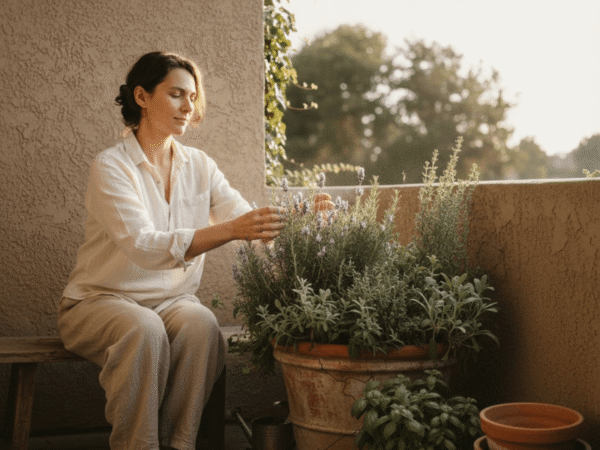
This planter is a conversation starter and a learning hub. It’s a hands-on way to explore history with children, discussing how people once lived and healed. It’s a sensory garden—crush sage between your fingers, run your hands through rosemary, and be transported. It connects us to the rhythms of the past, reminding us of the simple, profound act of growing things for wellbeing. Position it near a seating area to create a contemplative, fragrant nook.
Grow Your Own Legacy
Your balcony or courtyard doesn’t need to be just a modern outdoor room. It can also be a chapter from a medieval manuscript, brought to life. And you don’t have to stick to any strict guidelines – be creative and you’ll be able to find a planter design that complements these historic herbs. You’ll create a permanent stage for this living story—a blend of function, beauty, and deep-rooted tradition.
To see these same herbs growing in their original context, visit the Royal College of Physicians’ Garden of Medicinal Plants — a living archive of over 1,000 species once used by apothecaries and healers.
Ready to plant your own piece of history? Explore our range of rustic, weather-resistant planters designed to be the perfect foundation for your apothecary garden, your sanctuary, and your story. What will you grow first?
0 Comments