


Looking for some inspiration for your container gardening project? Whether you are planning on using a Planter Box, Cube Pot, or Round Planters, we have some inspiring ideas here for you. If fact, we have gathered 125 container garden ideas and tips so grab a cuppa and read on to treat yourself to these awesome ideas.
For more posts similar to this one, check out our Pot Planting and Care resource hub.
1. Highlighting Doorways with Container Planting

Container planting is one of the simplest ways to strengthen the visual importance of an entrance without altering the architecture itself. Tall, upright planting positioned on either side of a doorway can frame the opening, establish symmetry and create a clearer sense of arrival for homes, offices, hospitality venues and commercial buildings.
Topiary, compact trees and other strongly structured plants work particularly well because their form reinforces the vertical lines of the doorway. The planter itself should also relate to the scale and material palette of the building. A large entrance generally requires a substantial container; undersized pots can look temporary or visually disconnected from the façade.
For more contemporary projects, simple geometric planters can soften hard architectural finishes without introducing unnecessary visual clutter. Planting can also help bridge the transition between paved areas and the building frontage, making an entrance feel more established and welcoming while still retaining a clean, professional appearance.
2. Prevent Structural Damage by Putting Small Trees in Strong Pots

Small trees can create excellent structure and height in a landscape, but their root systems need to be considered from the outset. When vigorous trees are planted directly beside paving, driveways, walls or swimming pools, expanding roots can eventually interfere with surrounding surfaces and infrastructure. Using a sufficiently large, structurally strong planter allows the root zone to be contained while still providing enough growing volume for the tree to establish properly, making this particularly useful in courtyards, commercial developments, paved terraces and other locations where in-ground planting is impractical or undesirable.
The planter should be selected for long-term use rather than simply for the size of the tree at installation. Adequate internal volume, drainage and structural strength are essential, especially as the combined weight of the tree, growing media and retained water increases over time. Containerising a small tree also gives the designer greater control over placement, allowing greenery to be introduced close to architectural elements while reducing the risk of uncontrolled root growth affecting adjacent hardscape.
3. Consider the Plant’s Mature Size When Planting

Plant selection should be based on mature dimensions rather than how a specimen looks at the nursery. A plant that appears well-scaled when young may eventually become too tall, wide or vigorous for the container and surrounding space.
Before planting, consider the expected height, spread and root development of each species, particularly when combining several plants in one container. Faster-growing varieties can quickly dominate slower-growing plants and disrupt the intended composition.
Scale also matters visually. Oversized plants can overwhelm the planter, obscure architectural features or interfere with circulation, while undersized plants may lack sufficient presence. Planning for mature size helps reduce excessive pruning, replacement and repotting while maintaining a balanced relationship between the plant, planter and surrounding architecture.
SIGMA PLANTERS RANGES
Our exclusive in-house ranges are only available from Sigma Planters Australia.
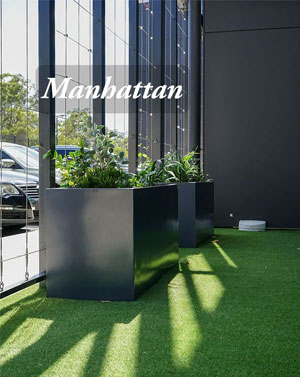
Manhattan Fiberglass Charcoal
$195.00 – $1495.00
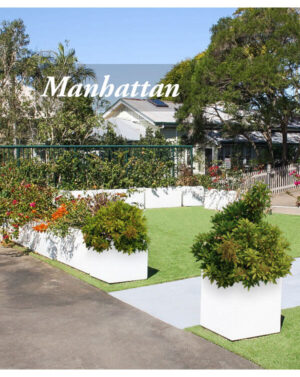
Manhattan Fiberglass White
$99.00 – $329.00
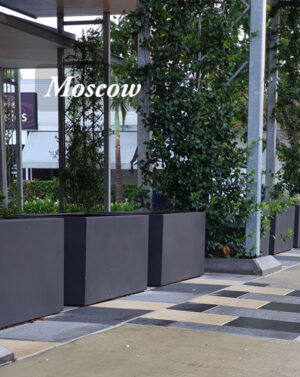
Moscow Rendered Concrete
$99.00 – $549.00
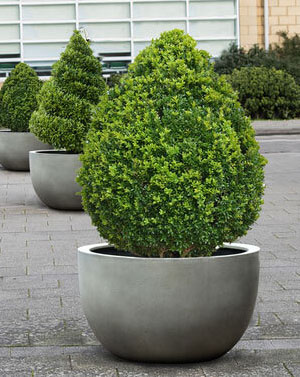
Florence Light Concrete
$195.00 – $995.00
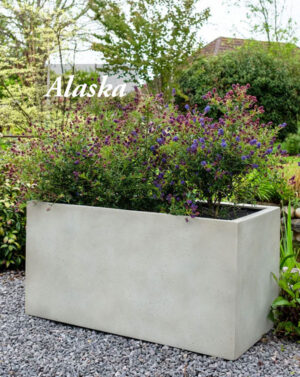
Alaska Off-White
$195.00 – $549.00
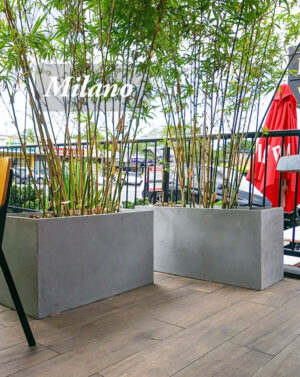
Milano Concrete Light
$195.00 – $895.00
4. Linear Repetition Using Same Size Pots

Repeating planters of the same size in a straight line creates rhythm, order and visual continuity, making it particularly effective in contemporary landscapes. A row of rectangular, square or cylindrical planters can also define pedestrian routes, separate seating areas or establish boundaries without creating a solid barrier.
Using a consistent planter size, finish and planting treatment gives the arrangement a more deliberate architectural character. Linear repetition works especially well along pathways, building façades, outdoor dining areas and commercial forecourts, where it can introduce structure and balance to the overall design.
5. Use Thrillers, Fillers and Spillers in a Container

The “thriller, filler and spiller” approach gives mixed container planting a clear structure. Start with a thriller as the tallest or most architectural plant, usually positioned in the centre for a container viewed from all sides or toward the back for one viewed mainly from the front. Add fillers around it to provide volume, texture and colour through the middle of the arrangement, then place spillers near the edges so they can trail over the rim and soften the planter’s form.
The method works best when the plants are selected as a complete composition rather than individually. Combine species with compatible light, water and maintenance requirements, and allow enough space for each plant to develop without one layer overwhelming the others as the arrangement matures.
6. Use Rectangular Pots to Guide Pedestrian
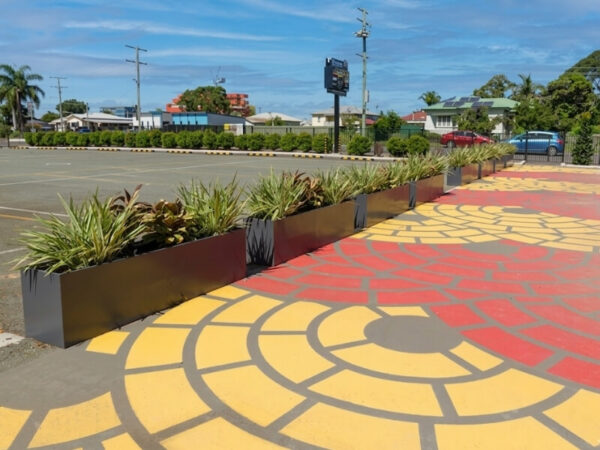
Rectangular planters are particularly useful where planting needs to do more than simply provide decoration. Their linear form makes them well suited to defining pedestrian routes, separating circulation zones and creating a clear edge between different uses within a landscape. In commercial and public settings, a sequence of trough planters can guide movement without introducing the visual weight of a solid wall, fence or permanent barrier.
The arrangement works best when the planter proportions, spacing and planting treatment are considered together. Closely spaced troughs create a stronger boundary, while wider spacing allows more visual permeability between areas. Repeating the same planter size and finish can also reinforce the geometry of a pathway or building frontage and give the space a more deliberate architectural character.
For high-traffic environments, durability and stability are important. The selected planter should be appropriate for the level of exposure and should have sufficient weight or anchoring to remain secure in use. Planting should also be kept clear of key sightlines and circulation widths so that the landscape treatment supports pedestrian movement rather than obstructing it.
7. Liven Up Boring Corners with Container Garden Ideas

Corners that are left untreated can often feel visually disconnected from the rest of a courtyard, terrace or commercial landscape. Container planting is a simple way to give these areas a clearer purpose by introducing height, texture and a stronger focal point without requiring permanent construction or major changes to the surrounding hardscape.
Tall planters or upright planting can be particularly effective where the space needs vertical emphasis. In larger corners, grouping two or three containers of different heights can create more depth than a single small pot, while still keeping the arrangement controlled. The planting should respond to the available light, wind exposure and surrounding materials rather than being selected only for colour.
Scale is especially important. A small planter placed in a large architectural corner can look incidental, while an oversized feature can obstruct circulation or compete with the building itself. The most successful arrangements feel proportionate to the space and help visually connect otherwise empty areas with the broader landscape design.
8. Workplace Container Planting Comes with Many Benefits
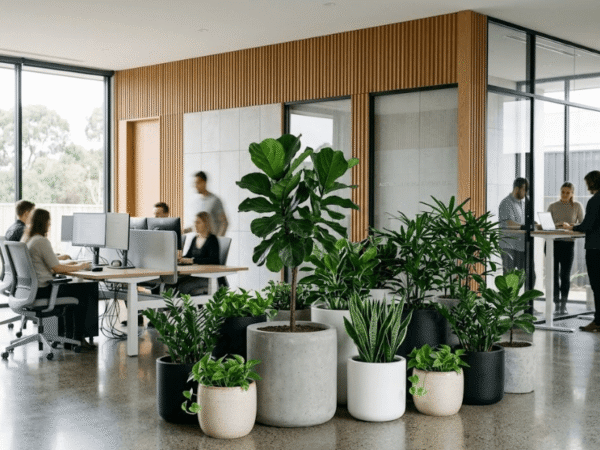
Container planting can make a significant contribution to workplace interiors and commercial environments, particularly where the architecture is dominated by hard finishes, large open areas or repetitive workstations. As part of a biophilic design approach, planting introduces natural form, texture and seasonal variation, helping create a stronger visual connection between occupants and the natural environment.
Planters can also be used functionally. Larger troughs and grouped containers can help define reception areas, breakout spaces, collaborative zones and circulation routes without the need for permanent partitions. This is particularly useful in workplaces where layouts may change over time, as planting can provide spatial definition while remaining relatively flexible.
Plant selection should respond to the actual indoor conditions. Available daylight, artificial lighting, air-conditioning, temperature and maintenance access all influence long-term performance. Hardy, low-maintenance species are generally more appropriate for commercial use than plants that require frequent intervention. Irrigation and drainage also need to be resolved properly, particularly where planters are positioned near flooring, joinery or electrical services.
9. Indoor Container Planting – Seal Those Drain Holes
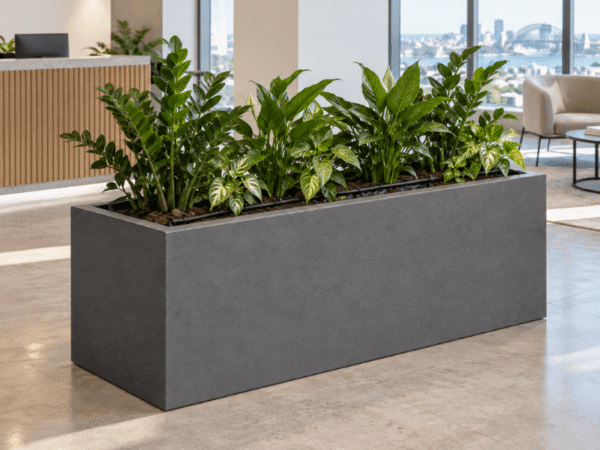
Indoor container planting requires more careful water management than an outdoor installation because excess water cannot simply drain onto the surrounding surface. Uncontrolled discharge can damage flooring, joinery and adjacent finishes, so drainage should be resolved as part of the planter specification rather than treated as an afterthought.
Where there is no connection to a drainage point, the planter may need to be sealed or fitted with an internal liner, reservoir or other containment system. In these situations, watering volumes need to be controlled carefully because a sealed planter can also create problems if water accumulates around the root zone. The growing medium should therefore be selected to provide adequate aeration and moisture control.
For larger commercial installations, drip irrigation or another managed irrigation system can provide more consistent water delivery and reduce the risk of overwatering. Access for inspection and maintenance should also be considered, particularly where planters are built into joinery or positioned in areas that are difficult to service. The planter, planting medium, irrigation system and drainage strategy should all function as one integrated system.
10. Use High Quality Frost-Resistant Containers

In climates where freezing conditions occur, the planter material needs to be suitable for repeated exposure to moisture and low temperatures. Porous or low-quality containers can absorb water into the body of the material. When that moisture freezes and expands, it can contribute to cracking, spalling or surface deterioration over time.
Frost resistance therefore needs to be considered alongside drainage. Even a durable container can be placed under unnecessary stress if water is allowed to collect within the planter or around drainage outlets. Free-draining growing media and unobstructed drainage holes help reduce the amount of retained moisture exposed to freeze-thaw cycles.
The root system also requires consideration because container-grown plants are generally more exposed to cold than plants growing in the ground. In colder locations, larger containers can provide more buffering around the root zone, while additional insulation may be appropriate for more sensitive species. The planter material, wall thickness, drainage and planting selection should all be matched to the expected climatic conditions rather than selected on appearance alone.
11. Succulents Require Good Drainage
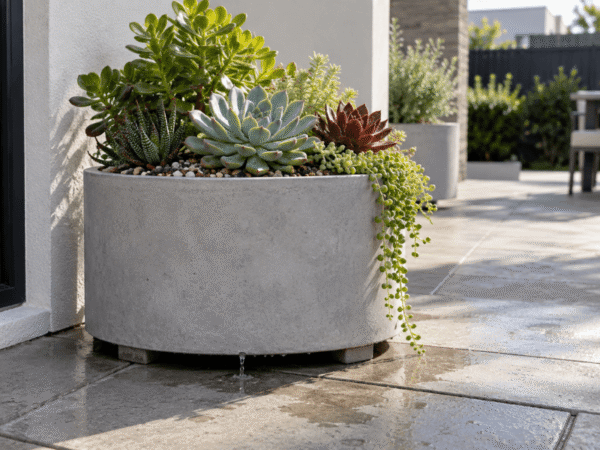
Succulents are adapted to store water in their leaves, stems or roots, so they generally perform best in free-draining conditions rather than consistently wet growing media. In containers, poor drainage can quickly create problems because excess water has nowhere to disperse, leaving the root zone saturated and increasing the risk of root rot.
Use a planter with unobstructed drainage holes and a well-draining potting mix formulated for succulents or other drought-tolerant plants. The growing medium should allow excess water to move through the root zone efficiently while still retaining enough moisture for the plant to establish. Avoid relying on a layer of gravel or pebbles at the bottom of the pot as a substitute for proper drainage, as this does not correct a poorly draining container or unsuitable potting mix.
Watering should also be adjusted to the conditions. Allow the growing medium to dry between waterings rather than applying small amounts of water frequently. Container size, exposure, temperature and plant species will all influence how quickly the mix dries, so drainage and irrigation should be considered together rather than as separate issues.
12. Be Generous with Succulents
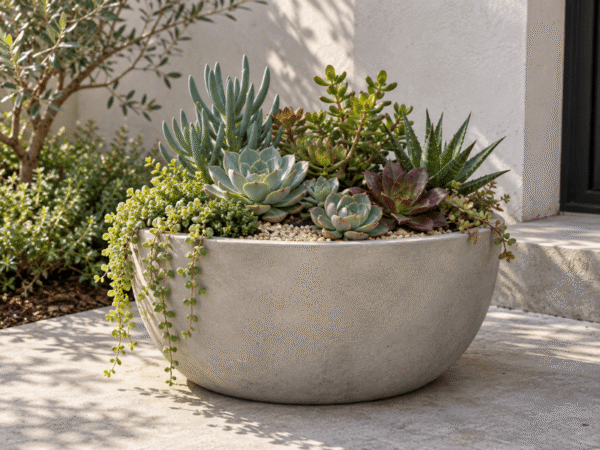
Succulents are well suited to mixed container planting because their contrasting forms, colours and textures can create a strong composition without relying on flowers. Rather than planting a single specimen in isolation, combining several compatible varieties can produce a fuller and more visually interesting arrangement.
The key is to group plants with similar growing requirements. Choose succulents that tolerate comparable light levels, watering frequency and drainage conditions, and allow enough space for each plant to develop without becoming overcrowded. A combination of upright, rosette-forming and trailing forms can create depth while still keeping the planting visually controlled.
Succulents are particularly effective in shallow bowls, low planters and feature containers where the planting can be viewed closely. The planter should still provide adequate drainage, and the growing medium should be free-draining so the composition remains healthy as it matures.
13. Fishbowl Succulents
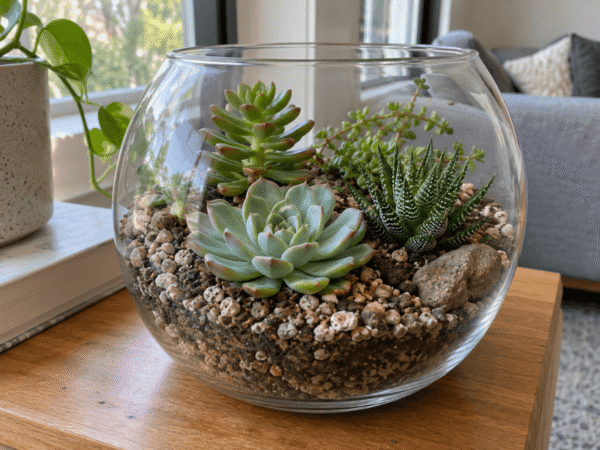
A glass fishbowl can create an unusual display for succulents, particularly where the planting is intended as a small indoor feature. The transparent sides make the growing medium part of the visual composition and can work well on shelves, tables or other areas where the container can be viewed at close range.
The main limitation is drainage. Most fishbowls do not have drainage holes, so they need to be treated differently from conventional succulent planters. Use a very free-draining growing medium, water sparingly and avoid allowing water to accumulate at the base of the container. Because glass can also intensify heat when exposed to direct sun, bright indirect light is generally more appropriate than placing the bowl in a hot window.
This type of planting is best treated as a decorative indoor arrangement rather than a low-maintenance substitute for a properly drained pot. Regularly check the moisture level and root condition so problems can be addressed before the growing medium becomes persistently wet.
14. Not Enough Space? Hang Your Plants

Hanging plants are a practical way to introduce greenery where floor space is limited, particularly on balconies, patios and compact outdoor areas. By using vertical space, planting can be added without reducing circulation or occupying areas needed for furniture and other functions. This creative approach can maximise your space and add a unique touch to your outdoor decor.
Trailing and compact species generally work best because their growth habit naturally suits an elevated position. Select the plant according to the available light and exposure, and make sure the container is large enough to support the root system without becoming excessively heavy. Drainage also needs to be considered carefully, especially where water could drip onto furniture, paving or neighbouring properties below.
The fixing point is just as important as the planting itself. Hooks, brackets and overhead supports should be capable of carrying the full saturated weight of the planter, growing medium and mature plant. In exposed locations, wind movement should also be considered so the installation remains secure and does not become a maintenance or safety issue.
15. Create a Vertical Garden Using an Old Pallet

An old wooden pallet can be repurposed into a compact vertical garden, making it useful where wall or floor space is limited. Before planting, clean the pallet thoroughly, remove any protruding nails or splinters, and sand rough surfaces so it is safer to handle and easier to finish.
Small pots can then be fixed between or against the slats using suitable brackets, ties or other secure supports. Choose lightweight containers and plants that suit the available light, such as herbs, succulents or compact flowering species. A vertical arrangement can create more planting area without taking up much ground space, which makes it especially useful for courtyards, balconies and narrow garden areas.
The pallet itself also needs to be stable. If it is fixed to a wall, use suitable anchors for the wall type and allow for the combined weight of the timber, containers, wet growing medium and mature plants. If it is freestanding, make sure it cannot tip or shift once planted.
16. Mosquito Problems? Plant Lavender

Lavender can be a useful addition to patios, balconies and outdoor seating areas where fragrance and flowering colour are both desirable. Its strong aromatic foliage is commonly associated with mosquito-repellent planting, while the flowers also add seasonal interest and help create a more pleasant setting around frequently used outdoor spaces.
For containers, lavender performs best in a sunny position with free-draining growing media. Avoid keeping the root zone constantly wet, as prolonged moisture can reduce plant health. A container with unobstructed drainage is therefore important, particularly in areas that receive regular rainfall.
Positioning lavender close to seating areas, paths or entrances also makes the fragrance more noticeable as people move past the plants. It works well as part of a broader planting scheme, particularly where a drought-tolerant, low-maintenance species is preferred.
17. Rooftop Container Gardening
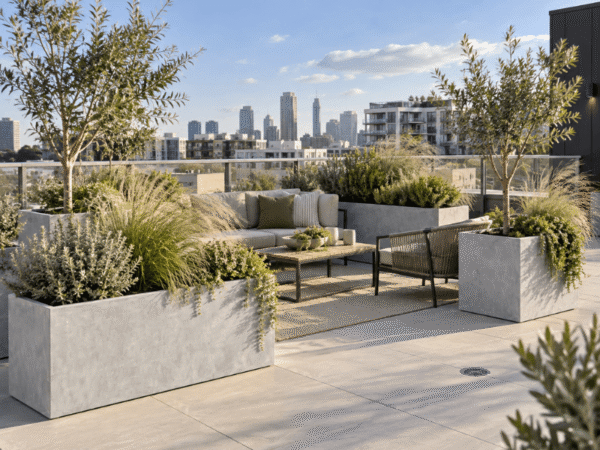
Rooftops can be transformed into productive or decorative planted spaces using containers, but the exposed conditions mean planter and plant selection needs to be considered carefully. Rooftop environments can experience stronger wind, higher temperatures and faster moisture loss than gardens at ground level, so species should be selected to suit those conditions.
Containers should provide adequate growing volume and drainage while remaining appropriate for the structural and access limitations of the site. Larger planters can offer greater moisture stability and root space, but their filled weight also needs to be considered. Irrigation may be necessary where plants are exposed to prolonged sun and wind, particularly during warmer periods.
Layout is equally important. Planters can be used to create screening, define seating areas or introduce greenery around circulation zones, but they should not obstruct drainage points or access routes. With suitable planting, irrigation and maintenance, a rooftop container garden can provide shade, colour, food production or simply a more usable outdoor environment.
Are you specifying for a large-scale commercial or high-exposure project?
Our Fibreglass Planters are engineered for maximum tensile strength and UV stability.
18. Avoid the Pot-Lifting Dilemma
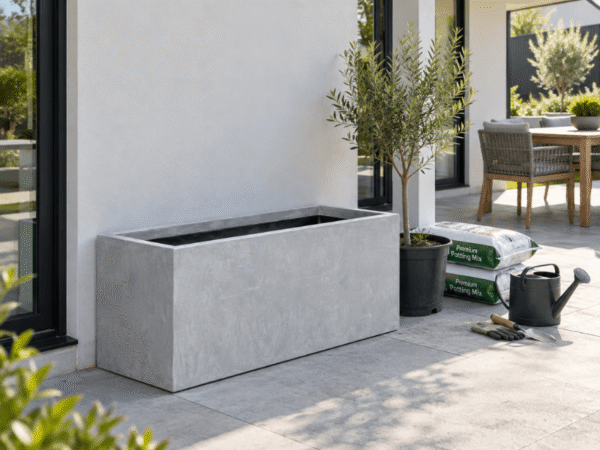
Large planters become extremely heavy once they are filled with growing media, water and mature plants. For that reason, the final location should be decided before filling and planting wherever possible, particularly for large residential or commercial containers.
Consider access, drainage, irrigation, sunlight and the relationship to surrounding furniture or architecture before installation. Moving a filled planter later may require specialist equipment and can risk damaging the planter, paving or surrounding landscape.
Where future relocation is likely, plan for it from the beginning. Lightweight planter materials, internal fill strategies or concealed castors may make movement easier, depending on the application. The simplest approach, however, is still to position the container correctly first and complete the planting in place.
19. Turn an Old Water Fountain into a Planter
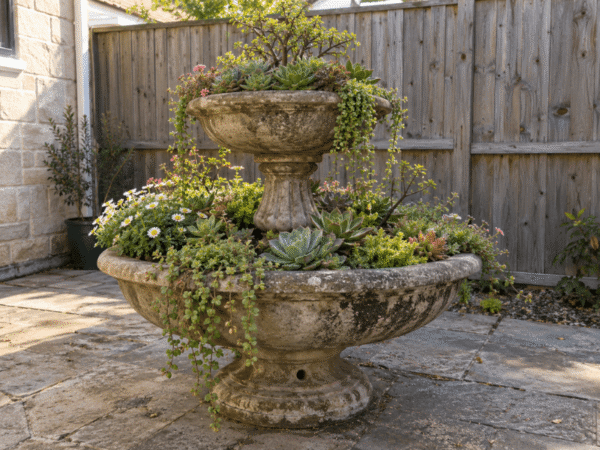
An unused water fountain can be repurposed as a distinctive planter, particularly where the original basin already provides a strong architectural form. Before planting, remove any redundant pump or plumbing components and inspect the structure for cracks, unstable sections or areas that may retain too much water.
Drainage is the main consideration. If the basin already has an outlet, make sure it remains clear and suitable for excess water to escape. Where drainage is limited, the planting and growing medium need to be selected carefully to avoid waterlogging. Succulents, herbs and compact flowering plants can all work well, depending on the depth of the basin and the amount of sunlight the area receives.
The existing shape of the fountain can also be used as part of the design. Multi-level fountains, for example, can support layered planting at different heights, while a single broad basin can be treated more like a shallow feature planter. The result can preserve the original character of the fountain while giving it a practical new use within the garden.
20. Tree Stump Planters
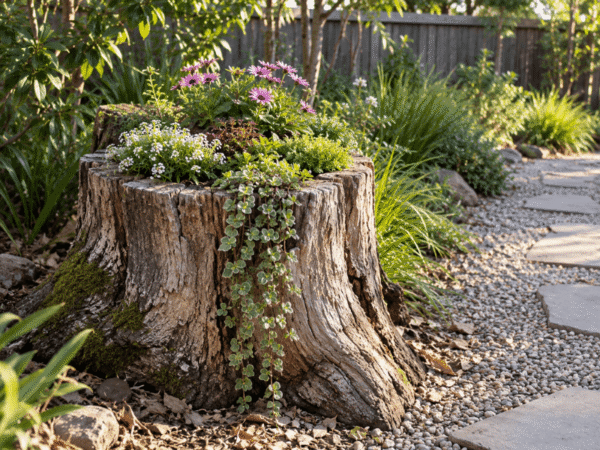
An old tree stump can be converted into a natural planter where removing the stump completely is unnecessary or impractical. Hollowing out part of the centre creates a planting pocket while retaining the texture and form of the original timber, allowing the stump to become part of the landscape rather than an unwanted remnant.
The planting cavity should be large enough to hold suitable growing media while still leaving enough timber around the edges to maintain the stump’s structure. Drainage is important, as water trapped inside the hollow can accelerate decay and create unsuitable conditions for the plant roots. Compact flowering plants, succulents, groundcovers or trailing species are generally better suited than plants requiring a deep root zone.
Because the timber will continue to weather and decompose over time, a tree stump planter should be treated as an evolving garden feature rather than a permanent container. Its irregular form works particularly well in informal, woodland or naturalistic landscapes where a conventional planter might appear too structured.
21. Repurpose an Old Boat as a Planter
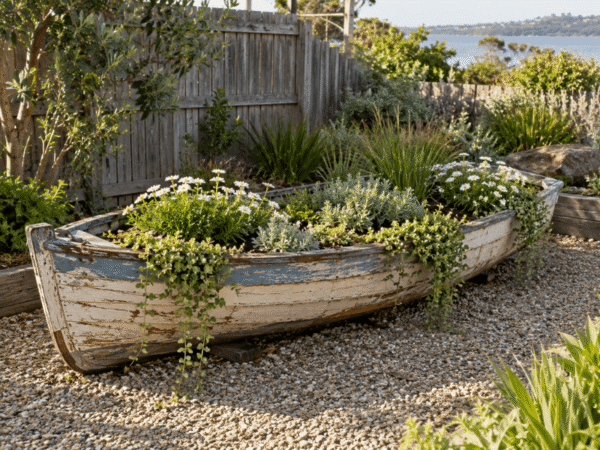
An old boat can be repurposed into a large feature planter, particularly in informal gardens, coastal settings or landscapes where a more playful focal point suits the design. Its elongated form provides generous planting space and can support a layered arrangement of flowering plants, foliage and trailing species.
Before planting, check that the hull is structurally sound and provide adequate drainage so water does not collect inside. The internal depth may also need to be adjusted with a suitable false bottom or lightweight fill layer so the entire volume does not need to be filled with growing media. This can reduce overall weight while still providing enough root depth for the selected plants.
Planting should respond to the scale of the boat rather than simply filling it with as many species as possible. Repeating a limited palette of plants generally creates a stronger result, while trailing plants along the sides can help soften the rigid outline of the hull and integrate the feature into the surrounding garden.
22. Use Ornamental Grasses for Height and Movement

Ornamental grasses are particularly useful in container planting because they introduce height, texture and movement without relying on flowers. Their upright or arching forms can add structure to a composition, while fine blades and seed heads create contrast against broader-leaved plants.
Different varieties also offer a wider colour range than standard green foliage, including tones of burgundy, gold and blue. This makes ornamental grasses useful for creating subtle colour variation while still keeping the planting restrained and architectural.
Movement is another important quality. As the foliage responds to wind, grasses can make a container arrangement feel more dynamic and less static. They work well as a feature plant in their own right or as part of a mixed planting scheme where additional vertical interest is needed.
23. Highlight Small Plants with the Right Scale
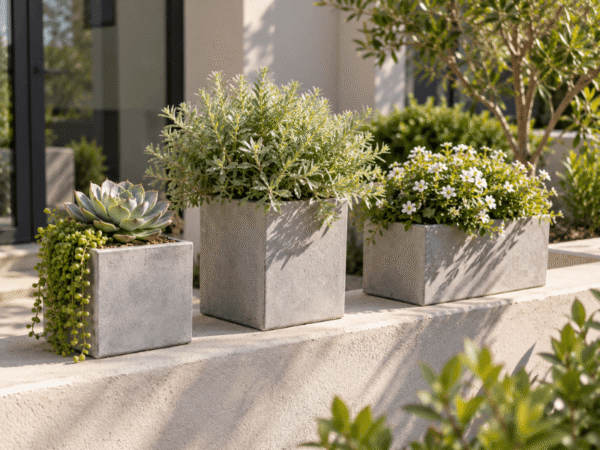
Small plants are most effective when the container and surrounding setting are scaled appropriately. Pairing a compact plant with an equally small planter helps maintain visual balance and prevents the planting from being overwhelmed by the container itself.
Placement also matters. Small plants are easier to appreciate when positioned closer to eye level, such as on shelves, low walls, tables or raised stands. This allows finer details in the foliage, flowers and overall form to be seen more clearly.
Avoid placing very small plants in oversized pots or large open spaces unless that contrast is intentional. In most cases, maintaining a proportionate relationship between the plant, planter and viewing distance produces a more coherent and visually resolved result.
24. Add Dimension by Going High
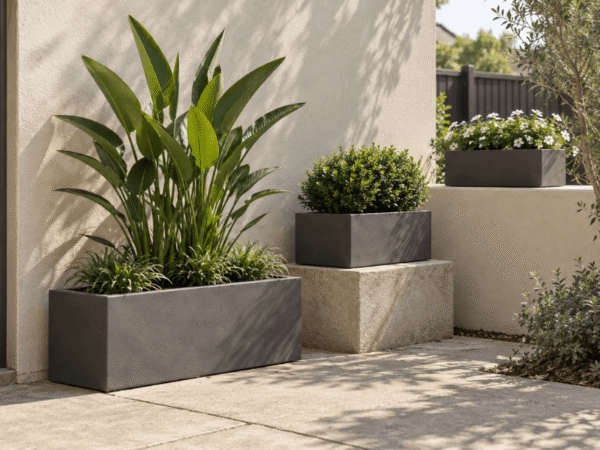
Introducing height into a planting scheme can make an otherwise flat landscape feel more layered and dynamic. Elevated planters, raised stands and vertical structures can draw the eye upward and create stronger visual transitions between planting at ground level and taller architectural elements.
This approach is particularly useful where colourful or detailed planting would otherwise be lost within a larger space. Raising selected containers can give feature plants greater prominence while also helping create a more varied composition.
The elevation method should suit the scale and character of the site. Raised beds, trellises, obelisks or grouped planters at different heights can all be used to introduce vertical interest, provided the arrangement remains stable and does not interfere with circulation or maintenance.
25. Match Plants with Similar Light Requirements
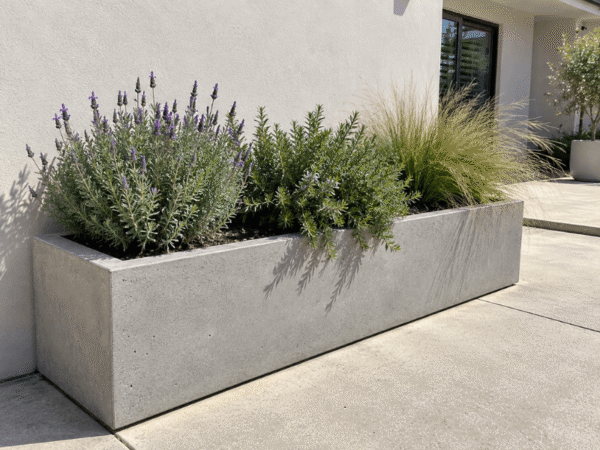
Plants sharing the same container should be selected according to compatible growing conditions, particularly their sunlight requirements. Combining full-sun, part-shade and shade-loving plants in the same arrangement can lead to uneven performance because one position is unlikely to suit all of them equally well.
Before planting, assess how much direct sun the container will receive throughout the day and choose species suited to that exposure. The same principle applies to water and nutrient requirements, as plants with very different needs can be difficult to manage successfully within one root zone.
Grouping compatible plants makes irrigation and maintenance more straightforward and helps the entire arrangement develop more evenly. The result is not only healthier planting, but also a container composition that is more likely to maintain its intended balance over time.
26. Use Native Plants
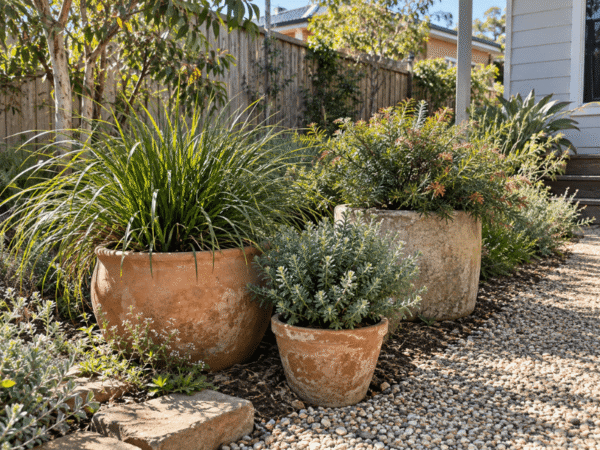
Native plants are a practical choice for container gardens because they are already adapted to local climate conditions and can often cope better with seasonal heat, rainfall patterns and periods of reduced water availability. For Australian landscapes, they can also provide a planting palette that feels naturally connected to the surrounding environment.
The best results come from choosing species that suit both the local conditions and the limitations of container growing. Consider mature size, root behaviour, sun exposure and water requirements rather than assuming every native plant will perform well in a pot. Compact shrubs, grasses, groundcovers and smaller flowering species are often easier to manage than vigorous plants with extensive root systems.
Native planting can also support local biodiversity by providing habitat or food sources for insects, birds and other wildlife. In larger residential and commercial landscapes, using suitable native species in containers can help create a more coherent transition between built areas and surrounding planting while keeping maintenance requirements relatively controlled.
27. Group Different-Sized Containers
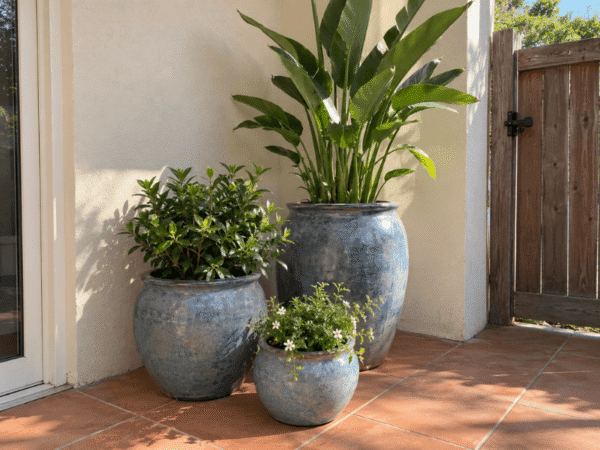
Grouping containers of different sizes is an effective way to create depth and visual hierarchy without relying on a single oversized planter. A combination of tall, medium and low containers allows the eye to move through the arrangement and can make a corner, entrance or terrace feel more deliberately designed.
The group should still have a clear relationship between its elements. Repeating a common material, finish, colour or planter shape helps different sizes read as one composition rather than as unrelated pots collected together. Planting can then reinforce that structure by varying height and foliage while maintaining a consistent overall palette.
Avoid overcrowding the group. Leaving enough space between containers makes each form easier to read and provides practical access for watering and maintenance. In larger spaces, three or more planters can create a stronger focal point, while smaller groupings are often more appropriate for balconies, patios and compact courtyards.
28. Use Deep, Dark Colours for Contrast
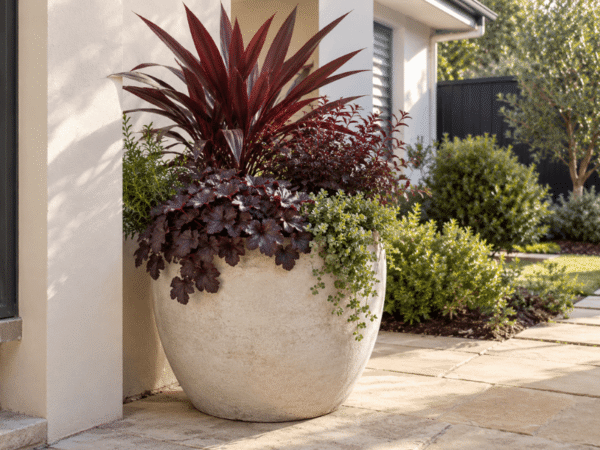
Deep foliage and flower colours such as burgundy, plum, deep red and near-black can add depth and visual weight to a container arrangement. These darker tones are particularly effective when used against lighter paving, pale walls or neutral planter finishes, where the contrast helps the planting read more clearly from a distance.
Dark colours can also be used to anchor a broader planting palette. Rather than relying on them throughout the entire arrangement, use them selectively to create focal points or to balance brighter foliage and flowers. Plants with dark leaves are especially useful because their colour can remain part of the composition even outside the flowering season.
The effect is strongest when colour is considered alongside texture and form. Broad, dark foliage will read differently from fine burgundy grasses or compact flowering plants, so varying these qualities helps prevent the arrangement from becoming visually flat or overly heavy.
29. Vertical Wall Gardens

Vertical gardens offer a brilliant solution for those with limited space. These innovative systems maximise your growing area by utilising vertical surfaces like walls or fences. Contrary to popular belief, creating a vertical garden isn’t overly complex.
Numerous DIY and pre-made systems are available, making it accessible to gardeners of all skill levels. From simple hanging planters to intricate living walls, vertical gardens not only enhance your green space but also add a unique and visually striking element to your home or outdoor area.
30. Use Planters to Create Privacy Screening
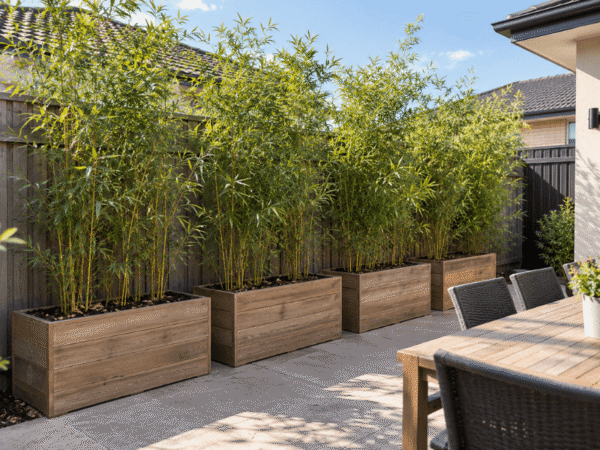
Planters can be used to create effective privacy screening where permanent walls, fences or in-ground planting are not practical. Tall troughs or a repeated row of large containers can support screening plants along balconies, terraces, courtyards, pool areas and commercial boundaries while keeping the planting flexible and visually integrated with the surrounding landscape.
The planter needs to provide enough soil volume and stability for the selected plants, particularly where taller species are exposed to wind. Consider the mature height and spread of the planting, root requirements, irrigation access and the level of screening actually required. Dense planting can provide stronger privacy, while more open species can soften views without creating a completely solid barrier.
For a more architectural result, keep the planter size, spacing and finish consistent along the screening line. This helps the planting read as part of the overall design rather than as a series of separate pots, while still allowing the greenery to provide privacy, shade and separation between adjacent spaces.
31. Place Woody Plants in Containers for More Design Options
Planting woody plants like small trees, shrubs, and even some vines in containers significantly expands design choices for patio gardens. This technique allows gardeners to cultivate plants that might be outside their typical hardiness zone, creating a more diverse and interesting landscape. Container gardening with woody plants offers flexibility, enabling easy rearrangement of the patio layout as desired. The portability of containers also simplifies protecting sensitive woody plants from harsh weather, extending their lifespan and maintaining their aesthetic appeal.
For a Mediterranean-style woody feature, Olive trees can bring silvery foliage, structure, and long-term character to patios and courtyards.

https://www.pinterest.com/pin/451626668860852274/
32. Bamboo in Containers
Introduce an oriental or Zen-like feel to your garden by incorporating bamboo. This graceful plant provides both height and depth, adding a vertical element and creating visual interest. The rustling leaves and slender stalks of bamboo create a soothing and tranquil atmosphere. However, bamboo’s rapid growth can make it invasive if planted directly in the ground. Containing bamboo in pots is essential to control its spread and prevent it from overtaking other plants. Choose a large, sturdy container with good drainage to accommodate the bamboo’s vigorous growth. Regular watering is key, especially during dry periods.

Image Credit: http://hydroponics-fine.blogspot.com/2008/01/bamboo-with-hydroponics.html
33. Overflow Bloom Effect
Create a dramatic and eye-catching display in your garden with the overflow bloom effect. This technique involves tilting a container, either by design or placement, and planting flowers so they appear to cascade or flow out from the container’s edge. The result is a visually stunning display, as if the blooms are spilling onto the surrounding area. Trailing flowers like petunias, verbena, and calibrachoa are ideal for this effect. Choose a container that complements the flower colours and consider the placement to maximise the visual impact. Ensure proper drainage to prevent water-logging, which can harm the plants.

Image Credit: http://www.diyandmag.com/anyone-can-make-these-10-beautiful-and-useful-diy-accessories-for-a-garden-outdoors/6-2/
34. Spiral Garden
Construct an attractive and functional focal point in your garden with a spiral garden. This unique design can be created using wire mesh, metal rods, and some basic construction skills. The spiral shape maximises planting space and creates a visually appealing structure. Spiral gardens are ideal for herbs, vegetables, or a mix of flowers and foliage. The tiered design allows for easy access to plants for harvesting and maintenance. Consider the size and placement of your spiral garden to ensure it fits well within your overall garden design.

Image Credit: https://www.pinterest.com/pin/319122323572740276/
35. Glowing Flower Planters
Add a touch of magic and nighttime ambiance to your garden with glowing flower planters. This simple DIY project involves coating the exterior of planters with glow-in-the-dark paint. As darkness falls, the planters emit a soft, ethereal glow, creating a captivating effect. This is perfect for illuminating pathways, highlighting focal points, or simply adding a touch of whimsy to your garden. Choose a high-quality glow-in-the-dark paint for long-lasting results. Experiment with different colours and patterns to personalise your glowing planters.

36. Vegetable Container Garden
Grow fresh, delicious vegetables even with limited space by creating a vegetable container garden. This practical and economical approach allows you to cultivate a variety of vegetables in portable planters. Container gardening offers several advantages, including easy access to your crops, control over soil conditions, and the ability to move plants to optimise sunlight exposure. Choose vegetable varieties that are well-suited for container gardening, such as tomatoes, peppers, herbs, and lettuce. Select containers of appropriate size and ensure they have adequate drainage.

37. Jewelled Planter
Add a touch of sparkle and elegance to your garden with jewelled planters. This creative project involves embellishing planters with beads, crystals, gemstones, or other sparkling accessories. Repurpose broken jewellery or other decorative items to create unique and eye-catching planters. The jewelled planters will catch the sunlight and add a touch of glamour to your outdoor space. Use a strong adhesive to secure the embellishments to the planter surface. Consider the colour scheme of your garden when choosing your jewels and embellishments.

38. Tower Planters
Maximise your gardening space and create a stunning vertical display with tower planters. This space-saving solution is ideal for small gardens, balconies, or patios. Tower planters involve stacking multiple planters vertically, creating a tiered structure that adds height and visual interest. This project may require some woodworking or construction skills, but the results are definitely worth the effort. Choose sturdy materials that can support the weight of the stacked planters and soil.

39. Seashell Planters
Bring a touch of coastal charm to your garden with seashell planters. These unique and whimsical planters are perfect for small plants, especially succulents. The natural beauty of seashells adds a touch of elegance and personality to your outdoor space. Choose seashells with a size and shape suitable for the plants you want to grow. Drill drainage holes in the bottom of the seashells to prevent water-logging. Succulents are a great choice for seashell planters due to their low water requirements.

40. Spoons for Hanging Planters
Add a touch of personality and charm to your garden by using old spoons for hanging planters. This creative DIY project involves repurposing spoons to create unique and whimsical hangers for small pots. Simply bend the handles of the spoons to create hooks and attach them to small planters. Hang the planters from fences, walls, or trees to add a touch of rustic charm to your garden. This is a fun and easy way to add a personal touch to your outdoor décor.

Image Credit: http://www.goodhousekeeping.co.uk/lifestyle/home-decoration/clever-diy-ideas-for-pretty-balcony-patio-furniture-decorating-ideas
41. Natural Shade
Create a beautiful and functional source of natural shade in your garden by training flowering vines on an umbrella-shaped wire mesh. This elegant solution provides shade while also adding colour and fragrance to your outdoor space. Choose a fast-growing, flowering vine that is well-suited to your climate. Ensure the wire mesh is sturdy enough to support the weight of the mature vine. This creates a unique and classy way to enjoy your garden even on the hottest days.

42. Rocks as Garden Markers
Add a touch of rustic charm and natural beauty to your garden while keeping your plants organised by using rocks as garden markers. This simple and eco-friendly solution involves painting, writing on, or labelling rocks to identify your plants. Use paint pens, permanent markers, or even chalk to write the plant names on the rocks. Choose rocks of various sizes and shapes for a more visually interesting display. This is a fun and easy way to personalise your garden.

43. Mini Garden in a Container
Create a whimsical and enchanting miniature world within your planters by adding miniature benches, garden tables, fences, and other small decorative elements. This creative project allows you to recreate scenes from your imagination or create a tiny fairy garden. Use your creativity to design a miniature landscape that complements your plants and adds a touch of magic to your garden. This is a fun project for both adults and children.

44. Design Your Kitchen with Herbs
Bring the freshness and flavour of herbs right into your kitchen by designing a dedicated space for growing them. This is not only aesthetically pleasing but also incredibly practical. Having fresh herbs readily available makes cooking more convenient and enjoyable. Create a small herb garden on a windowsill, countertop, or even a vertical wall. Choose herbs that you use frequently in your cooking, such as basil, mint, thyme, and rosemary.

45. Add a Relaxing Scent, Use Lavenders
Transform your garden into a tranquil oasis by planting aromatic plants like lavender. Lavender is known for its calming and relaxing scent, which can help reduce stress and create a peaceful atmosphere. Plant lavender near seating areas or pathways to enjoy its fragrance as you relax in your garden. Lavender also attracts pollinators like bees and butterflies, adding to the beauty and biodiversity of your garden.

46. Help Planters Drain Properly
Proper drainage is essential for healthy container gardening. Avoid filling the entire planter with potting soil. Instead, start with a layer of loose material like broken terra cotta pots, polystyrene chips, pebbles, or even peanuts at the bottom of the container. This layer helps improve drainage and prevents water-logging. Cover this layer with a piece of landscape fabric before adding the potting mix to prevent soil from washing through the drainage holes.

47. Tiered Plant Stand
Maximise your vertical space and create a visually appealing display with a tiered plant stand. This is a great solution if you don’t have a variety of different-sized planters. A tiered plant stand allows you to create height and dimension in your container garden. You can arrange your plants on the different tiers to create a layered composition. Choose a plant stand that is sturdy and can support the weight of your planters.

48. Terrarium
Create a miniature ecosystem in a glass container with a terrarium. Terrariums are self-sustaining miniature gardens that are easy to care for. Choose a glass container with a wide opening. Start with a layer of gravel for drainage, followed by a layer of potting soil. Plant small, slow-growing plants like ferns, succulents, mosses, and miniature orchids. You can even add small figurines to create a miniature scene.

49. Broken Pots Turned Into Beautiful Fairy Gardens
Don’t throw away broken clay flower pots! Instead, use your creativity to transform them into beautiful fairy gardens. A broken pot can be repurposed into a miniature landscape with different levels and sections. Plant small plants and add miniature fairy garden accessories to create a whimsical and enchanting display. This is a fun and creative way to upcycle broken pots and add a touch of magic to your garden. Consider different levels within the broken pot to create a more dynamic miniature landscape.

50. Vertical Pot Garden
Create a striking vertical garden display using pots, an ideal space-saving solution for small gardens, balconies, or even indoor spaces. Stack terracotta or lightweight plastic pots on top of each other, using sturdy ropes threaded through drainage holes or a central metal rod for stability. This creates a tiered, eye-catching structure that adds vertical interest and maximises planting space. Consider using a variety of pot sizes and shapes for a more dynamic look. Choose plants with trailing habits to cascade down the tiers, creating a lush, living wall.

51. Toy Car Planters
Reclaim a piece of your childhood and transform those beloved toy cars into charming miniature gardens. This whimsical approach to planting succulents adds a playful touch to any space, indoors or out. Simply hollow out the car, ensuring adequate drainage, and fill it with succulent-friendly soil. The contrast between the rigid, nostalgic form of the toy car and the soft, organic shapes of the succulents creates a visually appealing juxtaposition. Choose cars with vibrant colours or unique designs to further enhance the display. These planters make excellent conversation starters and bring a sense of fun to your gardening endeavours, proving that even the most unexpected items can find new life as beautiful plant containers.

52. Easy Way to Create a Two-Tiered Pot
Elevate your container gardening with a simple yet elegant two-tiered pot arrangement. This technique maximises vertical space and adds visual interest to your plant displays. Start by placing a larger pot as your base. Then, invert a smaller, sturdy pot and position it securely inside the larger one, creating a raised platform. This inverted pot now serves as a pedestal for a third pot, which will be placed on top. The result is a stunning tiered structure that allows you to showcase a variety of plants at different heights. This method is perfect for creating focal points in your garden or patio, adding depth and dimension to your container arrangements. It’s an easy and cost-effective way to achieve a sophisticated garden design.

Image Credit: http://www.amandakaram.com/
53. Use Dried Twigs to Spruce up Planters
Infuse your planters with a touch of rustic charm by incorporating dried twigs. These natural elements can transform ordinary containers into visually captivating displays. Simply gather fallen twigs from your yard or nearby woods, ensuring they are clean and dry. You can arrange them vertically, sticking them into the soil to create a natural fence or trellis. Alternatively, bind them together with twine or wire to form decorative structures. For an added touch of creativity, consider painting the twigs in complementary colours to match your plant palette. Dried twigs can also be used as part of a “thriller, filler, spiller” design, adding vertical interest and texture. Their organic shapes and textures provide a beautiful contrast to the smooth surfaces of pots and the vibrant colours of flowers and foliage.

Image Credit: http://www.deborahsilver.com/blog/stick-work/
54. Plant Citrus in Pots
Bring the vibrant colours and refreshing scents of citrus to your garden or patio by planting dwarf varieties in pots. These compact citrus trees, such as dwarf lemons and limes, are perfectly suited for container gardening, allowing you to enjoy fresh, homegrown fruit even in limited spaces. Citrus trees add a touch of Mediterranean flair to any setting, with their glossy green leaves and fragrant blossoms. As they mature, they will produce an abundance of bright, juicy fruits, adding both visual appeal and culinary delight to your life. Ensure your citrus trees receive plenty of sunlight and well-draining soil to thrive. With proper care, these potted citrus trees will provide you with a bountiful harvest and a delightful sensory experience.

55. Clinging Vines and Wood Structures: A No Go
Protect your wooden structures by avoiding the placement of clinging vines near them. While vines can add a lush, verdant touch to your garden, their tendency to retain moisture can lead to significant damage when they grow on wood. The constant dampness created by clinging vines can cause wood to rot, weaken, and deteriorate over time, compromising the structural integrity of fences, posts, and other wooden elements. This is especially true in humid climates or areas with frequent rainfall. Instead, opt for freestanding trellises or arbors made of metal or other weather-resistant materials to support your climbing plants. By keeping vines away from wood, you can ensure the longevity and durability of your garden structures while still enjoying the beauty of climbing plants.

56. Grow Vegetables between Your Ornamental Combinations
Maximise the productivity and aesthetic appeal of your container gardens by interplanting vegetables among your ornamental flowers and foliage. This practice not only saves space but also creates a visually appealing and functional garden. Vegetables like peppers and tomatoes, with their vibrant colours and interesting shapes, can add a unique touch to your floral arrangements. The fruits themselves become part of the aesthetic, offering a dynamic and ever-changing display. Imagine the bright red of ripe tomatoes contrasting with the soft hues of petunias or the deep green of pepper plants intermingling with the vibrant colours of marigolds. This combination provides both beauty and bounty, allowing you to enjoy fresh produce right from your own decorative containers.

Image Credit: https://bonnieplants.com/library/easy-container-combos-vegetables-and-flowers/
57. If You Do Container Gardening, Work On Site
Avoid the strain and hassle of moving heavy planters by assembling them directly on their intended site. Remember that fully filled containers can become incredibly heavy, making them difficult and potentially dangerous to relocate. By working on site, you can save yourself the backbreaking work of lifting and manoeuvring heavy pots. Choose the final location for your planter before you begin filling it with soil and plants. This will allow you to focus on creating a beautiful arrangement without worrying about the logistics of moving it later. This practical approach to container gardening ensures that you can enjoy your creations without the added stress of heavy lifting.

Image Credit: http://www.huffingtonpost.com/2013/04/13/pretty-container-gardens_n_3069509.html
58. Combine Similar Colours with Different Shapes
Achieve a harmonious and visually appealing container garden by focusing on a simple colour theme and incorporating a variety of shapes and shades. This approach creates a cohesive look while adding depth and interest to your arrangements. By sticking to a limited colour palette, such as shades of blue or pink, you can ensure that your plants complement each other beautifully. Then, introduce different shapes and textures through the foliage and flowers of your chosen plants. Tall, spiky plants can be paired with rounded, mounding varieties, while plants with large, broad leaves can be combined with those with delicate, feathery foliage. This combination of similar colours and contrasting shapes creates a visually rich and balanced container garden.

Image Credit: http://www.hgtvgardens.com/container-gardening/16-creative-container-designs
59. Contrasting Shapes and Complimentary Colours
Create a visually dynamic and captivating container garden by combining contrasting shapes with complementary colours. This approach uses the power of colour theory to draw the eye and create a sense of harmony. For example, pair purple and yellow flowers, which are complementary colours, to create a striking contrast. Similarly, use red and green, another complementary pair, to add vibrancy and depth. The contrasting shapes of the plants, such as tall, spiky flowers alongside rounded, mounding ones, add further visual interest. This combination of contrasting shapes and complementary colours creates a balanced and visually stimulating display, ensuring that your container garden becomes a focal point of your outdoor space.

Image Credit: https://www.flickr.com/photos/27839922@N02/2774932141/
60. Ensure Proper Drainage
Protect your patio or deck and promote healthy plant growth by ensuring proper drainage in your containers. Cover the drainage holes at the bottom of your pots with a mesh screen or a layer of gravel to prevent soil from washing through and clogging the holes. This simple step helps to maintain adequate drainage, preventing waterlogged soil and root rot. Proper drainage is essential for the health of your plants, as it allows excess water to escape, ensuring that the roots receive adequate oxygen. By taking this precaution, you can keep your patio or deck clean and dry while providing your plants with the optimal growing conditions.

61. Plant from the Inside Towards the Edge
Visualize crafting a captivating container garden by initiating the design from its core. Position a striking, tall plant centrally as your captivating thriller, establishing height and drama. Progress outwards, embracing the middle ground with a full, verdant filler plant, adding texture and volume. Finally, cascade spillers gracefully over the container’s edges, introducing movement and a softening effect, completing your flourishing arrangement.

62. Keep the Colour Scheme Simple
To achieve a harmonious and visually appealing container garden, embrace simplicity in your colour choices. A helpful guideline is to either select varying tones of a single colour, creating a sophisticated monochromatic effect, or opt for a complementary colour scheme. These pairings, positioned opposite each other on the color wheel, generate a vibrant yet balanced aesthetic, preventing a busy or overwhelming appearance in your plant combinations.

Image Credit: https://lindenhillgardens.com
63. Make a List Before You Go to Buy Plants
Embarking on a nursery visit? Arm yourself with a thoughtfully prepared plant shopping list. This proactive step ensures you acquire only the necessary specimens for your gardening endeavours, preventing impulsive purchases. Enhance your preparedness by also noting down alternative plant choices, providing flexibility should your primary selections be unavailable. This strategic approach streamlines your shopping experience and helps you stay within your gardening plan.

64. Sometimes Plants Die; Deal with It
It’s a truth universally acknowledged that even the greenest thumbs encounter plant demise. Don’t despair when a beloved plant succumbs; it’s a natural part of gardening. Instead of clinging to a withered specimen, occupying valuable space and draining your energy with false hope, sometimes the most nurturing act is to accept its fate. Release the dead plant, learn from the experience, and make room for new life to flourish.

65. Learn How to Tell if Your Plants Need Water
Knowing when to quench your plants’ thirst is crucial for their well-being. Ironically, more plants perish from excessive watering than from dryness. To gauge their hydration needs accurately, perform the simple finger test. Gently push your finger a couple of inches into the soil near the plant’s base. If the soil feels moist to the touch, hold off on watering. However, if it’s dry, your plant is signaling its need for a refreshing drink. This tactile approach helps prevent the soggy conditions that can lead to root rot and ultimately, plant death.

66. Avoid Awkward Plant to Pot Ratio
Creating visually appealing plant arrangements involves considering the relationship between the plant’s size and the pot it inhabits. A general guideline suggests that the total height of your plant and pot combination should approximate the height of the container itself. This often creates a balanced and harmonious aesthetic. However, remember that this is merely a starting point. Don’t hesitate to experiment and deviate from this rule to achieve unique and eye-catching displays. Sometimes, breaking the mold leads to the most captivating results!

Image Credit: http://blackthumbgardener.com/
67. Accent Stairwells with Colourful Potted Plants
Transforming outdoor stairwells into vibrant focal points is easily achieved with the strategic placement of colourful potted plants. The inherent structure of stairwells, with their sharp angles and defined lines, can sometimes feel stark. Introducing the organic shapes and lively hues of flowering plants or foliage softens this rigid geometry, infusing the space with a welcoming and visually appealing charm. Consider a variety of pot sizes and plant textures to create a dynamic and inviting transition along your stairs.

Image Credit: http://www.houzz.com/photos/6142880/Stairs-traditional-landscape-minneapolis
68. Grasses as Container Plants
While grasses, hedges, and rushes are traditionally employed as ground cover to carpet garden beds with lush foliage, their unique textural qualities and varying heights are now being celebrated in container gardening. Innovative garden designers are increasingly recognizing their potential as key components in striking container combinations. The verticality and movement that grasses bring, coupled with their diverse textures, can add drama and sophistication to potted arrangements, offering a refreshing departure from typical flowering displays.

Image Credit: http://www.gardendesign.com
69. Use Container Planters on Your Guard Railings
Elevate the aesthetic appeal and safety of your outdoor spaces by adorning guard railings with container planters. Beyond introducing vibrant colors and lush greenery, these strategically placed planters can subtly enhance safety by naturally encouraging a comfortable distance from the railing’s edge. Imagine strolling along a walkway bordered by beautiful blooms or verdant foliage, creating a visually delightful and reassuring environment. Choose sturdy containers and plants that can withstand the elements to ensure both lasting beauty and practical functionality.

Image Credit: http://hgtvhome.com
70. Know Your Plants
To truly nurture your green companions, take the time to understand their individual needs. Those seemingly insignificant tags attached to your new plants from the nursery are goldmines of essential information. Resist the urge to discard them, as they often detail crucial aspects like sunlight requirements, watering preferences, and mature size. Should those vital tags go astray, fear not! The vast resources of the internet, particularly tools like Google, offer a wealth of knowledge to help you become well-acquainted with your plants and provide them with the care they deserve to thrive in Australia’s climate.
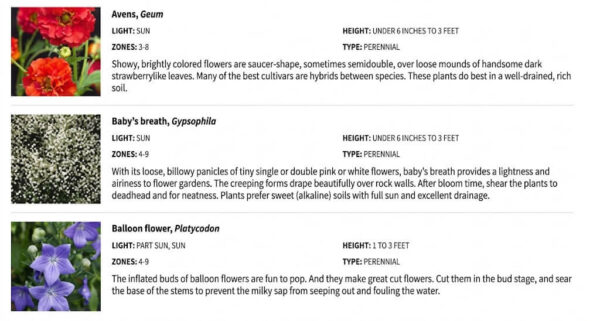
71. Know Your Plant’s Growth Habits
Understanding your plant’s natural growth habits is key to a beautiful garden. Plants are incredibly diverse; some are vertical growers that reach for the sun, while others are spreaders that expand outward. You’ll also find crawlers that hug the ground and shade lovers that stay low. A little research into what makes each plant tick will help you arrange them so they can all thrive without competing. Ignoring these habits can lead to a chaotic garden where some plants overshadow or choke out others, preventing them from reaching their full potential and creating a disorganised look.

Image Credit: http://www.countryliving.com/gardening/garden-ideas/advice/g735/container-gardens-0309/
72. Contrast Containers with the Plant Qualities
A plant’s container is a powerful tool for shaping its entire look and feel. By carefully selecting a container, you can completely change a plant’s personality and highlight its best features. A simple, understated pot can draw all the attention to an eye-catching plant with vibrant foliage or flowers, allowing its natural beauty to be the star. Conversely, a simple, minimalist plant can become a stunning centrepiece when placed in a bold, textured, or unusually shaped container. This interplay of plant and container creates visual interest and depth, transforming a simple pairing into a work of art.

Image Credit: http://www.countryliving.com/gardening/garden-ideas/advice/g211/architectural-plants-0705/
73. Soil-Free Potting Mix
When it comes to container gardening, ditching traditional garden soil is a game-changer. Garden soil is often too dense and can compact easily in a pot, which can suffocate roots. Instead, use a soil-free potting mix, which is specifically designed for containers. These mixes are typically composed of materials like peat moss, coco coir, and perlite, which provide a light and fluffy structure. This composition allows for superior aeration and excellent drainage, preventing root rot. You can add a layer of rocks at the bottom for even better drainage and to keep the drainage holes from getting clogged.

74. Clay Pots vs Plastic Pots
The choice between a clay pot and a plastic pot comes down to a balance between function and aesthetics. Plastic pots are great for moisture retention, which is ideal for plants that prefer damp soil. They are also lightweight and durable. Clay pots, on the other hand, are loved for their classic, earthy look that improves with age. The porous nature of clay allows for better air circulation and moisture evaporation, which is great for plants that don’t like “wet feet.” For the best of both worlds, plant in a plastic pot and then place it inside a larger, more decorative clay pot.

75. Start with the Greens
If you’re new to gardening, it’s a great idea to start your journey with green, leafy plants. While the allure of vibrant flowers or homegrown vegetables can be strong, leafy greens, herbs, and other foliage plants are often much more forgiving for beginners. Plants like ferns and pothos are generally more resilient and can tolerate a wider range of conditions. They are less demanding in terms of light and nutrients compared to their flowering or fruit-bearing counterparts. This allows you to build confidence and learn the fundamental skills of plant care without the pressure of a more delicate plant.

Image Credit: http://www.apartmenttherapy.com/top-10-best-easiest-herbs-to-grow-in-your-garden-and-how-to-use-them-147026
76. Get a Book on Gardening
When it comes to gardening, knowledge truly is power. While hands-on experience is invaluable, supplementing it with the wisdom of experts can accelerate your learning and prevent common pitfalls. Investing in a good gardening book is like having a seasoned mentor right at your fingertips. A well-written guide can teach you everything from the basics of soil composition and plant nutrition to advanced techniques for pruning and pest control. Reading about gardening helps you understand the “why” behind what you do, turning your efforts from guesswork into a well-informed and rewarding practice.

77. Orchids in Planters
Orchids are some of the most captivating flowers in the plant kingdom, renowned for their exotic, intricate blooms and graceful appearance. Their reputation for being challenging to care for can be intimidating, but the reward of seeing a new bloom emerge is truly unmatched. While they are often associated with complex care routines, many people are surprised to learn that orchids can be successfully grown in planters. The key is to provide them with the right growing medium, as they don’t thrive in traditional soil. Instead, they need a special mix of bark, moss, and perlite that mimics their natural environment, providing the excellent drainage and aeration their roots require.

Image Credit: http://oakstreetgardenshop.com/arrangements/
78. Garden for All the Senses
A truly exceptional garden engages more than just your sense of sight. While beautiful plants are a must, incorporating elements that appeal to other senses can transform your outdoor space into a sanctuary. Sound is a fantastic place to start. Consider hanging a few wind chimes from the branches of small trees or on a patio overhang. The gentle, melodic tinkling they produce on a breezy day can be incredibly calming and add a peaceful, serene atmosphere to your garden. Combined with fragrant plants and the tactile pleasure of running your hands through soft grasses, your garden becomes a multi-sensory retreat.

Image Credit: http://www.japanesestyle.com/wind-chime-chimes-kyoto
79. Have Something in Bloom Every Season
A vibrant garden is one that offers something to look at year-round. The secret to achieving this is to plant a variety of species that bloom in different seasons. By choosing plants with staggered blooming times, you can ensure that your garden never experiences a dull moment. For example, you might start the year with the blossoms of spring bulbs like daffodils and tulips. As spring gives way to summer, your garden can be bursting with the colours of perennials like hydrangeas. In the fall, asters and chrysanthemums can provide a beautiful display, and even in winter, you can find plants with colourful bark or berries.

80. Design Your Landscape for People-Comfort
A truly great garden isn’t just for plants—it’s for people, too. Designing your landscape with human comfort in mind will transform it into a functional and inviting extension of your home. Start by including all-weather seating so you can relax outside no matter the forecast. Add dry paving to create accessible paths and gathering spots, ensuring you can walk through the garden without getting muddy. Plan for natural climate control by providing shade in summer with strategically placed trees or a pergola. Likewise, use hedges or fences for wind protection in winter, making your space comfortable even on a chilly day.

Image Credit: http://www.avso.org/interior-design-ideas/20-stylish-ideas-for-outdoor-seating-area-a-comfortable-seating-area-in-the-garden
81. Change Your Plants Easily by Setting up a Buried Pot Garden
For gardeners who love to change their landscape with the seasons, a buried pot garden is a game-changer. This technique involves placing your potted plants directly into the ground, hiding the containers beneath the soil. This makes it incredibly easy to swap out plants when a new season arrives or a plant’s health declines, as you won’t need to dig up the roots. The method also keeps your plants neatly in their designated spots, preventing aggressive species from spreading and helping to maintain a tidy, organized garden design. It’s a simple solution for a flexible, ever-evolving landscape.

Image Credit: https://www.buzzfeed.com/peggy/easy-backyard-diys?utm_term=.vubKa38WJ#.dnqpklYBK
82. Create a Yard Environment that Welcomes Wildlife
Your garden can be more than just a beautiful space for you—it can also be a vital habitat for local wildlife. To attract different creatures, you can start with a simple bird bath to provide a source of water. You can also install a birdhouse or set out a feeder with birdseed to welcome feathered visitors. As you introduce these elements, you’ll be amazed by the different varieties of birds that visit your yard. This practice enriches your environment and provides a rewarding opportunity to observe and connect with nature right outside your door.

Image Credit: http://smallgardenideas.net/problems-with-bird-seed-in-the-garden/
83. Keep a Garden Journal
A garden journal is an invaluable tool for any gardener, regardless of experience level. It serves as a personal record of your landscape’s evolution. Be sure to include photographs to document your progress and take notes on the dynamics of your garden. Record what you planted, where you planted it, and how each plant responded to the conditions. You can also log details like watering schedules and any issues with pests or diseases. By keeping track of your gardening journey, you’ll be able to learn from your successes and mistakes, allowing you to improve your yard year after year.

84. Keep Yourself Updated on Design Trends
The world of garden design is always changing. Staying updated on the latest trends, from new plant varieties to innovative landscaping techniques, can provide fresh inspiration for your own space. A simple and effective way to do this is to subscribe to newsletters from garden design blogs. These resources often share seasonal tips, new ideas, and expert advice directly to your inbox. By staying in the loop, you can discover new ways to improve your garden, solve common problems, and keep your landscape looking modern and vibrant.

85. Enrich the Soil
The key to healthy, thriving plants lies not in what you feed them, but in what you feed their home: the soil. Rich, fertile soil provides the essential nutrients and microbial life that plants need to flourish. You can enrich your soil using either a commercial fertiliser or by creating your own compost. Compost, made from organic kitchen and yard waste, is an excellent way to improve soil structure, increase its water retention, and slowly release nutrients over time. By focusing on feeding the soil, you create a foundation that will support strong and resilient plants for years to come.

Image Credit: https://bonnieplants.com/library/feeding-the-soil-feeds-your-plants/
86. Consider Fruit Bearing Plants
Don’t limit your garden to just flowers and foliage. Fruit-bearing plants can add both beauty and bounty to your landscape. Berries are excellent candidates for container gardens, offering a dual purpose. Their delicate flowers and vibrant fruits make them visually appealing, and the reward of harvesting your own fresh berries is unmatched. Imagine picking your own blueberries for a morning stack of pancakes. From strawberries to raspberries, these plants can provide a delicious harvest while also serving as a beautiful ornamental addition to your outdoor space.

Image Credit: http://gardenofeaden.blogspot.com/2012/04/how-to-grow-blueberries.html
87. Recycle an Old Bird Cage
If you have an old bird cage that’s no longer in use, you can give it a new life as a charming and unique planter. This is a creative way to recycle and add a touch of vintage flair to your garden. To create the planter, add a layer of mesh on the sides to prevent the potting mix from washing away when you water. Then, plant some resilient species like succulents inside and let them overflow through the bars. The result is a whimsical, eye-catching piece that transforms a forgotten item into a beautiful garden feature.

Image Credit: http://www.craftberrybush.com/2014/05/how-to-plant-succulents-in-a-birdcage.html
88. Play with Textures Not Just with Colours.
While a colourful garden is beautiful, a truly compelling design relies on more than just hue. To create a garden with depth and visual interest, focus on playing with different textures. A monochromatic palette of greens can be incredibly soothing and easy on the eyes. To make this work, use plants with diverse leaf shapes, sizes, and patterns. Combine the broad, smooth leaves of hostas with the spiky fronds of a fern or the delicate blades of a grass. This variety of textures adds depth and guides the eye through the landscape, creating a sophisticated and elegant design.

89. Add a Butterfly Feeder
Attracting butterflies to your garden adds a touch of magic and enhances its natural beauty. You can easily create a do-it-yourself butterfly feeder to invite these delicate creatures into your space. To make the food, simply mix one part sugar with ten parts water. Pour this sugary mixture over a sponge or paper towel and saturate it. Butterflies are attracted to the sweet scent and will land on the sponge to feed. Placing this feeder near nectar-rich flowers will encourage even more butterfly activity, making your garden a lively and enchanting habitat.

Image Credit: http://www.growrealfood.com/dyi/make-a-homemade-butterfly-feeder-to-attract-butterflies-to-your-garden/
90. Old Tub Planter
Remodelling your bathroom and don’t know what to do with the old tub? Drag it to your yard. Drill some drain holes. Add a layer of sand and then some potting mix. Then plant away.

Image Credit: http://kisas.tumblr.com/post/30791205034
91. If Space is a Problem, Plant in Tall Pots
If there’s not a lot of space to accommodate plants, use tall planters. They won’t take as much space and you get to have plants.

92. Colander Planters
Because they’ve already got the holes for drainage, they’re perfect for potting plants. You can even paint the colander before you start planting.

Image Credit: http://blog.gardenloversclub.com/container-gardening/recycled-hanging-baskets/2/
93. Cinder Blocks Planters
Stacked cinder blocks have readymade compartments that are ideal for a variety of plants. You can stack and build them to create a wall or fit a custom space. It’s like playing Lego with plants.

Image Credit: http://www.icreativeideas.com/20-creative-uses-of-concrete-blocks-in-your-home-and-garden/
94. Tool Box Planters
If you’re aching to get a shiny new tool box, just go ahead and do it. The old one can be an ideal planter. Just don’t skip on the drain holes.

Image Credit: https://www.pinterest.com/pin/39688040441863518/
95. Flowers are Just One Part of the Design
While flowers in bloom are very attractive, most only last for a few days. There are plants that offer more than just their blooms. Consider foliage, fruits, and barks for a lasting colour and texture all year round.

96. Tire Planters
We love the new tire trends. They’re being upcycled in so many unique ways! With a little bit of creativity, you can add them to your yard, too.

Image Credit: http://www.decorcus.com/home-design/twelve-innovative-and-distinctive-backyard-tips.html
97. Light Bulb Planters
This is a great way to upcycle old light bulbs. They look good but are very fragile so handle with care.

Image Credit: http://recyclenation.com/2011/08/planters-recycle-light-bulbs
98. Teacup Planters
Need a good pot for planting herbs in your kitchen? You may not need to look too far. Get some old teacups from your cupboard and carefully drill some drain holes. Not only will it look good, it will also be a good fit for your kitchen design.

Image Credit: http://www.refinery29.com/top-pinterest-images?crlt.pid=camp.NYEnIwA4HFDc#slide-5
99. Chandelier Planter Holder
Now you won’t need to throw out that old chandelier. This will require a bit of work so just follow the instructions here.

Image Credit: http://diyshowoff.com/2013/06/11/chandelier-planter-tutorial-2/2/
100. Sitting Pretty
The lush yellows highlight the red calibrochoa. Aside from being a rail guard for the porch, the striking colour scheme in this wonderful arrangement will draw everyone’s attention.

Image Credit: http://www.midwestliving.com/garden/featured-gardens/container-gardens-with-pizzazz/?page=2
101. Bigger Pots are Better.
Large containers hold more soil so they retain moisture better. More room also means bigger root systems. Bigger root systems mean healthier and happier plants. Also, small pots are especially not recommended for large spaces so don’t be afraid to go big.

102. Choose the Right Container for the Job
Terra cotta looks great but they break easily. Granite pots are durable but very heavy. Fiberglass pots are lightweight and look great in modern designs. For a deeper comparison, explore our guide to choosing the right garden pot material for commercial and large residential spaces.

103. Greening Your Patio through Container Gardening
To many people, their patio is a place for some R&R. For some, it is a place for receiving guests and holding parties. When greening your patio, container gardening is the perfect solution.

104. Give Hand Pollination a Try
For gardens at higher elevations like in a high rise building, pollination might be a problem due to lack of insect traffic. To free up enough pollen to be effective, you can use a brush, cotton buds or just give your plants a good shake.

Image Credit: http://www.gardeningknowhow.com/edible/fruits/lime/hand-pollinating-limes.htm
105. Bring Ceramic and Terra Cotta Pots Indoors During Winter
Ceramic and terra cotta pots that have soil in them can crack or break when left outside during winter. Keep them indoors in your tool shed or garage so you can use them again.

106. Love Salsa? Grow It in Containers
If you love salsa, then you must know that you can easily grow salsa in containers. Well, not salsa in the literal sense, but the ingredients you need for it. Learn how companion planting can boost your garden’s yield, and bring out the chips, please!

107. Clear Container Water Garden
Container gardening is also for aquatic plants such as the lotus plant. A transparent container will look good. The fish in the container is not just for aesthetic purposes though. It can prevent mosquitoes from laying eggs on the stagnant water.

108. Keep the Mints Within Reach
Mint can be invasive so keeping them in pots is ideal. Fresh mint leaves make a refreshing garnish for drinks on a hot summer day so keeping potted mint plants within arm’s reach is a real treat.

109. The Hanging Ball of Lush Succulents
Succulents are beautiful in their own right. However they grow so low that they are most of the time underappreciated. Bringing them within eye level like this arrangement captures the viewer’s interest easily.

110. Feed Your Roses with Slow Release Fertilizer
If you are fond of roses, you should know that in order to continue blooming they need a constant supply of nutrients in the soil. Put in some slow release fertilizer to keep them in bloom.

111. Use Eggshells as Fertilizer
Eggshells are high in calcium which is good for plants too. When you crush eggshells, its jagged edges become good deterrents to pests like slugs and caterpillars.

Image Credit: http://thechicsite.com/2014/06/03/eggshells-garden/
112. Plants Don’t Always Have to Start With Seeds
Many plants grow from cuttings like roses for example. If you see a plant that you like whether it’s from the neighbour’s garden or a park, you can simply ask for a cutting. Just don’t go cutting without asking for permission first. Stick it in a pot and it will grow roots. It’s like magic.

113. Choose Drought-Resistant Plants for Drought-Prone Areas
If you live in an area that gets the occasional dry spell, choose plants that are resistant to droughts. Your local nursery should be able to provide you with all the information you need.

114. Winter Season Gardening
Roots of potted plants are sensitive to freezing temperatures. This is because the roots are above the ground. You can place them inside a shed to mitigate the freezing temperatures or you can invest in frost-resistant pots.

115. Use Drip Irrigation for Stress-Free Watering
The amount of water your plants needs depends on many variables. We suggest a drip irrigation system to automate your watering without wasting water. You can read more about drip irrigation in this post.

116. Reuse Bottles as Watering Globes
Before you go on a somewhat long vacation, inserting a watering globe will ensure your plants are well watered for a longer period. Note that this is only convenient for container plants that like to be watered regularly. You can use any bottle for this one.

Image Credit: http://wallacegardens.tumblr.com/search/wine+bottle
117. Deadheading
Cut off the wilted blooms to encourage new flowers. This process is known as deadheading.

118. How to Deal with Garden Pests
Ideally, you should have taken measures to ward off pests. When they do get in your garden, you should actively bury infected leaves, remove the pest habitat, and plant pest resistant plants.

119. When Using Pesticides Always Read the Label
Reading the labels on pesticides and following them ensures that you don’t accidentally kill off your plants and other beneficial bugs.

120. Use Trough Planters as Barriers for Pedestrians
Trough planters are effective barriers for separating spaces. In the image below, IOTA’s granite trough planters are being used to separate the parking area from the walkway.

121. Pinch Top of New Stems for a Bushier Plant
If you don’t want a leggy plant, pinch out the growing tip of each stem back to a node using your thumb and forefinger. This encourages side shoots to grow on other leaf nodes. You can do this a couple of times to encourage more growth, and later on, more flowers.

Image Credit: http://backyardpatch.blogspot.com/2013/05/pinch-your-herbs.html
122. Prune Regularly
Aside from aesthetics reasons, pruning also helps promote growth of new branches. So prune regularly and use a proper pruner. You run the risk of having plant disease if you don’t prune properly.

123. Avoid Moving Your Plants Too Much
Plants need time to adjust to their surroundings so avoid moving them too much. Moving your plants too much can cause them to get stressed and eventually die out.

Image Credit: http://kathrynwilking.com/services/staging-and-redesign/
124. Bring Out the Artist in You; Paint Those Planters
If you’re feeling some artistic inspiration, try painting those pots. You can dull paint plastic pots and turn them into something eye-catching. You can even paint terra cotta pots but this will require some prep work. You have to make sure the terra cotta pots are clean before painting them. For an extra smooth finish, we would recommend sanding them first.

Image Credit: http://paintedseasons.com/flowerpots.html
125. Enjoy Gardening
All these tips will be for naught if you don’t really enjoy gardening. Gardening should be a fun activity so enjoy and have fun. Garden with a smile on your face.
For more practical advice, visit our garden pot and planter guides.

I love most of these ideas. Thanks for sharing. Would be nice if the names of plants were given. Also, I am curious about planting in wine barrels. All the tomatoes and bell peppers in our wine barrels didn’t make it.
This was so helpful thank you so much😊
Great ideas! I’m excited to get started 😄😊
A wonderful display of colourful container planters