


Let’s be honest—pruning can feel a bit intimidating. For many gardeners, especially those growing plants in pots, the thought of taking secateurs to a favourite shrub or flowering plant brings a wave of anxiety. What if you cut too much? What if you ruin next season’s growth?
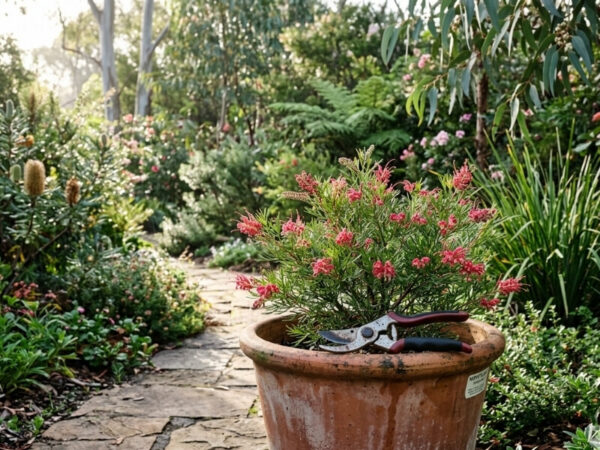
Here’s the good news: pruning potted plants isn’t nearly as scary as it seems. In fact, once you understand a few simple principles, you’ll wonder why you didn’t start sooner. Pruning encourages healthy growth, boosts flowering, and keeps your container plants looking their absolute best. Whether you’re tending a balcony herb garden, a patio lemon tree, or a collection of indoor foliage plants, learning to prune with confidence is one of the most rewarding skills you can develop.
As part of our Pot Planting and Care Resource Hub, this guide walks through everything you need to know about pruning potted plants—from essential tools and basic techniques to how your choice of planter impacts growth. Let’s dig in.
Why Prune Potted Plants at All?
Plants in containers live in a very different world to those in the ground. Their roots are confined, their access to nutrients is limited, and they often grow more compactly. Regular pruning helps manage this unique environment by:
Encouraging bushier growth – Instead of one long, leggy stem, pruning promotes side shoots and a fuller shape.
Removing dead or diseased material – This stops problems from spreading and keeps the plant vigorous.
Improving air circulation – Good airflow reduces the risk of fungal diseases, which can be a real issue in humid Australian conditions.
Boosting flowers and fruit – Many plants flower on new growth, so a good prune can mean a much more impressive display.
Keeping size under control – In a pot, you don’t want a monster. Pruning keeps things manageable.
Must-Have Pruning Tools for Potted Plants
You don’t need a shed full of expensive gear. For most potted plants, a few quality tools will do the job beautifully. Here’s what we recommend.
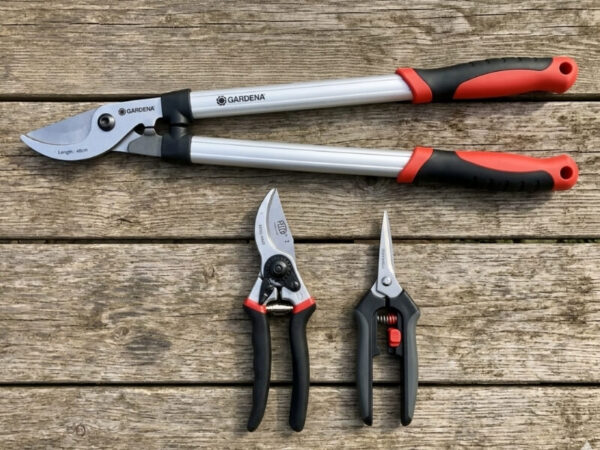
- Pruning Shears (Secateurs): These are your everyday workhorses. Perfect for cutting stems, small branches, and deadheading flowers. Look for a pair that fits comfortably in your hand and can handle branches up to about ¾ of an inch (roughly 2 cm) thick. Bypass secateurs are generally best for live growth because they make a clean, precise cut.
- Snips (Fine Pruning Scissors): For delicate work—think herbs, small indoor plants, or deadheading tiny flowers—a pair of sharp snips is invaluable. They give you excellent control and are less likely to crush soft stems.
- Loppers: For larger potted plants like dwarf citrus, olive trees, or mature roses, you might occasionally need loppers. These handle branches up to about 2½ inches (6 cm) thick. The long handles give you extra leverage without straining your hands.
- Pruning Saw (Small): Rarely needed for most potted plants, but if you’re growing a small tree in a large pot, a compact pruning saw can help remove thicker branches cleanly. Look for one with a curved blade designed for live wood.
Keeping Tools Clean and Sharp: This is crucial. Dirty, blunt tools spread disease and crush stems instead of cutting them. After each use, wipe your tools down. Give them a sharpen every few months, and disinfect with methylated spirits between plants—especially if you’ve been cutting anything diseased.
Basic Pruning Techniques for Pots
You don’t need a horticulture degree to prune well. Two simple techniques will cover most of what you’ll ever need to do.
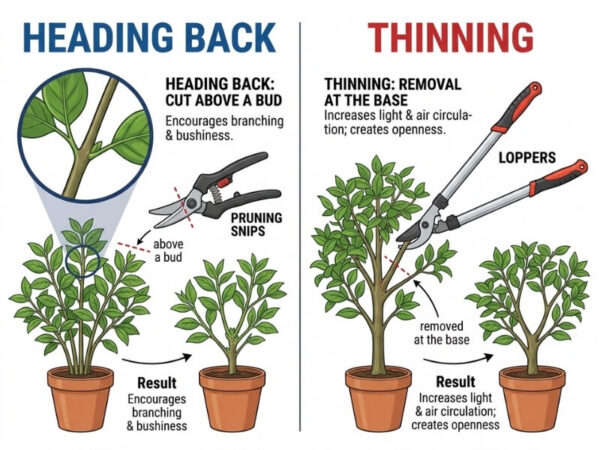
Heading Back
Heading back means cutting a shoot or branch back to a bud. This encourages the plant to produce multiple new shoots from just below the cut. The result? A denser, bushier, sturdier plant.
- How to do it: Make your cut about ¼ inch (6 mm) above a healthy outward-facing bud. Angle the cut away from the bud so water doesn’t pool on it.
- Best for: Herbs like basil and mint, flowering annuals, indoor plants getting leggy, and young shrubs you want to bulk up.
Thinning
Thinning removes entire branches or stems right back to their point of origin. This opens up the plant, improves air circulation, and lets light reach the interior.
- How to do it: Identify the branch you want to remove and cut it flush with the main stem or trunk—but without damaging the bark collar (the slightly swollen ring where branch meets trunk).
- Best for: Overgrown potted trees, roses, and any plant that feels too crowded or tangled.
When to Use Each Technique
- Use heading back when you want more compact, dense growth.
- Use thinning when you want a more open, airy structure.
- Many pruning sessions will use a mix of both. Start with thinning to remove anything dead or crossing, then use heading back to shape the remaining growth.
Timing Your Pruning: When to Cut
One of the most common questions new gardeners ask is: When should I prune? The answer depends on your plant, but here’s a general guide.
- Winter Pruning (Dormant Season): For deciduous plants that lose their leaves over winter—like some fruit trees, wisteria, or hydrangeas—winter is the time for major structural pruning. Without leaves in the way, you can clearly see the branch structure. This is when you’ll do your heaviest cuts.
- Spring and Summer Pruning: Evergreen plants, many tropicals, and indoor plants respond well to light pruning in spring as they start actively growing. For plants that flower on new growth (like lantana or abelia), prune in late winter or early spring before flowering begins.
- After Flowering: For spring-flowering shrubs (like azaleas or camellias), prune immediately after they finish flowering. If you wait too long, you’ll cut off next year’s flower buds.
- Dead, Damaged, or Diseased Material: This can be removed any time of year. Don’t wait for the “right season” to take out a broken branch or spotted leaf—do it straight away.
Other Essential Pruning Tips
- Over the years, I’ve learned a few lessons that make all the difference. Here are the most important ones.
- Prune weak plants hard, vigorous plants lightly. A struggling plant needs energy to recover, so a hard prune can actually help by reducing demand on the roots. A healthy, vigorous plant only needs light shaping.
- Always cut with a reason. Never prune just for the sake of it. Ask yourself: Why am I making this cut? What do I want to happen as a result?
- Never leave ragged cuts. Ragged, torn wounds take longer to heal and invite disease. Use sharp tools and cut cleanly.
- Don’t use hedge shears for general pruning. Hedge shears are for shaping hedges only. Using them on individual plants creates a blunt, bruised mess of torn stems. Use secateurs or snips for precise cuts.
- Don’t do all your pruning at once. If a plant needs a lot of work, spread it over a few weeks or even across two seasons. Removing too much foliage at once can shock the plant.
- Pruning won’t fix underlying problems. If your plant is struggling because it’s root-bound, in poor potting mix, or getting too little light, pruning won’t solve it. Fix the growing conditions first, then prune.
Choosing the Right Planter for Pruned Plants
Now, here’s something many pruning guides overlook: your choice of planter directly affects how and when you need to prune. The two work hand in hand. A good planter supports healthy growth, which in turn reduces problematic pruning. A poor planter can create all sorts of headaches.
How Planter Size Affects Pruning
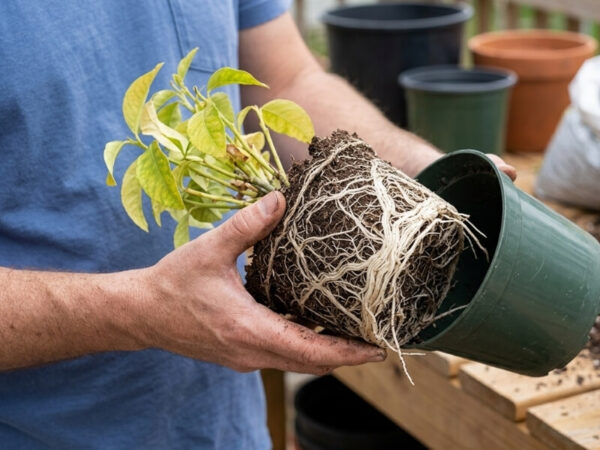
A pot that’s too small will restrict root growth, causing the plant to become root-bound. What does that mean for pruning? You’ll notice stunted top growth, yellowing leaves, and a plant that seems to need constant watering. No amount of pruning will fix a root-bound plant. You’ll need to either repot into a larger container or, if you want to keep the plant small, prune the roots as well as the foliage.
A pot that’s too large, on the other hand, holds excess moisture around the roots. This leads to weak, leggy growth—and more pruning work for you. The goal is a pot roughly 2 to 4 inches (5–10 cm) wider than the current root ball.
Material Matters: Terracotta, Plastic, Metal, and Timber
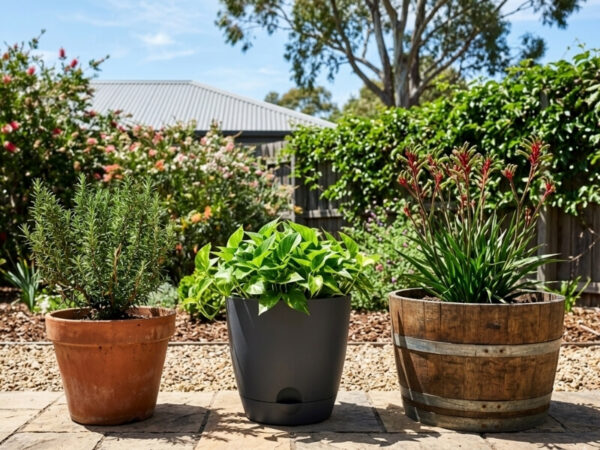
- Terracotta (clay) pots are porous, so they dry out faster. Plants in terracotta often grow more slowly and compactly, which means less pruning overall. The right pot material can affect moisture, growth, and maintenance. However, in hot Australian summers, you’ll need to water more frequently.
- Plastic and fibreglass pots retain moisture well. Plants grow faster and may need more frequent pruning to keep them in check. They’re lightweight and easy to move, which is handy when you’re working on a plant from all angles.
- Metal planters look stunning but can heat up dramatically in direct sun, cooking roots and stressing the plant. Stressed plants often send out weak, spindly growth that requires corrective pruning.
- Timber planters (like old wine barrels) offer good insulation and drainage. They’re excellent for larger potted specimens. Just avoid treated timber that may leach chemicals into the soil.
Drainage: The Non-Negotiable Feature
No matter how beautiful a planter looks, if it doesn’t have drainage holes, think twice. Poor drainage leads to root rot, which manifests as wilting, yellowing, and dieback. You might mistake this for a pruning problem, but it’s actually a planter problem. Always choose pots with adequate drainage holes, and use saucers to protect your surfaces.
Matching Planter Shape to Pruning Needs
- Tall, narrow planters encourage upward growth. You’ll do more heading back to keep plants bushy rather than leggy.
- Wide, shallow planters encourage spreading growth. You’ll do more thinning to prevent overcrowding.
- Standard nursery pots (wider than tall) are the most balanced option for most potted plants.
When to Repot Instead of Prune
Sometimes a plant looks overgrown not because it needs pruning, but because it’s outgrown its pot. If you see roots circling the bottom of the container or poking out of drainage holes, it’s time to repot. After repotting into a slightly larger planter, you may find you need to do very little top pruning at all.
Common Mistakes to Avoid
Even experienced gardeners make these from time to time. Watch out for:
- Pruning at the wrong time and accidentally removing flower buds.
- Cutting too close to a bud (which damages it) or too far above a bud (which leaves a dead stub).
- Using blunt tools that crush stems instead of cutting cleanly.
- Over-pruning – as a rule of thumb, never remove more than about 25–30% of a plant’s foliage at once.
- Ignoring the planter – pruning can’t fix a pot that’s too small, has no drainage, or is cooking the roots in the sun.
Final Words
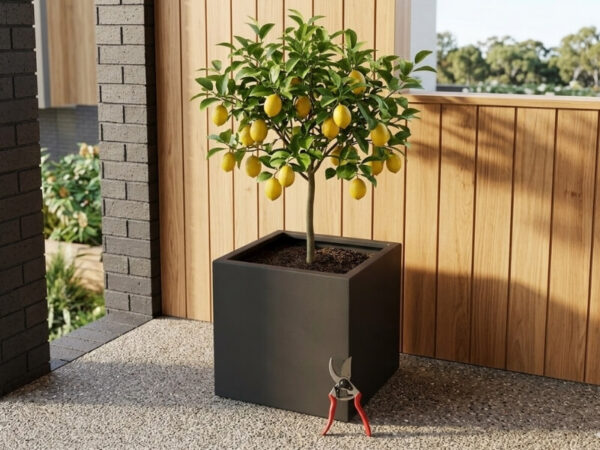
Pruning doesn’t have to be terrifying. Most plants are remarkably forgiving—make a mistake, and they’ll usually grow back just fine. Start simple: grab your secateurs, make a few thoughtful cuts, and watch how your plant responds. You’ll learn more by doing than from any guide.
The goal is to create good structure. Get that right, and you’ll be rewarded with more flowers, better fruit, and healthier plants. Pair your pruning with the right planter—proper drainage, correct size, suitable material—and you’re set for long-term success.
Happy pruning, and happy growing.
I have attempted pruning with varying degrees of success. I often kill my lavender plants 😣
I’m not sure what I doing wrong.
Hi Tara, I wouldn’t be able to tell for sure what’s happening in your case, but here are a few ideas:
• Don’t cut into the woody stem – Lavender won’t regenerate from old wood the way other plants do. Keep some green growth on each stem when you prune.
• Timing matters – The best time to prune is right after it finishes flowering, or lightly in early spring before new growth appears. Avoid pruning in autumn or during cold spells.
• Don’t over-prune – A light trim is usually plenty (about a third of the plant). The goal is to keep it tidy and encourage bushy growth, not to cut it back drastically.
Let me know if those help.