

Extra Large Planters Blog Category
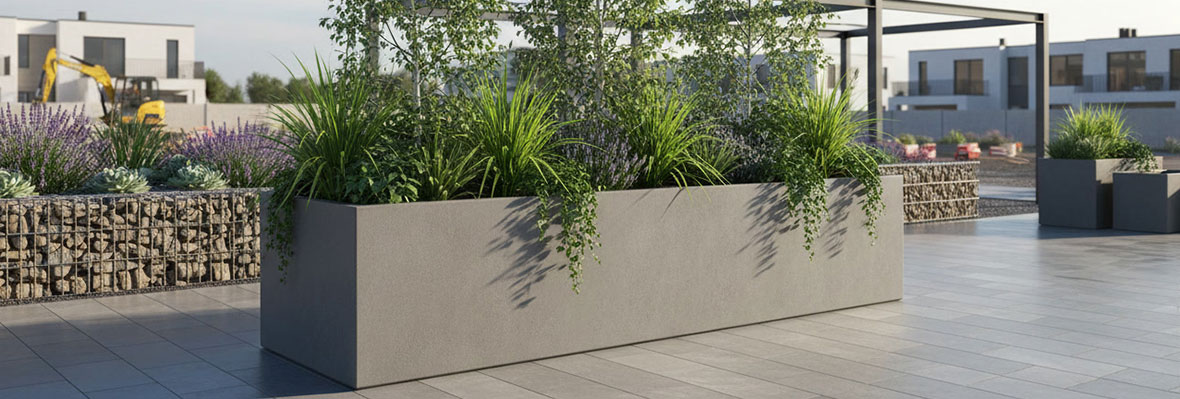
Scaling Up Your Landscape: Expert Advice on Choosing and Managing Extra Large Planters
Designing with extra large outdoor planters opens up opportunities that smaller containers simply cannot provide. Oversized planter pots allow landscapes to create stronger visual impact, support larger plant species, and introduce greenery into spaces where in-ground planting is not possible. From residential courtyards and rooftop terraces to large commercial developments, these statement vessels can transform the way a space is experienced.
However, working with large planter pots requires careful planning. Factors such as soil depth, drainage systems, structural weight loads, irrigation needs, and plant selection become significantly more important as container size increases. Without the right approach, large containers can become difficult to maintain, inefficient for plant growth, or even problematic for the structures they sit on.
Our Extra Large Planter Guides bring together practical knowledge from real projects and industry experience to help you plan, specify, and maintain large-scale container plantings successfully.
Creating Visual Impact with Large Planters
One of the biggest advantages of oversized planters is their ability to create immediate visual structure within a landscape. Large pots can define entryways, frame architectural features, divide open spaces, or anchor seating areas in both residential and commercial settings.
If you’re looking for inspiration on how large containers can transform outdoor spaces with minimal effort, explore our guide on using extra large outdoor planter pots to enhance garden design. It covers practical ways to introduce statement planters into gardens, courtyards, and patios while maintaining balance with surrounding planting.
Large Planters in Commercial and Public Projects
In commercial environments such as hotels, office complexes, retail precincts, and hospitality venues, large planters are often used as flexible landscape elements. They can soften hard architectural surfaces, introduce greenery into paved areas, and provide modular planting solutions where permanent landscaping is impractical.
Designing with large pots in commercial settings also introduces additional considerations, including durability, public safety, maintenance access, and long-term plant performance. Our article on design ideas for using large pots in commercial projects explores how designers and developers use oversized containers to shape spaces, guide pedestrian movement, and elevate the overall aesthetic of large developments.
Large Planters in Urban Landscape Architecture
As cities become denser, landscape architects are increasingly using large-scale planter systems to introduce greenery into urban environments. Rooftop gardens, podium landscapes, public plazas, and streetscapes often rely on large containers to support trees and deep-rooted plants where traditional planting beds are not available.
Thoughtfully designed planter installations can help improve urban microclimates, soften built environments, and create more welcoming public spaces. Our guide on large planter design in professional landscape architecture explores how oversized containers are integrated into modern urban design strategies and how they contribute to sustainable city landscapes.
Practical Guidance for Designing with Extra Large Planters
Beyond aesthetics, successful large-scale planting depends on the technical details. Throughout our guides, we explore essential topics such as:
-
Choosing the right planter size and soil depth for different plant types
-
Managing drainage and water retention in deep containers
-
Calculating soil volume and weight loads for balconies and rooftops
-
Selecting plant species that thrive in large pots
-
Maintaining the structural integrity and longevity of large vessels
Whether you are specifying a single statement planter or designing an entire container landscape, these resources will help ensure your planting scheme is both visually impressive and built to perform over time.
Explore the Full Range of Extra Large Planters
If you’re ready to bring large-scale planting into your project, explore our range of extra large outdoor planters designed for residential gardens, commercial developments, and architectural landscapes.
Shop the Extra Large Collection
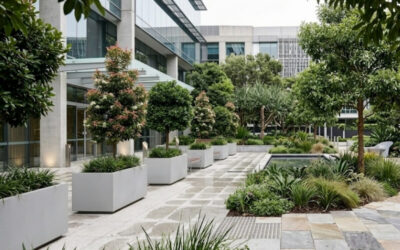
The Best Native Australian Trees for Pots and Planters
There's a particular logic to choosing native Australian trees for container planting that goes beyond aesthetics. These are plants that evolved under our conditions — the brutal summer heat, the long dry spells, the high UV intensity — and many of them require far...

Specifier’s Guide to Weight Analysis for Extra Large Planters
For landscape architects, structural engineers, and specifiers working on Australian projects—from rooftop hospitality venues in Melbourne to coastal developments in Queensland—the mass of an extra large planter is rarely just the planter itself. The critical design...
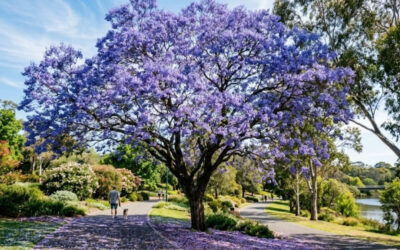
Growing Jacaranda Trees in Pots – A Jewel In The Landscape
There are trees you admire from a distance, and then there is the Jacaranda — the tree that makes you stop walking. That cloud of blue-violet suspended against an October sky, the fern-like canopy raining spent blossoms onto the footpath below, the faint sweetness...

DIY Tutorial: How to Add Castor Wheels to an Extra-Large Planter
Transform your heavy planters into flexible, movable features with this professional-grade installation guide on adding castor wheels to an extra-large planter. This tutorial is a specialized module within our resource hub for working with Extra-Large pots and...
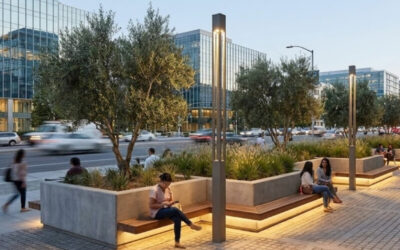
Security by Design: Using Heavy Planters for Vehicle Mitigation
In the evolving landscape of our cities and public spaces, a critical yet often delicate design challenge emerges: how do we protect people from vehicle-borne threats without turning our plazas, forecourts, and streetscapes into fortressed, unwelcoming environments?...

The Invisible Engineering: Solving Drainage in Large Commercial Planters
Large planters are more than just decorative vessels for commercial landscaping and architectural design; they are complex micro-environments. Their success hinges on an often-overlooked principle: physics-driven drainage. A failure to master the movement of water...
No Results Found
The page you requested could not be found. Try refining your search, or use the navigation above to locate the post.