


Many of our clients come to us looking for solutions for using large planters in their commercial car parks. Looking to tame these, often vast expanses of asphalt and concrete, are a necessary component of modern landscaping.
Large garden pot containers can yield a wealth of benefits, enhancing aesthetics, improving environmental performance, and ultimately creating a more positive experience for users.
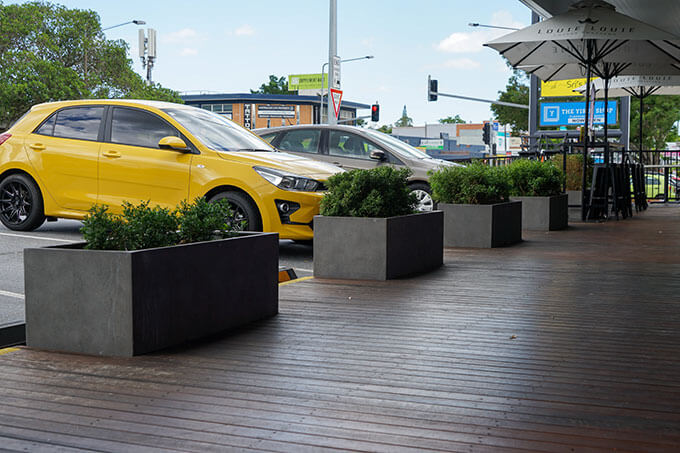
For more posts similar to this one, check out our Garden Pot & Planter Design resource hub.
The Aesthetic Uplift: From Grey to Green
The most immediate and noticeable impact of planters in a parking lot is the visual improvement. The introduction of greenery breaks up the monotonous expanse of grey, adding colour, texture, and life to what is often a visually sterile space. Strategically placed planters can soften harsh architectural lines, screen unsightly service areas, and create focal points that enhance the overall aesthetic appeal of the commercial property. More broadly, garden planters offer a flexible way to soften built environments, define spaces, and introduce greenery where in-ground planting is not practical.
A diverse range of plant life can thrive in planters, from vibrant flowering shrubs and ornamental grasses to small trees providing welcome shade. The choice of plant species should consider factors such as drought tolerance, low maintenance requirements, and visual appeal throughout the year. Native Australian plants are often an excellent choice, as they are well-adapted to the local conditions and can attract native wildlife, further enhancing the ecological value of the space.
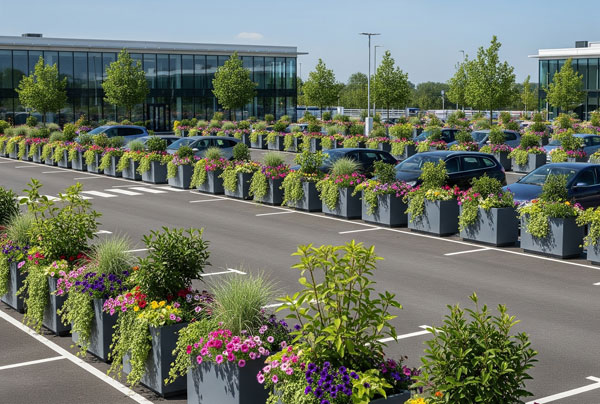
Well-designed planter arrangements can also contribute to wayfinding within the parking lot. This same approach to wayfinding and traffic flow can be applied across larger public spaces where pedestrians and vehicles need clearer visual guidance. Distinctive planting schemes or the strategic placement of taller planters can help drivers and pedestrians orient themselves and locate their vehicles more easily. This is particularly beneficial in large or multi-level parking facilities.
PROJECT SPOTLIGHT
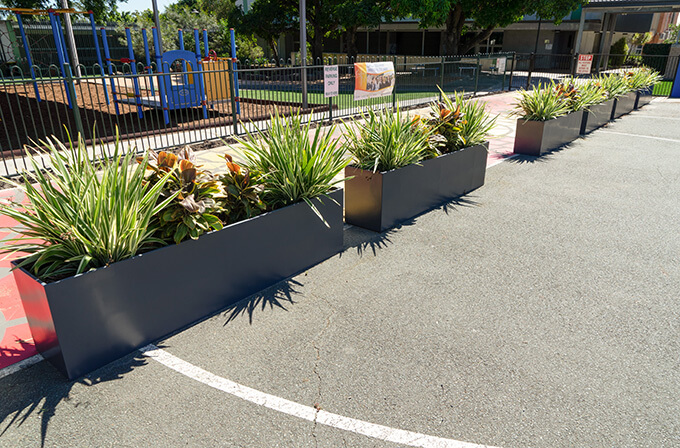
These sleek, dark planters effectively delineate the walkway from the parking area in this Brisbane school setting, significantly enhancing safety. This thoughtful separation prevents pedestrians from inadvertently straying into the vehicle zone, a crucial measure to protect both adults and children.
Conversely, the planters also safeguard parked vehicles from accidental bumps or scrapes from passersby. Beyond the walkway, a children’s playground is visible, and parents will appreciate the added layer of protection these planters provide, acting as a visual and physical barrier.
Planted with low-lying shrubs, the planters introduce a consistent touch of green throughout the school grounds, complementing the existing tall trees and thriving in Brisbane’s climate. This demonstrates a practical solution for incorporating vegetation into paved areas where traditional planting is not feasible.
Environmental Benefits: Cooling and Filtering.
Beyond aesthetics, planters offer significant environmental advantages in car parking areas. One of these is the urban heat island effect, where large expanses of dark surfaces absorb and retain heat, leading to higher temperatures. Vegetation in planters can help mitigate this effect through evapotranspiration, the process by which plants release water vapor into the air, which has a cooling effect. The shade provided by larger plants and small trees in substantial planters can also directly reduce the surface temperature of the surrounding pavement.
Furthermore, the vegetation in planters contributes to improved air quality. Plants absorb carbon dioxide and release oxygen through photosynthesis. They can also filter out airborne pollutants such as dust and particulate matter, which are often elevated in areas with high vehicle traffic. This is particularly important in densely populated urban areas like Brisbane, where air quality is a significant public health concern.
PROJECT SPOTLIGHT
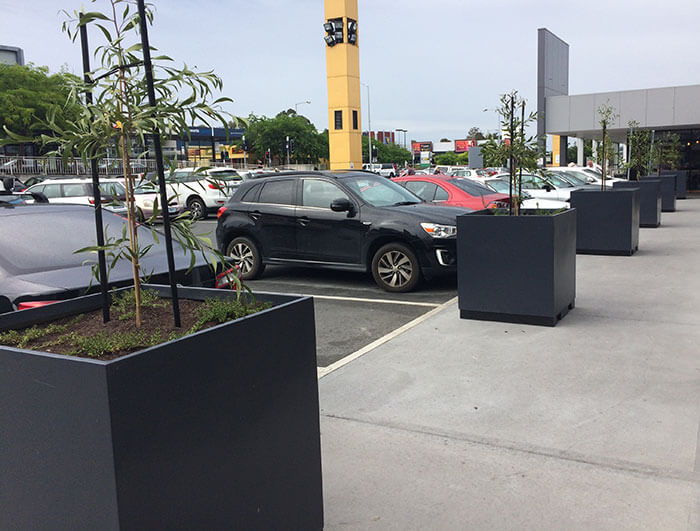
The row of fibreglass, cube-shaped planters clearly separates the pedestrian walkway from the parking lot. These planters bring much-needed greenery to an otherwise stark area dominated by concrete paving and metal structures, improving the overall aesthetic.
Planters are an excellent tool for landscape designers, allowing them to introduce plants into hardscaped urban environments where traditional ground planting isn’t feasible. The plants provide a sense of calm, have a cooling effect on the immediate surroundings, and help to reduce air pollution in the area.
Functionality and Safety: Defining Spaces and Enhancing Pedestrian Flow
Planters can also serve functional purposes within a commercial parking lot, enhancing safety and pedestrian flow. Strategically placed, robust planters can act as physical barriers, separating pedestrian walkways from vehicular traffic lanes. This is particularly important at crosswalks and along the edges of parking spaces, providing a crucial layer of protection for pedestrians. In higher-risk areas, vehicle mitigation can also be considered when selecting heavier planters for public-facing spaces.
Larger, more substantial planters can also be used as wheel stops, preventing vehicles from encroaching onto sidewalks or landscaped areas. This not only protects pedestrians and vegetation but also helps to maintain the order and organization of the parking lot.
The thoughtful placement of planters can also help to define different zones within the parking lot, such as loading areas, accessible parking spaces, and pedestrian pathways. This can improve the overall efficiency and usability of the space.
PROJECT SPOTLIGHT
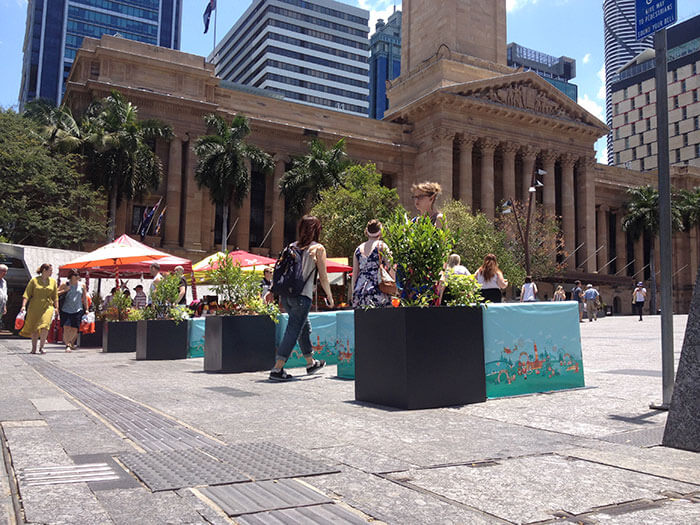
The planters used to create a clear division between a bustling market area and a public square. The planters decorate the concrete bollard and are strategically placed to define the space and guide pedestrian flow, ensuring people can navigate the area safely and efficiently. In this context, the planters function similarly to wheel stops, preventing any vehicle access from the street and protecting both the market stalls and the people browsing them.
This use of planters not only provides a natural, green element to the urban environment but also serves a practical purpose, enhancing the safety and organization of a busy public gathering space.
Choosing the Right Planters: Materials, Size, and Design
The success of incorporating planters into a car parking spaces depends on selecting the right type of planters for the specific needs and context. Several factors should be considered:
- Material: Planters are available in a variety of materials, each with its own advantages and disadvantages. Concrete planters are durable and offer a substantial presence but can be heavy and difficult to move. Fiberglass planters are lightweight, durable, and available in a wide range of shapes and finishes, making them a versatile option. Metal planters can offer a sleek, contemporary look but may be susceptible to rust depending on the type of metal and the local climate. Recycled plastic planters are an environmentally friendly option that is also lightweight and durable. In Brisbane’s humid climate, durability and resistance to moisture are key considerations.
- Size and Shape: The size and shape of the planters should be appropriate for the available space and the type of plants being used. Larger planters can accommodate more substantial plants and trees and offer greater soil volume, which is beneficial for plant health. The shape of the planters can also influence the aesthetics and functionality of the parking lot. For example, long, narrow planters can be used to define boundaries, while larger, more sculptural planters can serve as focal points.
- Maintenance: The choice of planter material and design should also consider ease of maintenance. Smooth, non-porous materials are generally easier to clean. Planters should be designed to allow for easy access for watering, weeding, and pruning.
- Aesthetics: The style and finish of the planters should complement the overall design of the property. Planters are available in a wide range of colours, textures, and finishes, allowing for seamless integration with the existing architectural elements.
For projects seeking the concrete look with more design flexibility, GRC lightweight concrete planters can support modern architectural landscapes without relying on traditional heavyweight concrete.
What are Sigma Planters Lightweight Concrete Planters Made From?
While many lightweight concrete planters incorporate materials like perlite, vermiculite, or glass fiber to reduce weight, Sigma Planters has opted for a different approach to achieve the perfect balance of weight, strength, and durability.
Our lightweight concrete planters feature a high-quality fiberglass core with a concrete-look finish. This innovative construction offers several advantages:
- Reduced weight: Fiberglass is significantly lighter than traditional concrete, making our planters easy to handle and move.
- Increased strength: Fiberglass provides exceptional strength and durability, ensuring your planter can withstand various weather conditions and heavy plant loads.
- Flexibility: Fiberglass offers greater flexibility compared to concrete, reducing the risk of cracking or breakage.
- Concrete aesthetic: The concrete-look finish provides the desired appearance without the added weight and maintenance associated with traditional concrete.
Our Florence, Moscow and Milano ranges are lightweight GRC. We also have the capability and tooling for heavy GRC, which we typically reserve for custom projects that require additional weight. In most cases, extra weight can be achieved by filling the planter base with gravel or securely bolting the planter to the ground.
By combining the best qualities of fibreglass and concrete, Sigma Planters delivers lightweight planters that are both stylish and functional.
Learn More about Lightweight Concrete Planters
Implementation and Maintenance: A Long-Term Investment
Incorporating planters into a commercial parking lot is a long-term investment that requires careful planning and ongoing maintenance. The initial design should consider the layout of the parking lot, pedestrian and vehicle flow, and the specific environmental and aesthetic goals. Collaboration between landscape architects, engineers, and property managers is crucial to ensure a successful implementation.
Once the planters are installed and planted, regular maintenance is essential to ensure their continued health and aesthetic appeal. This includes regular watering, fertilization, weeding, and pruning. Depending on the plant species selected, seasonal maintenance tasks may also be required. Investing in a professional landscaping service can help to ensure that the planters are properly maintained and continue to provide their intended benefits over time.
PROJECT SPOTLIGHT
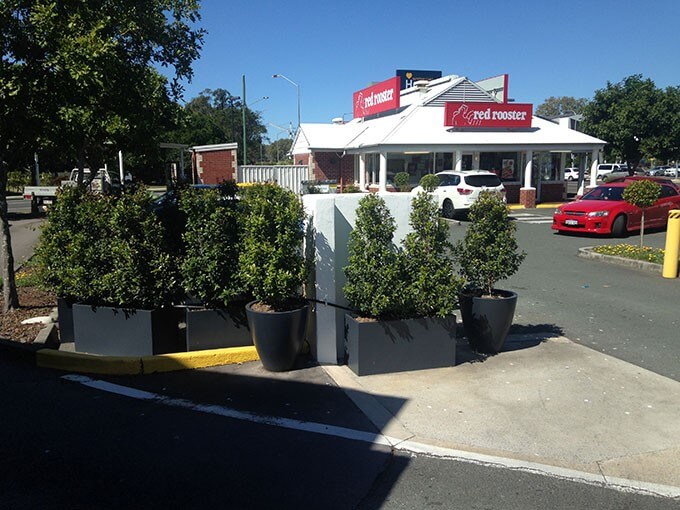
This parking lot, like many, needed a touch of greenery. The designers used a variety of fiberglass planters to bring plant life to the space without having to tear up the existing pavement.
The fiberglass planters offer a modern look with their sleek, dark finish. They are a great choice for this type of installation because they are both durable and lightweight. To reduce maintenance, a drip irrigation system was installed, as shown by the black fittings visible in the planters. This system automatically delivers water to the plants, eliminating the need for manual watering.
Drip irrigation is an excellent choice for a public space. It conserves water far more effectively than traditional watering methods or sprinkler systems, which can lead to significant water waste. It also removes the need for costly and time-consuming manual watering.
Learn More About Sigma Planters Fibreglass Planters
What is Fibreglass and Why is it Better?
Fibreglass planters offer a superior alternative to traditional planter materials, such as glazed, terracotta, terrazzo, concrete or even more modern light-weight materials such fibre-clay, fibre-stone, or GRC. Engineered with exceptional strength and durability, these planters are ideal for a wide range of applications in commercial and residential landscapes.
Unmatched Strength and Durability
Unlike GRC and fibrestone, which are prone to cracking and breakage, fibreglass possesses inherent flexibility and impact resistance. The reinforced polymer matrix creates a robust structure capable of withstanding harsh weather conditions, including frost, heat, and UV exposure. This durability translates into long-term cost savings as fibreglass planters require minimal maintenance and replacement. That’s why we can back these with a 3-Year-Warranty you will not find from other planter suppliers.
What is Different About Our Fibreglass Planters?
Sigma Planters fibreglass planters are the result of a meticulous manufacturing process that combines advanced technology with traditional craftsmanship. To meet the diverse needs of our clients, we operate two modern factories in China and Vietnam, each employing distinct production techniques.
Our Chinese facility specializes in the sheet moulding compound (SMC) process. This method involves compressing layers of resin-impregnated fiberglass sheets into a mould under high pressure. The outcome is a planter characterized by exceptional strength, durability, and precision. The SMC technique allows for thinner wall thicknesses without compromising structural integrity, resulting in planters that are both lightweight and robust.
In contrast, our Vietnamese factory utilizes the chopper gun method. This process involves spraying chopped fiberglass strands and resin onto a mould to create the desired shape. While this technique produces planters with a slightly thicker profile, it offers greater flexibility in design and finish. Both manufacturing processes adhere to rigorous quality control standards to ensure that every Sigma planter meets our exacting specifications.
By operating two factories with complementary manufacturing methods, Sigma Planters is able to offer a comprehensive range of fibreglass planters that cater to various project requirements. Whether you prioritize weight reduction, design complexity, or a combination of both, we have the perfect solution to elevate your landscape design.
Conclusion: Greening the Grey for a Brighter Future
The integration of planters into commercial parking lots represents a significant opportunity to transform these often-overlooked spaces into more aesthetically pleasing, environmentally responsible, and user-friendly environments. By strategically incorporating greenery, we can mitigate the urban heat island effect, improve stormwater management, enhance air quality, and create more welcoming and safer spaces for pedestrians.
While careful planning and ongoing maintenance are essential, the numerous benefits of using planters in commercial parking lots far outweigh the challenges, contributing to a greener and more sustainable urban future. Embracing innovative solutions like the widespread use of planters in parking lots will be crucial in creating a more liveable and vibrant city for all.
Environmental Studies that show how shrubs, plants, and trees improve the appearance and reduce pollution in these areas. Increased greenery in cities has a positive impact on public health through the reduction of smoke, dust, carbon dioxide, and other pollutants.
0 Comments