


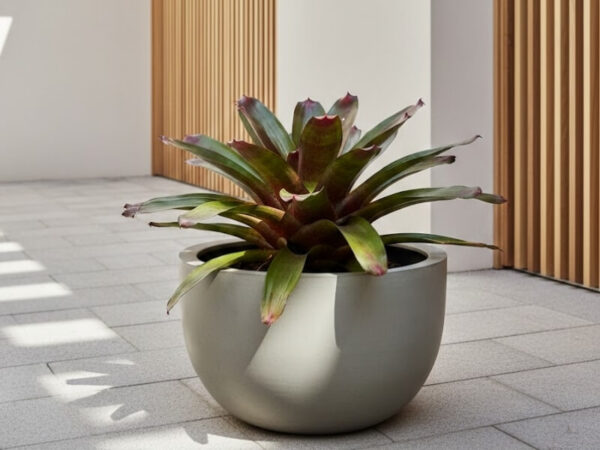
Few plants possess the immediate sculptural presence of a bromeliad. They are the silent protagonists of a well-composed interior, the striking focal point in a minimalist courtyard, and the textural counterpoint to sleek, modern architecture. With a form that is at once primitive and futuristic, bromeliads offer designers and homeowners a living artefact—a piece of tropical exoticism rendered in rigid geometry and vibrant colour.
This guide is part of our comprehensive Potted Species Growing Guides Resource Hub
Belonging to the same family as the pineapple (Bromeliaceae), these native plants of the tropical Americas have transcended their origins to become staples of Australian design. However, their appeal lies not in a fleeting seasonal bloom, but in their enduring architectural structure. They are cultivated not merely as plants, but as components of a spatial aesthetic.
Structural Qualities and Form
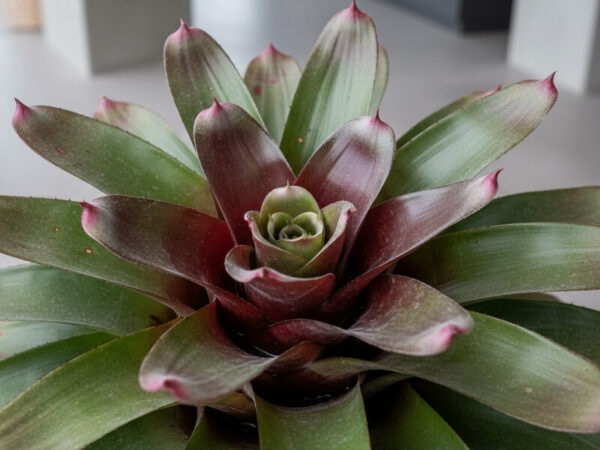
The bromeliad’s fundamental form is its rosette. This configuration, where leaves radiate from a central axis, creates a natural vessel—a water-holding cup in many varieties—that is both functional and visually compelling. The leaves themselves are a study in contrasts: they may be broad and strappy, or narrow and spiky, often edged with smooth or serrated margins.
The colour palette extends far beyond simple green. Foliage can be banded, marbled, or overlaid with silver trichomes (specialised scales that give a dusty, metallic sheen), appearing in hues of deep maroon, fiery red, and soft grey. When a bromeliad prepares to flower, it produces a terminal inflorescence—a stunning bract structure that can last for months. These modified leaves, in shades of electric pink, crimson, or orange, rise from the centre like a torch, reinforcing the plant’s dramatic, sculptural quality long before any small, true flowers appear.
If you notice leaf-tip browning or stunted growth despite following these steps, it may be an environmental factor rather than a species-specific issue. For a deeper dive into establishing your plant’s health, see our Ultimate Guide to Fixing Common Potting Problems.
Cultivation Parameters for the Modern Space
Success with bromeliads is less about constant care and more about understanding their specific physiological needs. They are epiphytes or semi-epiphytes by nature, meaning in the wild they often grow on trees, deriving nutrients from the air and rain. Replicating this environment in a pot is the key to their longevity. The following parameters provide a framework for optimal health.
Light & Positioning
Bright, indirect light is the ideal. A position near an east- or west-facing window, or in a spot filtered by a sheer curtain, will yield the most intense foliage colours. Insufficient light will cause the plant to become leggy and its colours to fade, while harsh, direct afternoon sun can scorch the leaves. In outdoor settings, a position under the dappled shade of a tree or on a covered patio is preferable.
Watering Strategy
This is the most critical element and the most common point of failure. Bromeliads are highly susceptible to rot. Water should be applied to the central cup formed by the rosette, keeping it filled with fresh water (rainwater or distilled is ideal to avoid salt build-up). The potting medium, however, must be allowed to dry out completely between waterings. During cooler months, watering frequency should be significantly reduced.
Drainage & Pot Selection
Drainage is non-negotiable. The roots function primarily as an anchoring system and are not designed to sit in moisture. An open, free-draining potting mix is essential—a blend of orchid bark, perlite, and peat-free compost is far superior to standard garden soil. The chosen container must have adequate drainage holes. Find more potting mix recommendations in our Pot Planting & Care Guides hub.
Fertilisation
As light feeders, bromeliads require minimal supplementary nutrition. A balanced, water-soluble fertiliser diluted to one-quarter or one-half strength can be applied to the potting medium once or twice during the active growing season (spring and summer). Avoid fertilising the central cup, as this can encourage algae growth and burn the foliage. Do not fertilise in winter.
Pest & Maintenance Management
While robust, bromeliads can occasionally be visited by scale insects or mealybugs. These are easily managed with a targeted application of horticultural soap or neem oil. Maintenance is largely aesthetic; simply trim any spent flower bracts or damaged leaf tips, following the natural shape of the leaf to maintain the plant’s silhouette. After flowering, the parent plant will slowly decline, but not before producing “pups” or offsets at its base, which can be separated and repotted to continue the cycle.
DESIGNER NOTE: ARCHITECTURAL PAIRINGS
Bromeliads are frequently specified for modern foyers and balcony edges due to their striking form. To complement their industrial aesthetic, they are best paired with our Extra Large Round Planters.
Styling with Planters: A Design Dialogue
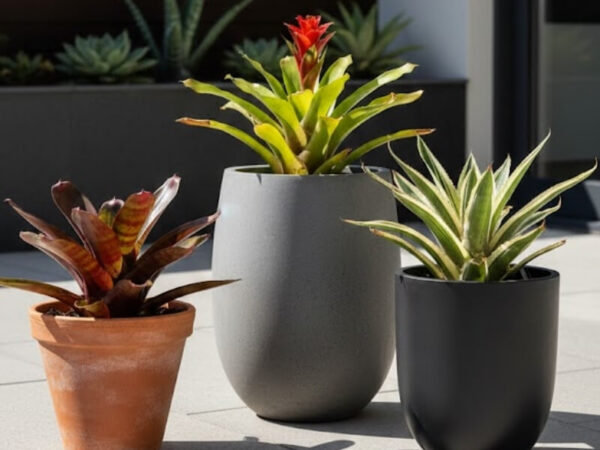
The choice of planter is as crucial as the plant itself, creating a dialogue between the organic and the constructed. For bromeliads, the container is not merely a vessel but a foundation for the overall composition.
Ideal Planter Types: The architectural form of a bromeliad is best complemented by clean-lined, contemporary planters. Low, wide bowls echo the plant’s horizontal spread and are perfect for tableaus. Taller, elevated pots lift the plant to eye level, transforming it into a living sculpture. Textured finishes provide a tactile counterpoint to the smooth, rigid foliage.
The Importance of Container Material: A planter’s material directly influences root health. Unglazed ceramic and terracotta are porous, allowing air exchange and assisting moisture evaporation—a significant advantage for bromeliads. Glazed ceramic or fibreglass planters retain moisture longer, requiring greater vigilance with watering. Regardless of material, excellent drainage remains essential.
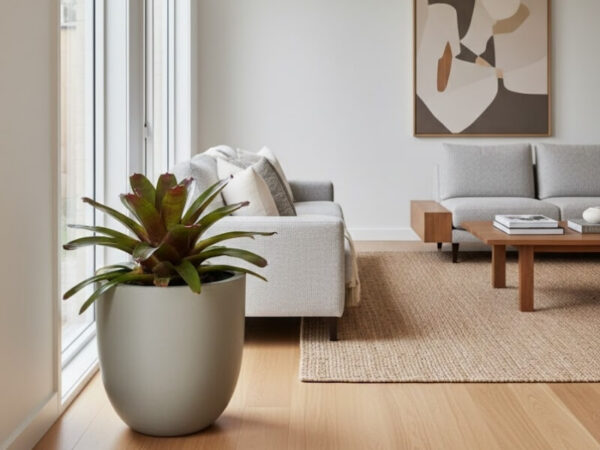
Contextual Applications: In a residential setting, a single bromeliad in a sculptural pot can anchor a living room corner or punctuate a balcony. For commercial spaces, groupings in varying sizes within matching planters create a cohesive statement. In a courtyard, their bold forms harmonise with modern architecture, timber, or stone.
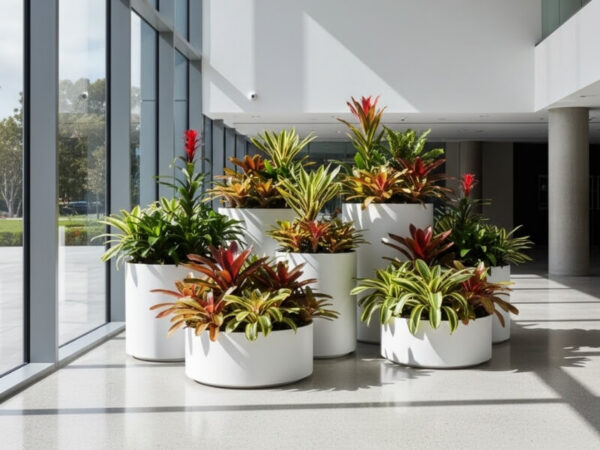
The bromeliad is a testament to the fact that strength and subtlety can coexist. It asks for little more than a well-drained environment and a considered position, rewarding that respect with months of unrivalled structural beauty. To design with a bromeliad is to acknowledge the power of form, to appreciate the richness of texture, and to invite a piece of enduring, living architecture into your space.
COMPLEMENTARY ARCHITECTURAL SPECIES
If you appreciate the bold, structural form of Bromeliads, you’ll find Agaves in Pots to be an equally stylish and low-maintenance choice for modern landscapes. Both species excel in defining clean lines and adding high-impact texture to commercial or residential balconies.
0 Comments