


A garden is more than a landscape; it is an extension of the living and working space. While expansive lawns and perennial borders have their place, there is a unique sophistication in cultivating something both beautiful and bountiful. Enter the citrus tree in a planter: a living sculpture that offers fragrant blossoms, glossy evergreen foliage, and the unparalleled pleasure of harvesting sun-warmed fruit directly from its branches.
Growing citrus in containers is not merely gardening; it is an exercise in intentional cultivation. It allows for control, creativity, and the ability to defy geography, bringing a taste of the Mediterranean or a sun-drenched patio to any environment. This guide will walk you through the art and science of creating your own potted citrus grove.
For more related resources, please visit our comprehensive Potted Species Growing Resource Hub.
Why Container Citrus? The Ultimate in Control and Luxury
The benefits of container cultivation are particularly well-suited to the citrus family.
Climate Mastery
Citrus trees are sun-worshippers and frost-tender. By planting in containers, you can effortlessly move them to maximize sun exposure in summer and protect them in a greenhouse, orangery, or bright atrium when temperatures drop.
Architectural Flexibility
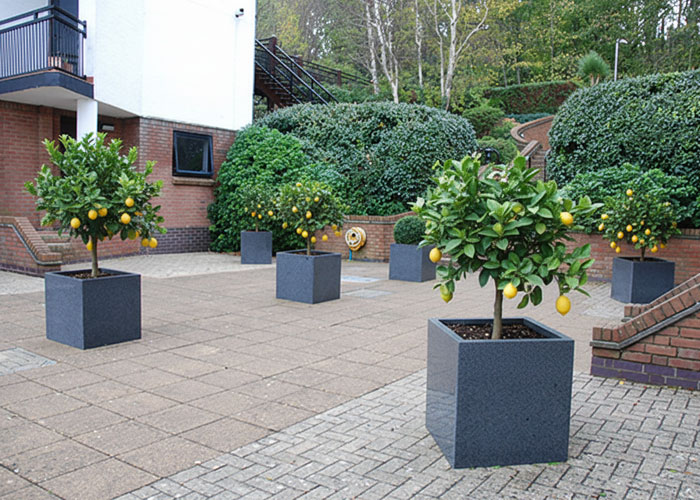
A mature citrus tree in a handsome planter serves as a stunning focal point on a terrace, beside a pool, or framing an entrance. It is a dynamic element of your design palette.
Soil Perfection
Container gardening allows for “the perfectly balanced, well-draining, slightly acidic soil” is the very cornerstone of success with citrus. For the discerning gardener, this is not just a horticultural tip; it is the equivalent of building a custom home on a perfect foundation. You are creating a tailored microenvironment where every variable is optimized for peak health and productivity.
Well-Draining
Citrus roots abhor “wet feet.” Soggy, oxygen-deprived soil is the primary cause of root rot, which can swiftly kill an otherwise healthy tree. A well-draining mix ensures that water flows through easily, pulling fresh air into the root zone after each watering. This is something that can be difficult to achieve in heavy clay or even overly rich garden soils.
Slightly Acidic (pH 5.5 – 6.5)
In this pH range, citrus trees can effectively access essential micronutrients like iron, manganese, and zinc. If the soil becomes too alkaline (a common issue with tap water), the tree will suffer from nutrient deficiencies, evident in yellowing leaves with green veins (chlorosis). Container growing allows you to start with and maintain the correct pH, avoiding this constant battle.
Manageable Size:
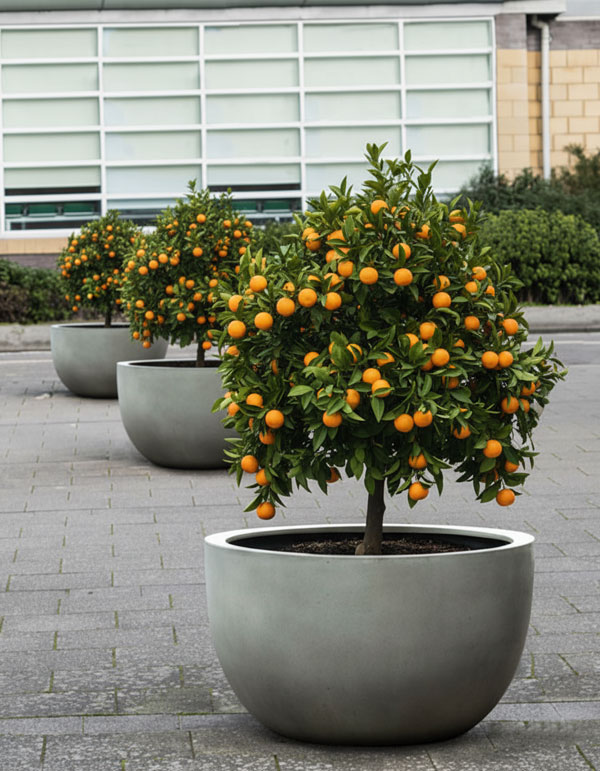
A tree’s ultimate size is governed by its root system. In the open ground, roots can spread widely in search of water and nutrients, supporting massive canopy growth. In a container, the root system is confined. This natural root restriction sends a hormonal signal to the tree that limits its overall size above ground. It’s a self-regulating process that results in a proportionally smaller, more compact tree without the need for constant, drastic pruning that can reduce fruit production.
Architectural Precision:
This size control allows you to place a fruit-bearing tree in spaces where a full-sized version would be overwhelming or impractical. A ‘Meyer’ lemon tree can be maintained at a graceful 5-6 feet tall for years, making it perfect for flanking a lounge area, situating under a pergola, or using as a living screen on a balcony.
The Espalier Masterpiece:
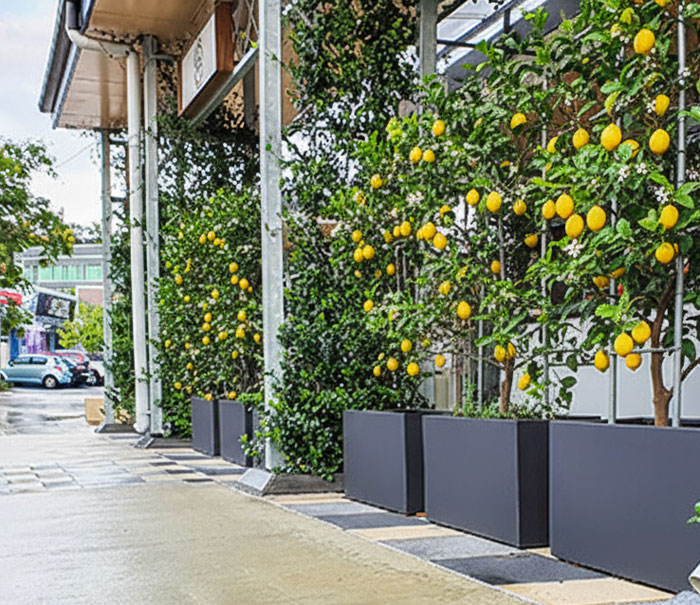
As mentioned, manageable size is essential for espalier. Training a tree flat against a wall requires a level of control that would be immensely difficult with a vigorously growing, in-ground specimen. The container naturally lends itself to this art form.
Simplified Harvest and Care:
No more needing ladders to harvest fruit. All fruit, flowers, and foliage are within easy reach. This makes routine care—such as inspecting for pests, pruning, and harvesting—a pleasant, effortless activity rather than a chore. It turns the tree into an interactive feature.
Dwarf Varieties vs. Container Restriction:
It’s important to distinguish between genetically dwarf varieties (e.g., ‘Improved Meyer’ lemon) and standard varieties grown in pots. Dwarf varieties are naturally more compact and are the best choice for smaller containers. Standard varieties can be kept manageable in large pots but will still generally be larger than true dwarfs. This gives you a spectrum of sizes to choose from based on your space and design vision.
Selecting Your Citrus: A Curated Collection for the Connoisseur
The choice of variety is where personal taste shines. Here are premier selections for oranges, lemons, and limes.
Oranges: The Classic Sun-Kissed Jewel
While standard sweet oranges require significant heat, several varieties excel in containers.
Calamondin Orange (x Citrofortunella microcarpa):
Arguably the perfect container orange. While its fruit is tart (ideal for marmalade), its virtues are immense: nearly ever-bearing, incredibly fragrant blossoms, and stunning ornamental appeal with tiny orange fruits contrasting against dark green leaves.
Cara Cara Navel Orange (Citrus sinensis ‘Cara Cara’):
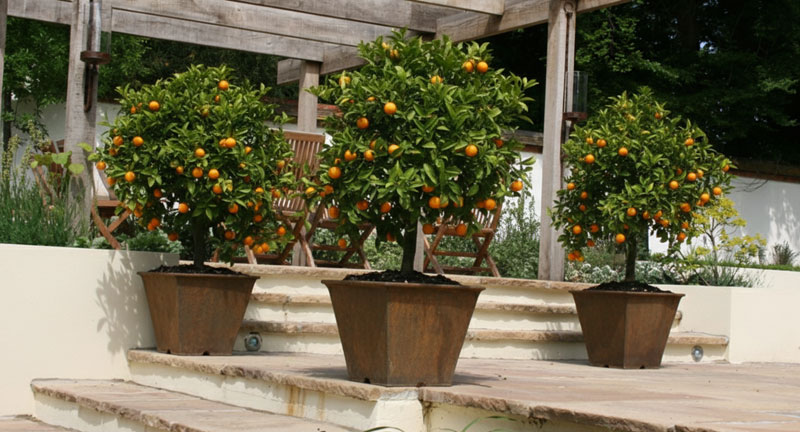
For those who can provide ample heat and sun, the Cara Cara is a gourmet’s choice. The flesh is a distinctive rosy pink, seedless, and boasts a sweet, complex flavor with notes of cherry and blackberry. A mature, fruiting tree in a classic terra cotta pot is the height of garden luxury.
Lemons: The Quintessential Patio Citrus
No other citrus says “home” quite like a lemon tree, often blooming and fruiting simultaneously. Another fragrant option for edible-style container growing is lemon myrtle in pots, especially if you enjoy aromatic foliage close to outdoor kitchens or entertaining areas.
Meyer Lemon (Citrus x meyeri):
The undisputed champion for containers. Meyer is actually a sweet lemon-orange hybrid, resulting in a thinner-skinned, less acidic, and richly flavoured fruit. It is exceptionally prolific, cold-tolerant, and has a lovely, compact growth habit.
Eureka Lemon (Citrus x limon ‘Eureka’):
The classic supermarket lemon, known for its tart, juicy fruit and vigorous, nearly thornless growth. It produces fruit year-round. The ‘Pink Variegated’ Eureka is a particularly attractive variety.
Variegated Pink Eureka Lemon (Citrus x limon ‘Variegated Pink’):
A true showstopper. The leaves are streaked with cream and white, and the young fruit is striped with green, ripening to a pale yellow with pink flesh. The fruit is juicy and less acidic than a standard Eureka.
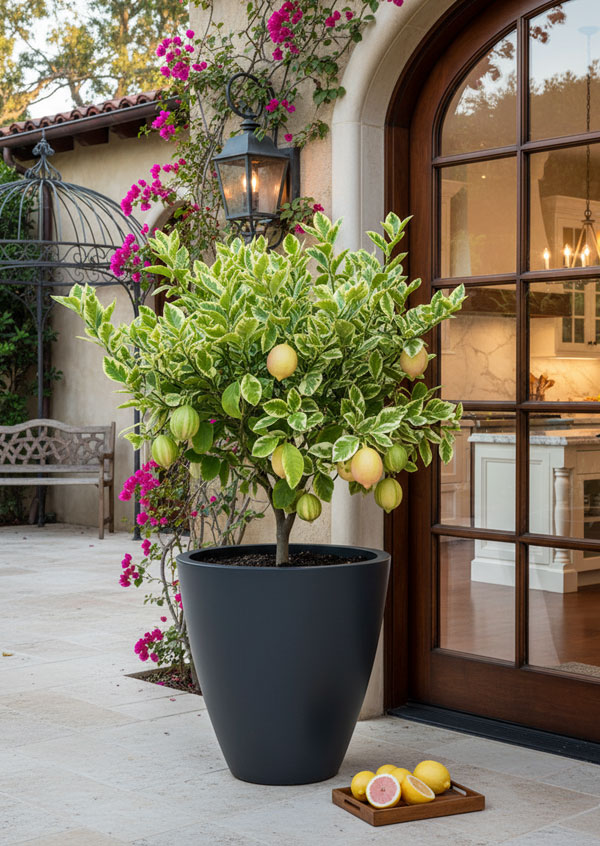
Ponderosa Lemon (Citrus x limon ‘Ponderosa’):
A conversation piece. This is a cold-hardy lemon that produces gigantic, bumpy-skinned fruit, sometimes weighing several pounds. It has a more shrub-like habit, making it interesting for large containers.
Limes: The Zesty Accent
Limes bring a tropical flair and are essential for the home mixologist.
Key Lime (Citrus x aurantiifolia):
The famous pie lime. It’s a smaller, more delicate tree with slender branches and small, aromatic fruit. It requires warmth but rewards with an intense, floral flavor.
Bearss Lime (Citrus x latifolia):
Also known as the Persian or Tahiti lime. This is the seedless, larger lime commonly found in stores. It’s a vigorous, productive tree that adapts very well to container life and is more cold-tolerant than the Key lime.
Kaffir Lime (Citrus hystrix):
Grown primarily for its unique double-lobed leaves, which are indispensable in Thai and Southeast Asian cuisine. The fruit is bumpy and intensely aromatic, but the leaves are the true prize for the culinary enthusiast.
Pruning for Form and Health:
Pruning is primarily for shaping, removing dead or crossing branches, and encouraging airflow. Light pruning is often all a potted citrus tree needs, but understanding how to prune correctly helps protect both its shape and fruiting potential. The best time is after the main harvest in late winter or early spring, before the flush of new growth.
Objective: Aim for an open, vase-like shape that allows light to penetrate the canopy.
Method: Make clean cuts just above a leaf node. Never remove more than ⅓ of the tree’s foliage at once. Regularly pinch back tips to encourage bushier growth.
Espalier: The Ultimate Architectural Statement
For a truly formal and space-saving display, consider espaliering your citrus. Training a tree flat against a wall—in a fan, cordon, or Belgian fence pattern—transforms it into living art. This technique is ideal for a sun-drenched kitchen wall or to line a walkway. It requires a sturdy support system and consistent tying and pruning during the tree’s formative years, but the result is breathtakingly elegant.
Pest Management: A Proactive Approach
Healthy, well-sited trees are remarkably pest-resistant. Vigilance is key.
Common Foes: Watch for scale insects (small, immobile bumps on stems and leaves), spider mites (fine webbing), and aphids (clusters of small insects on new growth).
Elegant Solutions: For minor infestations, a strong jet of water can dislodge pests. For more persistent issues, horticultural oils or insecticidal soaps are highly effective and environmentally sound options. Always introduce treatments carefully, following label instructions.
Design and Architectural Considerations: Integrating Citrus into Your Lifestyle
This is where your citrus collection moves from horticulture to high design.
DESIGNER NOTE: ARCHITECTURAL PAIRINGS
Citrus trees make beautiful feature plants for patios and courtyards. Pair them with our Extra Large Planters for a strong, refined, architectural look.
The Kitchen Garden, Perfected:
The most logical and satisfying placement for a lemon or lime tree is immediately adjacent to the outdoor kitchen or just outside the main kitchen door. This creates an unparalleled farm-to-table experience. Imagine stepping out to clip a fresh Kaffir lime leaf for a curry or harvesting a Meyer lemon for an evening cocktail. Choose dwarf varieties like ‘Improved Meyer’ or ‘Calamondin’ for smaller spaces near pathways. A cocktail garden can build on the same idea, pairing fresh herbs and citrus flavours for outdoor entertaining.
The Grand Entrance or Courtyard:
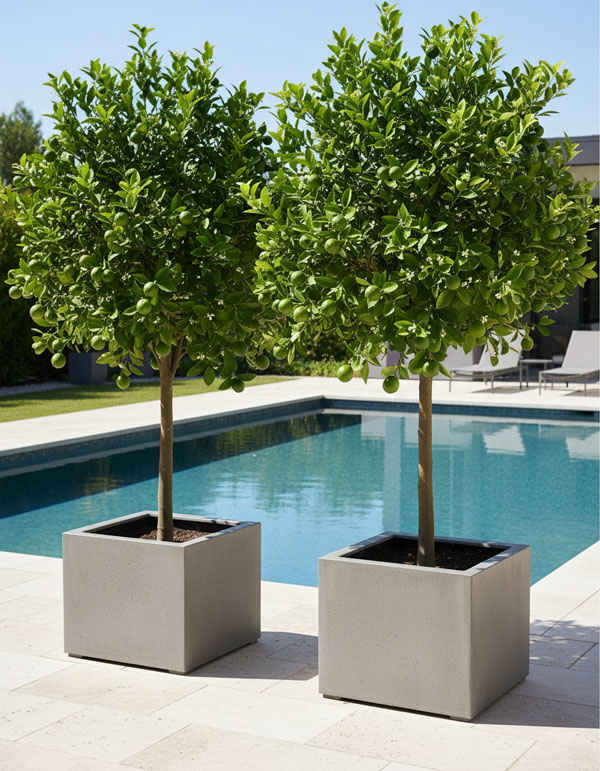
A pair of matching, mature orange trees in monumental planters flanking a front entrance conveys immediate grandeur and hospitality. The symmetry is classically beautiful, and the scent of the blossoms is a welcome unlike any other. For a courtyard, a single, perfectly pruned specimen becomes a serene focal point.
The Poolside Paradise:
The glossy, evergreen foliage of citrus provides a lush, tropical backdrop around a pool. Ensure the planters are on a stable, hard surface to avoid soil and debris from washing into the water. The reflective quality of water amplifies sunlight, benefiting the trees. Pair your citrus planters with vibrant, sun-loving companions like bougainvilleas to create a dazzling Mediterranean display bursting with colour and fragrance.
The Mobile Orchard:
With trees on casters or plant dollies, you can create dynamic seasonal displays. Group them together on a terrace for summer entertaining, then move them to a protected winter gallery as the weather changes. This flexibility is the ultimate luxury for gardeners in cooler climates.
The Final Harvest
Cultivating citrus in planters is a rewarding pursuit that blends the sensory pleasures of gardening with the precision of design. It is a testament to a life lived with intention and an appreciation for nature’s elegant bounty. By selecting the right varieties, providing attentive care, and integrating these beautiful trees into your architectural vision, you create not just a garden, but a personalised oasis of beauty and flavour.
Citrus is only one way to build a productive container garden; our wider pot planting and care guides can help you explore other plants suited to pots, patios, balconies, and courtyard spaces.
Thanks for the article. I scrolled down to look for citrus gall in the pest management section and saw no mention. In Melbourne’s eastern suburbs it’s a common problem and I’ve lost several trees to it, both potted and in the ground. One I have left, a small potted lemon, I’ve had to prune to an ugly state to remove affected branches. It will never be attractive and I may get rid of it. Larger trees are difficult to examine and prune closely enough, and again you may be left with ugly stumps. Just this week I found gall on a potted olive and learned that may be the same wasp. It would be helpful if you included this issue, since you’re plugging potted citrus, many customers will come across it at some point without recognising or knowing what to do about it.
Thanks,
Anita
Thanks Anita. Here is a brief guide to managing Citrus Gall Wasp:
Identification & Lifecycle: The galls are the tree’s reaction to the wasp’s eggs, laid in young, soft stems. The wasps emerge from these galls in spring, so the management strategy is timed to break their cycle.
The Primary Strategy: Pruning with Precision
Timing: The most effective control is to remove the galls before the new generation of wasps emerges. The best window for this is from late autumn through mid-winter (May to July).
Method: Carefully examine your trees and prune off the affected branches, making your cut at least 10-15 cm below the visible gall. This ensures you remove any developing wasps still inside the stem. Do not simply scrape or cut the gall off the surface, as the larvae will likely remain in the inner part of the branch.
Disposal: It is crucial to bag and dispose of the pruned material in your household rubbish bin. Do not compost it or leave it near your trees, as the wasps can still mature and emerge.