

Indoor and over-structure landscaping is a precise calculation where weight, waterproofing, and structural integrity meet aesthetic intent. For the Australian professional—whether navigating the strict load-bearing limits of a Brisbane rooftop or the climate-controlled lobby of a Sydney corporate HQ—the choice of planter is a technical specification as much as a design one.
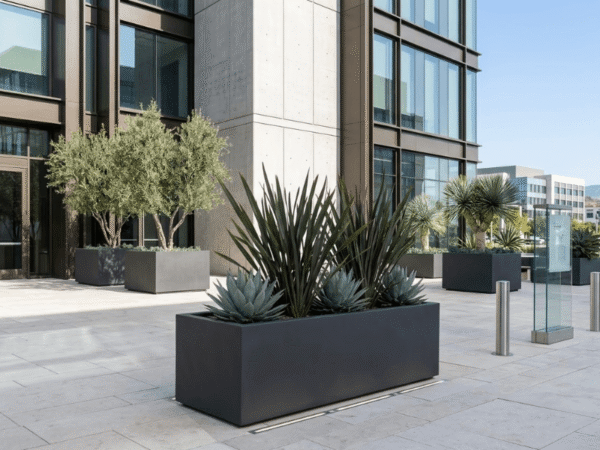
Lightweight Planters in Fibreglass (GRP) has moved beyond being a “versatile option” to become the industry standard for high-stakes environments. This guide examines the technical advantages of high-grade fibreglass and how to specify it for maximum project longevity.
This comprehensive guide is a part of our collection of resources for working with Fibreglass Planters.
The Engineering of Weight: Solving the Podium Load Challenge
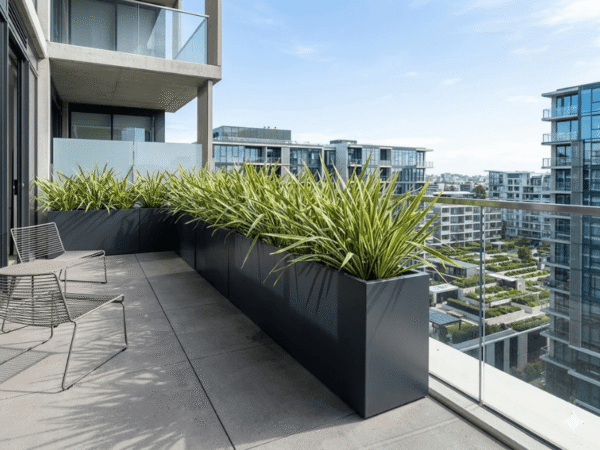
In modern urban development, green space is increasingly elevated. Rooftops, balcony terraces, and podium levels have uncompromising load-bearing limitations.
The Technical Edge: High-quality fibreglass offers an unparalleled strength-to-weight ratio. By specifying FRP over concrete or stone, designers can allocate more of their “weight budget” to soil volume and mature tree specimens rather than the container itself.
Installation Efficiency: The lightweight nature of these planters significantly reduces the need for heavy craneage and specialized labor during the fit-out phase, particularly in restricted-access interior sites.
Interior Precision: PH Neutrality and Waterproofing Assurance
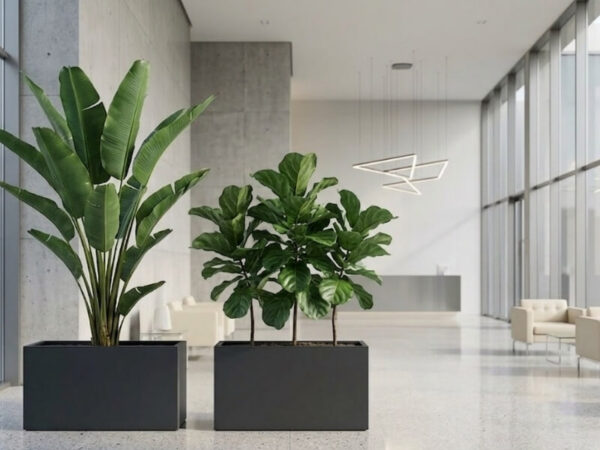
Interior plantscaping requires a stable environment for sensitive species like Ficus lyrata or Strelitzia.
Material Stability: Unlike GRC (Glass Reinforced Concrete) or terracotta, which can leach lime and alter soil PH over time, premium fibreglass is chemically inert. This ensures the root environment remains exactly as the horticulturalist intended.
Surface Protection: For indoor applications, we specify “closed-base” or integrated-reservoir systems. The non-porous nature of fibreglass prevents “sweating” or moisture migration, protecting expensive parquetry or stone flooring from water damage and salt efflorescence.
Structural Integrity: Preventing “Bowing” in Large-Scale Troughs
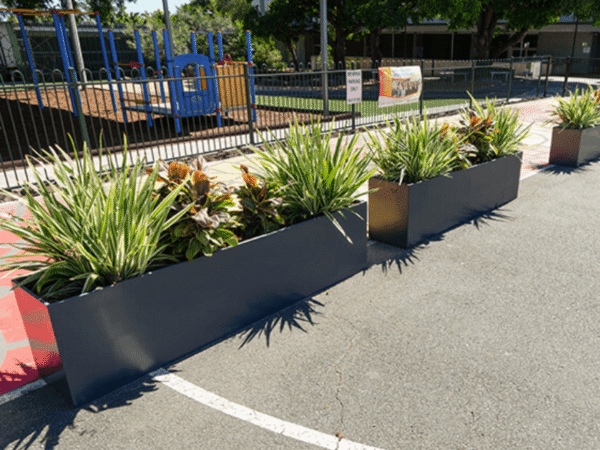
A common failure in low-quality planters is structural deformation under the outward pressure of wet soil.
The Sigma Standard: For professional specifications, we focus on hand-laid fibreglass with reinforced internal ribbing. For long troughs (such as the Sigma Manhattan range), internal bracing is essential to maintain a crisp, linear profile over a 10-year lifecycle.
Impact Resistance: While lightweight, the tensile strength of hand-laid FRP allows it to withstand the daily rigors of high-traffic commercial zones—retail centers and hotel lobbies—where “budget” plastics would crack or fatigue.
Pro Tip: When specifying for public spaces, always confirm the finish is UV-inhibited. In Australia’s high-UV environment, this is the difference between a finish that stays “showroom-fresh” and one that chalks within 24 months.
Are you specifying for a large-scale commercial or high-exposure project?
Our Fibreglass Planters are engineered for maximum tensile strength and UV stability.
Customization as a Functional Requirement
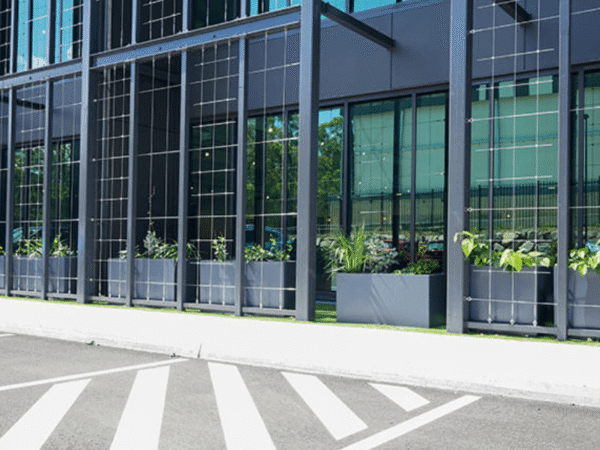
No two commercial floor plans are identical. Often, a planter isn’t just a pot; it’s a spatial divider or a safety barrier.
Bespoke Fabrication: Fibreglass allows for “Millimetre-Perfect” integration. Whether it’s a series of extra-deep planters to accommodate large root balls or troughs fabricated to act as living privacy screens on a hospitality balcony, FRP can be molded to the exact architectural footprint.
Color Matching: We can finish units to any RAL or Pantone code, allowing the landscaping to become a seamless extension of the corporate branding or the building’s interior palette.
The Sustainability of Longevity
As sustainability becomes a core principle in modern design, fibreglass pots are perfectly aligned with green building initiatives. They are often manufactured using eco-friendly processes and materials.
Lifecycle Value: The carbon footprint of a planter is best measured by its lifespan. A single high-quality fibreglass unit that lasts 20 years is significantly more sustainable than three cheaper alternatives that crack and end up in a landfill within a decade.
Thermal Regulation: Fibreglass provides superior insulation for root balls compared to metal containers, reducing plant stress and the frequency of replacement in exposed rooftop environments.
The Verdict for Professionals
For the landscape architect or interior designer, fibreglass is the key to unlocking ambitious greenery in challenging locations. By combining flawless aesthetics with the rigors of structural engineering, it provides a “set and forget” solution for the most demanding Australian projects.
If you are looking to elevate your landscape designs, make a lasting statement, and provide your clients with a solution that marries functionality with stunning aesthetics, fibreglass pots are more than just a container—they are the key to unlocking the full potential of your creative vision. Of course, great design must also make sense on the balance sheet. If you are ready to take the next step, our guide on The Economics of Commercial Landscaping: Fibreglass Planters vs. In-Ground Beds breaks down the long-term cost advantages that make fibreglass the smart choice for developers, body corporates, and commercial clients alike.
Click here to explore our full range of Fibreglass Planters!

0 Comments