


Few plants earn their place in a container quite as decisively as the Japanese maple. That extraordinary autumn transformation—green foliage igniting into copper, crimson, and gold—has made Acer palmatum one of the most sought-after specimens in residential and commercial landscape design alike. But growing a Japanese maple in a pot demands more than good intentions and a beautiful planter. Get the fundamentals right, and you’ll have a breathtaking focal point for decades. Get them wrong, and you’ll spend a lot of money replacing a very dead tree.
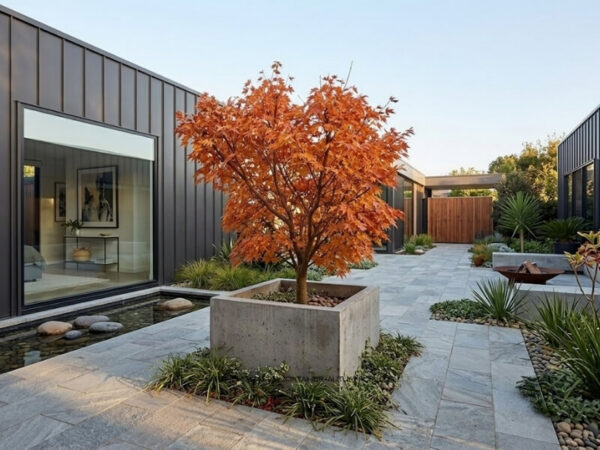
This guide covers everything you need to know: variety selection, pot choice, soil, positioning, watering, feeding, and the common mistakes that quietly kill potted Japanese maples before they ever reach their prime.
This guide is part of our comprehensive Potted Species Growing Guides Hub.
Why Grow Japanese Maples in Containers?
The obvious answer is flexibility. A Japanese maple in a pot can be repositioned as seasons change, moved to a sheltered spot during heat waves or late frosts, and repositioned to suit evolving landscape design schemes. For rooftop gardens, courtyard plantings, and high-end residential terraces where in-ground planting isn’t possible, containers are the only viable option.
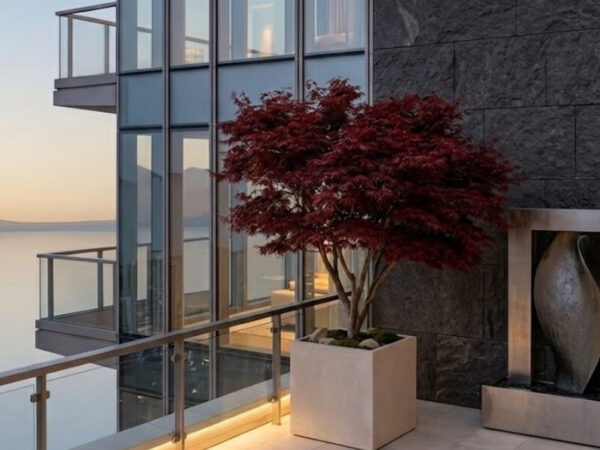
There’s also a horticultural argument for pots. Japanese maples are famously sensitive to soil conditions—poor drainage, alkaline soils, and waterlogging are among their primary killers. A container gives you complete control over the growing medium, which is genuinely harder to achieve in the ground.
For landscape architects and designers specifying potted Japanese maples in commercial or residential projects, container growing also allows you to introduce a specimen of instant maturity—nursery-grown trees in large containers can arrive at a project site already impressive, bypassing the five-to-seven-year wait of planting from scratch.
If seasonal colour and floral displays are also part of the brief, explore our guide to flowering trees for containers for more seasonal options.
Choosing the Best Japanese Maple for Containers
Not every Acer palmatum cultivar is equally suited to life in a pot. The best Japanese maple for containers tends to be naturally compact, slow-growing, and tolerant of the constraints that container growing imposes—primarily restricted root space and fluctuating soil moisture.
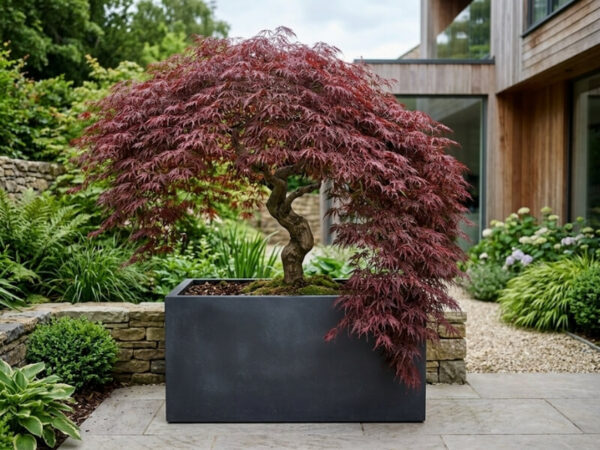
Compact and weeping cultivars to consider:
- ‘Crimson Queen’ – A weeping, dissectum type with deeply cut, burgundy foliage that turns brilliant scarlet in autumn. Extremely popular in containers for its graceful, cascading habit.
- ‘Garnet’ – Another dissectum weeper with reddish-purple leaves. Slower-growing than many, which makes it well-suited to long-term container cultivation.
- ‘Orangeola’ – Dissectum type with striking orange-red spring foliage that deepens through the season before producing a spectacular autumn display. Excellent for containers.
- ‘Sango-kaku’ (Coral Bark Maple) – Upright habit with striking coral-red stems providing exceptional winter interest. Pale green spring foliage turns soft yellow in autumn. While manageable in a container, its upright growth means it will eventually require a much larger, heavier base than the weeping types to prevent it from becoming top-heavy in strong winds.
- ‘Shaina’ – A dense, globe-shaped cultivar with deep red foliage held throughout the season. Naturally compact and one of the most reliable performers for Acer palmatum in pots.
- ‘Viridis’ – Green dissectum type that delivers one of the most vivid autumn colour displays of any maple, turning gold, orange, and flame red. Elegant and slow-growing.
Avoid large, vigorous upright cultivars unless you have the space and the very large containers to match. A tree that outgrows its pot becomes a costly problem—repotting a mature Japanese maple is a serious undertaking.
Choosing the Right Container
Root health is everything with Japanese maples. The pot choice affects drainage, root temperature, and moisture retention in ways that directly determine how well the tree performs.
Size matters more than most people expect. A common mistake is starting with a pot that’s too small, which leads to rapid root binding and moisture stress. For most cultivars, start with a container no smaller than 45–50 cm in diameter and at least 40 cm deep. Dissectum types and compact cultivars like Shaina can start smaller, but they’ll still need upsizing within a few years.
Material is a genuine consideration. Terracotta looks beautiful but dries out fast and can crack in frost. Lightweight concrete-look planters—fibre-reinforced composites with a concrete-style finish—are an excellent choice for Japanese maples. They maintain relatively stable root temperatures, drain well when properly set up, and their neutral grey tones provide a backdrop that makes autumn foliage colour absolutely sing. Dark-coloured pots absorb heat and should be avoided; in any climate above temperate, root temperature stress during summer is a real risk.
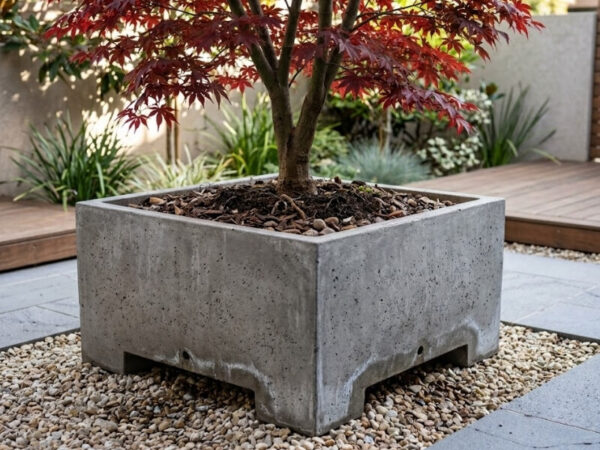
Drainage is non-negotiable. Japanese maples are susceptible to root rot in waterlogged conditions. Ensure your chosen pot has generous drainage holes, and if you’re using a saucer or tray beneath it, raise the pot on feet to prevent it sitting in pooled water.
Soil and Potting Mix
Standard potting mixes are often too water-retentive. Start with a premium Australian Standards-certified mix and amend with 20 to 30 per cent coarse perlite or pumice. Some growers add a small amount of fine pine bark for extra aeration.
Target a slightly acidic pH of 5.5 to 6.5. In areas with alkaline tap water—common across many Australian cities—switch to collected rainwater or apply an iron chelate drench in spring to prevent nutrient lockout.
Skip the water crystals and moisture-retaining gels. They suit many container plants, but risk holding too much water around Japanese maple roots during wet periods.
Positioning and Sunlight
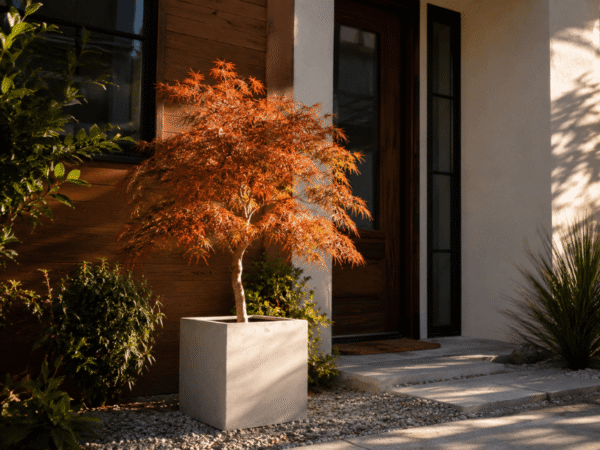
Morning sun with afternoon shade is the guiding principle. An easterly or north-easterly aspect suits most cultivars. Full western sun in summer risks leaf scorch; full shade produces weak growth and poor autumn colour.
Red and purple-leafed types are more heat-sensitive than green-leafed cultivars. Dissectum varieties need shelter from strong wind—their finely cut foliage tears and desiccates easily.
Temperate and cool-temperate regions—Melbourne, the Adelaide Hills, highland New South Wales, Tasmania—suit Japanese maples best. In subtropical areas like Brisbane or coastal Queensland, expect less vivid autumn colour and plan carefully around humidity and air circulation. In warmer, humid regions, lemon myrtle may be a more climate-suited aromatic tree option.
Watering
Aim for consistent moisture, not frequent light drinks. In spring and summer, most established potted trees need watering every two to three days, or daily during heatwaves. Test by pushing a finger two centimetres into the soil—dry at that depth, water deeply; still moist, wait.
Water until it drains freely from the base. In winter, ease off significantly; a dormant tree needs very little, and natural rainfall may be enough.
A thin bark mulch layer on the soil surface moderates temperature and slows evaporation. Keep it clear of the trunk.
Fertilising
Japanese maples are light feeders. Over-fertilising with nitrogen-heavy products produces soft, frost-prone growth. One application of balanced slow-release fertiliser in early spring is usually sufficient. Stop feeding by late summer—pushing new growth too late means it won’t harden before winter.
Where alkaline water has raised pot pH over time, chelated iron in spring corrects chlorosis quickly.
Repotting
Watch for roots emerging from drainage holes, soil drying out unusually fast, or growth stalling despite good care. Repot in late winter to early spring, just before bud break, and move up only one pot size—too large a jump holds more moisture than the roots can use.
Trim any circling roots and refresh the potting mix. If the tree has reached a desired size, root pruning back into the same pot will keep it there indefinitely.
Seasonal Care: What Changes Through the Year
Spring: The most critical growth period. As buds break, watch for late frost events—even a single late frost can burn emerging leaves. Keep fertiliser applications moderate. Position the pot in its final spring and summer location before growth is too advanced to move safely.
Summer: Heat management becomes the priority. Ensure consistent watering. In very hot climates, consider moving the pot to a more shaded position during the peak heat months—one of the genuine advantages of container growing. Watch for spider mites in hot, dry weather, and inspect the woody stems for scale insects, which often trigger a secondary layer of black sooty mould.
Autumn: The payoff. Reduce watering slightly and stop feeding entirely. This, combined with shortening days and cooler temperatures, triggers the enzymatic processes that produce anthocyanin pigments—the reds and purples—and carotenoids—the golds and oranges. Excessive fertiliser or warmth through autumn delays and diminishes colour.
Winter: Dormancy. Reduce watering substantially. In areas with significant frost risk, protect the root zone by moving the pot against a sheltered wall, or wrapping the container in hessian or horticultural fleece. The above-ground structure of Japanese maples is reasonably frost-hardy; it’s the roots in a container—exposed on all sides to cold air—that need attention.
Common Problems and Solutions
- Leaf scorch: Brown, crispy leaf margins in summer indicate either heat stress, underwatering, or wind exposure. Improve the position, increase watering frequency, and consider a temporary shade cloth in extreme heat.
- Chlorosis (yellowing between veins): Almost always a pH or nutrient uptake issue. Check soil pH and apply chelated iron if alkalinity is suspected.
- Root rot: Wilting despite moist soil, combined with dark or foul-smelling roots at inspection, indicates root rot. Improve drainage immediately, reduce watering, and consider repotting into a faster-draining mix.
- Poor autumn colour: In warmer climates, insufficient cold nights through March and April limit colour development. There’s limited intervention available; cultivar selection at the outset is the most effective strategy.
- Spider mites: Tiny bronze stippling on leaves in summer. Treat with a registered miticide or a strong water spray to dislodge colonies. Avoid pesticides that harm predatory insects.
- Scale and Sooty Mould: Small, raised bumps on branches (scale insects) accompanied by a black, powdery coating on leaves. Treat with a horticultural oil spray during a cool spell; applying oil in full sun or temperatures above 30°C can cause severe leaf burn.
For more practical advice on container growing, maintenance, and plant care, explore our pot planting and care guides.
A Final Note on Long-Term Success
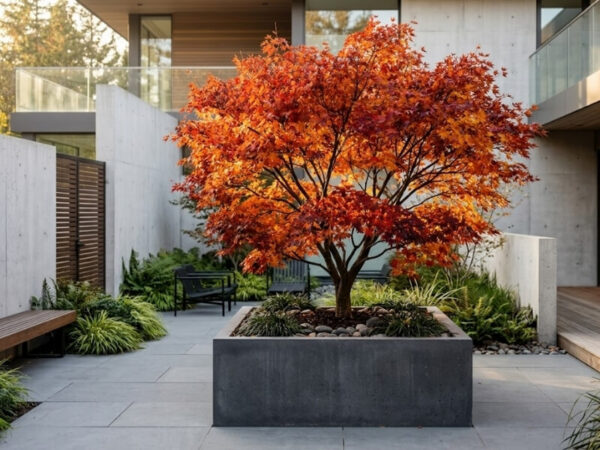
A Japanese maple in a pot is a long-term investment—in the right conditions, a well-managed specimen can thrive in a container for twenty years or more. The trees that succeed long-term share a few common traits: they’re planted in the right container from the start, they’re watered with discipline rather than guesswork, and they’re positioned where the climate genuinely suits them.
For those specifying potted Japanese maples in commercial or high-end residential projects, the message is the same: match cultivar to climate, invest in quality containers with appropriate thermal mass and drainage, and plan for the ongoing care the tree requires. A neglected Japanese maple in a beautiful planter isn’t a feature—it’s an expensive problem.
Get the fundamentals right, and few container plants offer anything close to the seasonal spectacle of a well-grown Acer palmatum. The autumn display alone is worth every bit of the attention they demand.
Related resources: If you’re comparing long-term feature trees for containers, you may also like our guides to large olive trees and dragon trees.
0 Comments