

If you’ve been searching for terrazzo garden pots and planters, you’ve likely noticed they can be a stylish, budget-friendly option. For years, Sigma Planters offered a range of Terrazzo planters because we appreciated the classic aesthetic and approachable price point.
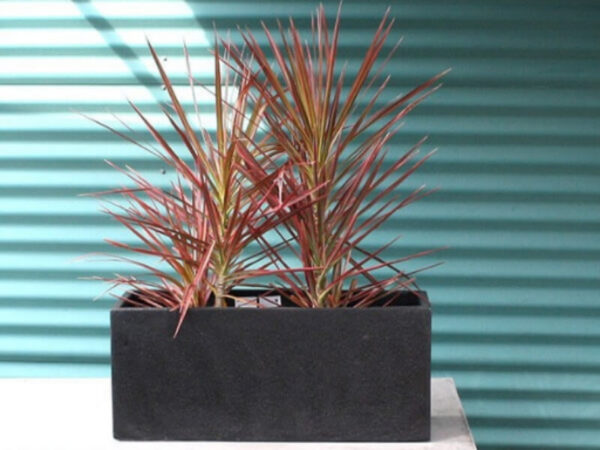
However, after years of real-world use—from residential patios to demanding commercial projects—we made the difficult decision to discontinue our Terrazzo line. Here’s why, and what we believe makes a far superior alternative.
The Durability Problem with Terrazzo
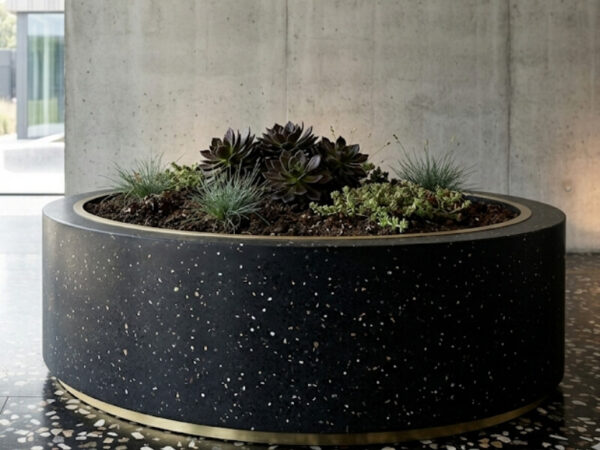
While terrazzo planters are undeniably attractive, they simply don’t hold up to the demands of modern gardening and landscaping. The material is prone to cracking and splitting, especially under the pressure of expanding soil or during transport.
Furthermore, terrazzo struggles in the Australian climate. The signature marble-like shine that makes terrazzo so appealing quickly fades when exposed to harsh sun, heavy rain, and fluctuating temperatures. Over time, the surface becomes dull, porous, and susceptible to moss and stains. When you compare terrazzo to high-performance materials like fibreglass and Glassfibre Reinforced Concrete (GRC), the difference in longevity and structural integrity is night and day.
The Origins of Terrazzo
The history of terrazzo is a fascinating one. Some archaeologists trace its origins back to ancient Egypt and Turkey, where structures were discovered using a form of burnt lime and clay. However, the general consensus is that terrazzo as we know it was perfected by Venetian construction workers.
In fact, terrazzo translates to “terraces” in Italian. These resourceful workers began taking discarded marble chips from the city’s upscale construction projects. They embedded the chips into clay to create durable flooring for their own homes. To finish the surface and preserve its natural lustre, they used goat’s milk as a traditional sealer—an early method of achieving that distinctive, polished shine.

Modern Day Uses
Today, terrazzo remains a popular choice for low-cost flooring, particularly for terrace designs, countertops, and backsplashes. There’s no doubt it adds a touch of elegance to interior spaces.
But when it comes to outdoor planters, the material reveals its shortcomings. Unlike a static floor, a planter must endure constant moisture, root pressure, and the structural stress of being moved. In these applications, the fragility of terrazzo becomes a liability rather than an asset.
Better Alternatives for Lasting Quality
At Sigma Planters, we take our brand image seriously. We’ve built our reputation on providing only the highest quality planters for both commercial and residential use. While we offered Terrazzo planters for several years because of their attractive price point, we ultimately found that “cheap” often becomes expensive when you factor in replacements, cracks, and splits.
Ultimately, we decided that the Terrazzo line no longer aligned with the standard of quality we are committed to maintaining. We want our customers to invest in planters that will thrive for years, not just look good for a single season.
If you love the look of stone but need something that can handle the elements, we recommend turning to our fibreglass and GRC (Glassfibre Reinforced Concrete) planters.
Fibreglass Planters

Fibreglass planters represent the ideal balance between form and function. Constructed from high-strength polymer resins reinforced with glass fibres, these planters are incredibly lightweight yet remarkably strong—typically weighing up to 75% less than traditional concrete or stone alternatives.
This lightweight nature makes them exceptionally easy to transport, manoeuvre, and reposition, saving both time and labour during installation. Despite their low weight, fibreglass planters are highly resistant to cracking, chipping, and weather-related deterioration. Unlike terrazzo, they will not lose their finish under harsh Australian sun or heavy rainfall. They also offer excellent insulation for plant roots, helping to regulate soil temperature throughout the seasons.
Key features include:
- Versatile finishes: Available in a wide spectrum of colours, textures, and custom finishes—including matte, gloss, stone-effect, and timber-look—to suit any design aesthetic.
- UV-stable construction: Engineered to resist fading, ensuring colours remain vibrant even in full-sun locations.
- Non-porous surface: Resists moisture absorption, preventing issues such as mould, mildew, and freeze-thaw damage.
- Ideal applications: Perfect for rooftop gardens where weight restrictions apply, balconies and elevated decks, indoor atriums, and spaces where planters may need to be frequently reconfigured.
For projects that demand a sleek, contemporary look without the structural constraints of heavier materials, fibreglass is a superior choice.
GRC Planters
GRC, also known as GFRC (Glassfibre Reinforced Concrete), is the gold standard for high-performance architectural planters. This advanced composite material combines the timeless aesthetic of concrete with the engineering benefits of glass fibre reinforcement. The result is a planter that offers the substantial, textural appeal of traditional concrete at a fraction of the weight—typically 50 to 75 per cent lighter than precast concrete.
GRC planters are manufactured using a spray-up or premix process that embeds alkali-resistant glass fibres throughout the material matrix. This provides exceptional flexural strength and impact resistance, allowing for slimmer wall profiles without compromising structural integrity. Unlike traditional concrete, GRC is engineered to resist micro-cracking and spalling, making it far more durable in demanding environments.
Key features include:
- Exceptional durability: Built to withstand extreme weather conditions, including prolonged UV exposure, heavy rainfall, coastal salt spray, and temperature fluctuations.
- High impact resistance: Ideal for public spaces where planters may be subject to incidental contact from pedestrians, maintenance equipment, or urban activity.
- Refined aesthetic: Achieves clean, sharp lines and allows for complex geometric shapes that are difficult to achieve with traditional concrete. Available in a variety of finishes, from smooth and polished to textured and raw.
- Low maintenance: Sealed surfaces resist staining, efflorescence, and graffiti, simplifying long-term care.
- Ideal applications: Well-suited for commercial landscapes, civic spaces, hospitality precincts, shopping centres, corporate campuses, and high-end residential projects where longevity and presentation are paramount.
For specifiers seeking a planter that combines the presence of stone with the resilience required for heavy-use environments, GRC delivers unmatched performance.
Ready to explore planters built to last? Browse our collection of premium fibreglass and GRC planters today.
0 Comments