


In the competitive landscape of retail and mixed-use precincts, every capital improvement is scrutinised for its return on investment. While elements like paving, lighting, and seating are often considered essential infrastructure, the role of high-quality greenery can be mistakenly relegated to a ‘cosmetic extra’—a final flourish rather than a core commercial driver. This perspective overlooks a critical truth: a streetscape is not just a public space; it is a primary commercial asset. The strategic introduction of greenery, specifically through robust commercial planters, is a proven lever for enhancing retail performance, customer experience, and ultimately, precinct valuation.

This guide is a part of our Commercial Planter Design Resource Hub, alongside other in-depth resources.
The Data: How Green Environments Influence Consumer Behaviour
The connection between an attractive environment and commercial success is more than intuitive; it’s empirically demonstrated. Global research in urban design, environmental psychology, and placemaking consistently reveals that greener, more attractive streetscapes directly influence consumer behaviour.
Increased Dwell Time
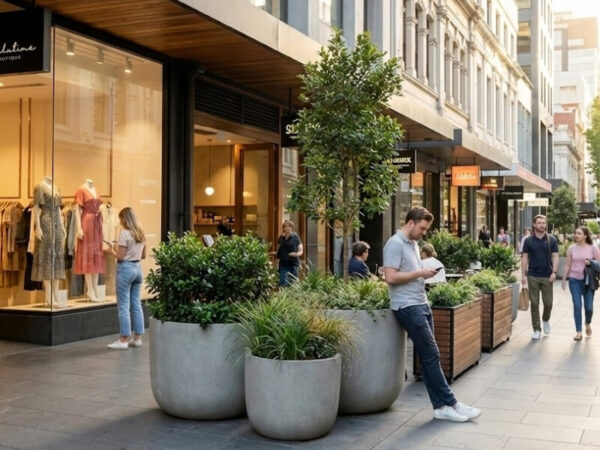
A study by the University of Washington noted that appealing green streetscapes encourage slower pedestrian movement and longer dwell times. In a retail context, dwell time is a key precursor to spending. Shoppers who linger are more likely to enter stores, browse, and convert. This isn’t just about feeling unhurried; it’s about creating micro-opportunities for discovery and impulse decisions that directly boost transaction volume.
Enhanced Perceived Value
Research published in the Journal of Environmental Psychology indicates that consumers perceive retail areas with high-quality greenery as more upmarket, cared for, and safer. This elevated perception translates to a greater willingness to spend. A streetscape that feels premium elevates the brands within it. In essence, greenery functions as a visual cue for quality, allowing tenants to benefit from the enhanced precinct branding without individual capital outlay.
Improved Experience & Return Intent
Australian placemaking studies, including work supported by organisations like Placemaking NSW, reinforce that people are drawn to and repeatedly visit vibrant, leafy precincts. Greenery reduces urban stress factors like heat, noise, and harsh visuals, creating an environment where people want to spend their time—and their money.
Dwell Time = Revenue: The Planter’s Role in the Commercial Equation
Commercial planters are not merely containers for plants; they are strategic tools for shaping pedestrian flow and experience. Here’s how they convert green investment into commercial return:
Pacing and Pause Points
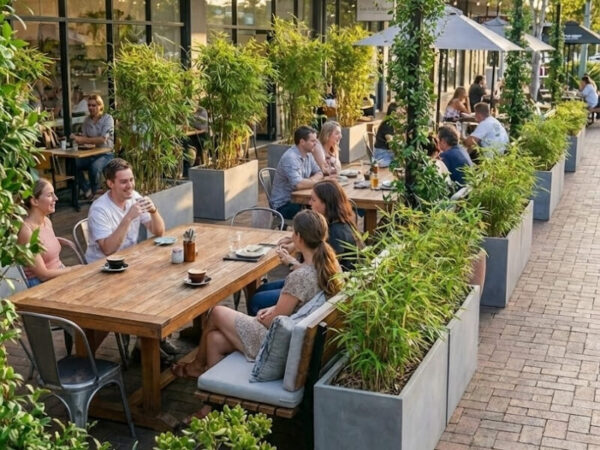
Strategically placed large-format planters naturally break up long sightlines, create visual rhythm, and define spaces. They subtly slow foot traffic, discouraging a rushed transit mentality and encouraging browsing. A cluster of planters near a hospitality zone can delineate an outdoor dining area, transforming a footpath into a destination. We discuss this in more detail here – using planters for wayfinding and traffic flow in public spaces.
Microclimate Management
In the Australian context, sun and heat are significant factors. Mature planting in sizable planters provides valuable shade, reduces ambient temperatures through evapotranspiration, and makes outdoor areas more habitable for more months of the year. A comfortable customer is a customer who stays longer.
Strategic planter placement is a proven technique for extending outdoor trading hours through microclimate management —capturing radiant heat, blocking chilling winds, and creating protected pockets that support al fresco dining across more seasons.
Visual Appeal and Atmosphere
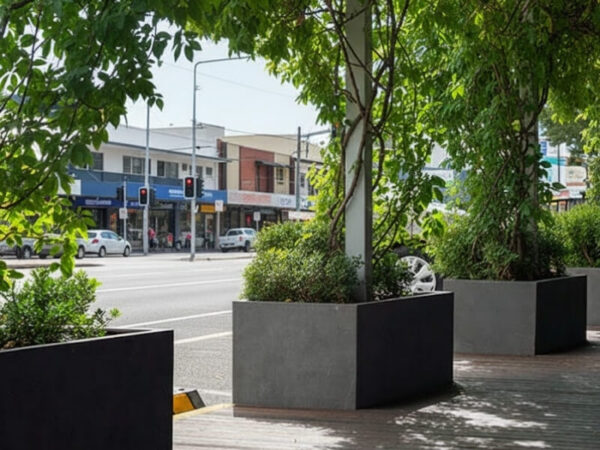
Well-maintained greenery softens hard architectural lines, adds year-round colour and texture, and creates a positive, relaxed atmosphere – all important elements of a well-planned urban landscape design. This sensory appeal is crucial for attracting the ‘experience-driven’ shopper and supporting high-margin hospitality tenancies. In a competitive retail environment, this atmospheric advantage can be the decisive factor that draws customers away from online alternatives and into a physical precinct. It transforms a routine shopping trip into a valued leisure occasion, encouraging social sharing and repeat visitation.
Why Commercial Planters Are a High-ROI Streetscape Upgrade
When evaluating streetscape interventions, planters offer a compelling, high-return proposition compared to more permanent, capital-intensive works.
- Lower Cost & Faster Deployment: Compared to full paving replacement, permanent structural landscaping, or major art installations, a suite of commercial-grade planters represents a significantly lower capital outlay with a dramatically faster implementation timeline.
- Minimal Disruption: Installation causes minimal disruption to tenant operations and pedestrian access—a critical consideration for active retail centres. There’s no need for lengthy site closures or complex civil works.
- Flexibility and Scalability: Plans change. Tenancy mixes evolve. Planters offer unparalleled flexibility; they can be reconfigured to test new layouts, support pop-up events, or adapt to future precinct developments. This future-proofs your investment.
- Immediate Impact: Unlike in-ground planting that requires time to mature, large-format planters with established specimens deliver an instant ‘wow factor’ and full aesthetic impact from day one.
Strong landscape design ideas for large commercial planters can turn that immediate impact into a more structured, functional streetscape strategy.
Case Examples: The Strategic Green Impact
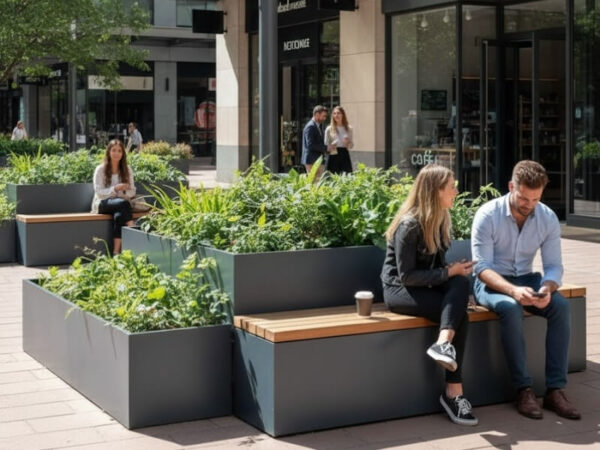
Consider the transformation of a generic suburban retail strip. By introducing a coordinated suite of large, durable planters along the footpath and at key nodal points, the precinct instantly gains structure and sophistication. The greenery defines dining areas for cafes, increasing their capacity and appeal. Pedestrians move more slowly, window-shop more frequently, and report a stronger ‘sense of place’. While specific metrics are commercial-in-confidence, asset managers report such upgrades correlate strongly with improved tenant satisfaction, reduced vacancy rates, and increased customer foot traffic, particularly in day-parts like evenings and weekends where ambience is key.
Similarly, a metropolitan mixed-use development used tiered planters to activate a barren wind-swept plaza. The introduction of greenery and seating created a welcoming pause space that drew people in, supporting the ground-floor retail tenants and increasing the overall vibrancy—and perceived safety—of the development.
To read more on specific concepts and case studies Designing with Garden Pots & Planters, visit our resource hub for it here.
Additional Commercial & Strategic Benefits
The value of green streetscapes extends well beyond foot traffic metrics:
- Tenant Attraction & Retention: A premium public realm signals active asset management and supports long-term leasing performance.
- Precinct Branding: A cohesive, green identity differentiates a precinct and builds community recognition.
- ESG & Sustainability Alignment: Greening contributes to urban cooling, biodiversity, and wellbeing—factors increasingly weighted by investors and councils.
- Council & Community Support: Landscaped upgrades align with local government objectives for liveability and climate resilience, often easing approvals and strengthening partnerships.
Conclusion: Designing for Return, Not Just Appearance
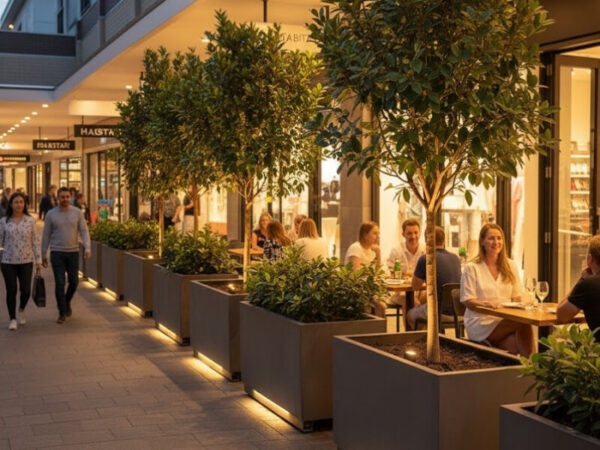
The evidence is clear: high-quality green streetscapes are not decorative extras—they are commercial infrastructure with measurable financial and experiential returns.
For developers and asset managers, the question is no longer whether to invest in greenery, but how to implement it strategically. Commercial planters offer a durable, scalable, and adaptable solution, delivering immediate impact while supporting long-term precinct performance.
In a market where place quality is a decisive competitive advantage, investing in premium planters is not an expense—it is a direct investment in the commercial vitality and future resilience of your asset. As documented in ULI’s 2025 Sustainability Meets Profitability report, green infrastructure investments are increasingly recognized not as mission-driven expenses, but as revenue-generating assets that deliver rental premiums, higher occupancy, and long-term valuation uplift.
Sigma Planters designs and manufactures engineered, commercial-grade planter solutions for Australia’s demanding public and private landscapes, supporting streetscape upgrades that perform as well commercially as they do visually.
Click here to explore our range of Commercial Planters!

Sources:
University of Washington | Appealing green streetscapes encourage longer dwell times
Wolf, K. L. (2005) | Customers perception of retail areas with high-quality greenery
Place Making NSW | People are drawn to vibrant, leafy precincts
0 Comments