


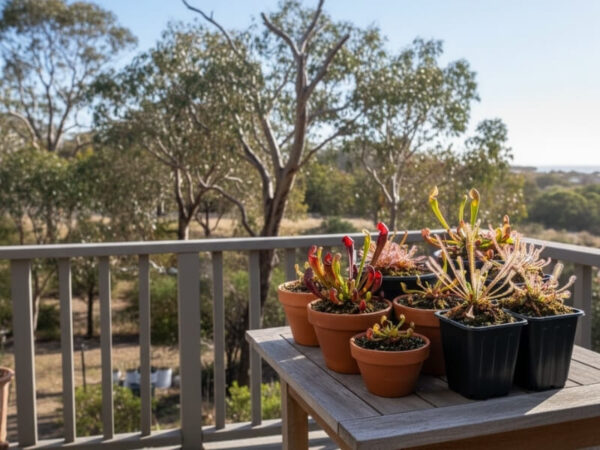
Have you ever wanted to grow something truly different—a plant that doesn’t just sit there, but actively hunts for its dinner? Right here in Australia, we’re home to some of the world’s most fascinating carnivorous plants, and they’re absolute rippers for growing in pots. Perfect for a balcony, windowsill, or a small courtyard, these native wonders offer a low-maintenance, high-interest project for curious gardeners. Forget about needing a massive garden; all you need is the right know-how and a bit of space for a container.
For more posts similar to this one, check out our Potted Species Growing Guides Hub.
Why Grow Aussie Carnivorous Plants?
Our native pitcher plants and sundews are uniquely adapted to our often harsh, nutrient-poor soils. They’ve evolved to get their nutrients from insects, making them tough, resilient, and surprisingly well-behaved in a pot. They’re conservation icons, and by growing them at home, you’re helping preserve our incredible botanical heritage.
Meet the Stars of the Show
Australian Pitcher Plant (Cephalotus follicularis)
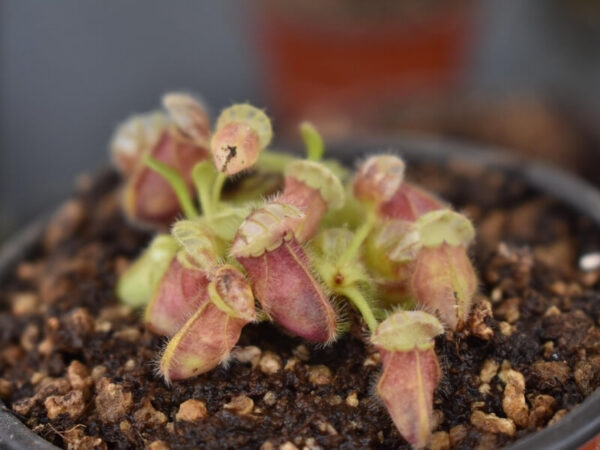
Hailing from a tiny, swampy corner of south-west Western Australia. This clever plant produces two types of leaves: a neat rosette of ordinary, non-carnivorous leaves and, alongside them, its famous miniature “pitchers.” These intricate, jug-like traps, complete with delicate lids and often stunning red and green veining, are masterpieces of natural engineering. It has a distinct seasonal rhythm, growing most actively during the cooler, wetter months from autumn to spring and typically slowing right down or becoming semi-dormant to rest through our hot summers.
Native Sundews (Drosera species)

Far more widespread, found in moist, open areas from the tropical north right down to the temperate south. They are the glittering gems of the carnivorous world, with leaves covered in sticky, glistening droplets of “dew” that snare unsuspecting insects. Aussie sundews come in an amazing variety, from tiny, penny-sized rosettes that hug the ground to upright species with forked leaves. Their lifestyles are just as diverse; many are annuals or have a strong seasonal dormancy. A particularly fascinating group are the tuberous sundews, common in places like Western Australia and South Australia, which completely die back to an underground tuber to escape the summer heat, magically reappearing with the autumn rains—a truly wonderful cycle to observe in your own collection.
Your Container Growing Guide
1. Choosing the Pot
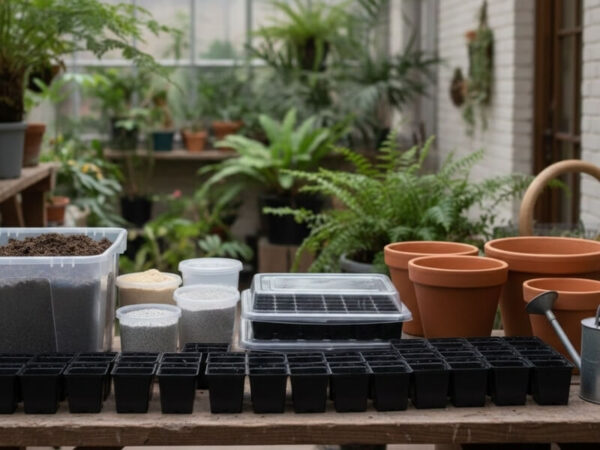
Always choose a pot with drainage holes—this is non-negotiable for carnivorous plants. Plastic pots are ideal because they retain moisture far better than terracotta, which dries out quickly and can leach salts into the soil. Cephalotus prefer a snug home, so a pot around 10–15 cm deep is perfect; their roots are delicate and don’t respond well to being over-potted. Sundews are much more flexible: tiny species thrive in shallow 5–10 cm pots, while larger varieties do best in slightly deeper containers.
2. The Perfect Soil Mix (The Golden Rule!)
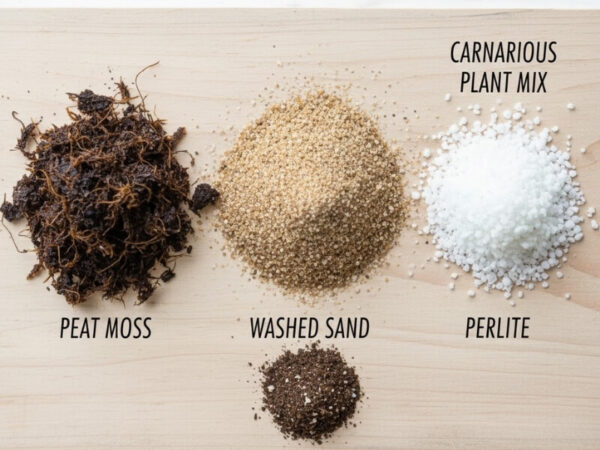
Never use standard potting mix, compost, or fertiliser, as these nutrient-rich mediums will harm or kill your plants. Instead, the most reliable Australian-appropriate mix is one part peat moss or coco peat combined with one part sharp, washed horticultural sand (avoid builder’s sand). Cephalotus growers often add a small amount of perlite or orchid bark for improved drainage. This simple mix delivers the acidic, nutrient-poor, moisture-retentive conditions these plants naturally thrive in.
3. Watering Wisdom
Water quality is critical—these plants must be watered with rainwater, distilled water, or reverse osmosis water. Tap water contains salts and minerals that can accumulate and burn the roots. The tray method is the easiest approach: sit your pot in a shallow tray or saucer and maintain 1–2 cm of water. Allow the tray to dry out for a day before refilling to keep the soil damp without becoming waterlogged, which helps prevent root rot. During winter or the wet season, Cephalotus in particular may prefer longer periods with a dry tray.
4. Light It Up
Both Cephalotus and sundews thrive in bright light. Aim for 4–6 hours of direct morning sun followed by filtered afternoon light, especially in hot Australian summers. A north- or east-facing position usually provides the ideal balance. Insufficient light leads to weak, pale growth and poor dew production, while harsh afternoon sun can scorch leaves. Indoors, a very bright windowsill may be enough, but most plants will benefit from a grow light to maintain their colour, vigour, and signature carnivorous traits.
5. Temperature & Humidity
Cephalotus dislike extreme heat and should be protected from strong afternoon sun during summer. They tolerate light frosts but may need shelter in very cold inland climates. Sundews are generally more adaptable and perform best when matched to your region—tropical species for QLD/NT, temperate species for the southern states. Outdoors, humidity is rarely a major issue in most parts of Australia, though in very dry environments, grouping your pots together can create a helpful microclimate. This same moisture-loving approach also suits other shade and humidity-friendly container plants, such as Moth Orchids.
6. To Feed or Not to Feed?
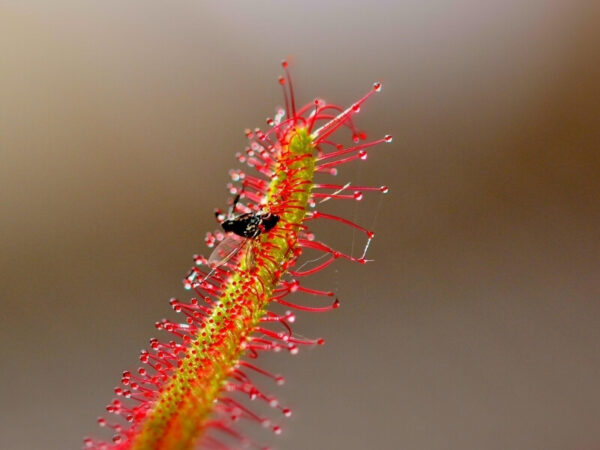
Carnivorous plants are built to hunt, so let them do what they do best. Outdoors, they’ll naturally catch gnats, flies, and mosquitoes without any help. Never apply fertiliser, as even diluted products can severely damage their sensitive roots. If you must support an indoor plant, feed only a single tiny insect—such as a dried bloodworm—once a month. For pitchers, that’s more than enough for healthy growth.
7. Repotting & Maintenance
Repot Cephalotus every 2–3 years in early spring, taking great care with their fragile roots. Sundews can be repotted annually if needed, giving you a chance to refresh the soil and encourage stronger growth. Routine maintenance is simple: trim away any dead or blackened leaves and pitchers using clean scissors. This keeps the plant tidy, reduces the risk of mould, and helps maintain overall plant health.
Step-by-Step: Starting from Scratch
- Gather: A suitable pot, your peat/sand mix, rainwater, and your plant (source from a reputable native nursery—never take from the wild!).
- Pot: Fill the pot with your dry soil mix. Dampen it thoroughly with rainwater.
- Plant: Make a small hole, place the plant in (for Cephalotus, ensure the growing point is above soil), and gently firm it in.
- Water: Soak the pot from above with rainwater until it drains freely.
- Tray Up: Place the pot in its saucer/tray and add the initial 1-2cm of water.
- Position: Find it a bright spot with morning sun.
Common Rookie Mistakes & How to Avoid Them
- Using Tap Water: This is the #1 killer. Invest in a rainwater tank or buy distilled water.
- “Rich” Soil or Fertiliser: Remember, they thrive in poverty. Stick to the recommended inert mix.
- Overfeeding: You’re growing a plant, not a pet. It doesn’t need a daily bug. Ignore it and let it do its thing.
- Wrong Pot: No drainage = soggy, rotting roots. Always use a pot with holes.
Seasonal Care for the Aussie Year
- Spring & Autumn: Prime growing seasons. Ensure consistent water and good light.
- Hot Summers: Provide afternoon shade. Watch water levels in the tray—they may need topping up daily. Cephalotus may stop producing pitchers; this is normal.
- Cool Winters: Many sundews die back to rest (don’t toss the pot!), and Cephalotus also slows. Reduce watering but keep soil slightly moist. For beginners, this is also a good time to review the basics of caring for carnivorous plants so you understand their seasonal habits. A mixed display of sundews, a small Cephalotus, and even a native trigger plant still looks great year-round.
Troubleshooting
- Burnt/Brown Leaves: Too much harsh sun. Move to a spot with gentler morning light.
- No Dew on Sundews: Not enough light. Increase sunlight exposure or add a grow light.
- Mould/Fungus: Improve air circulation, remove dead leaves, and water less from above.
- Plant Drying Out: Check your water tray and increase humidity by grouping plants.
- Poor, Leggy Growth: Almost always insufficient light.
Give It a Go!
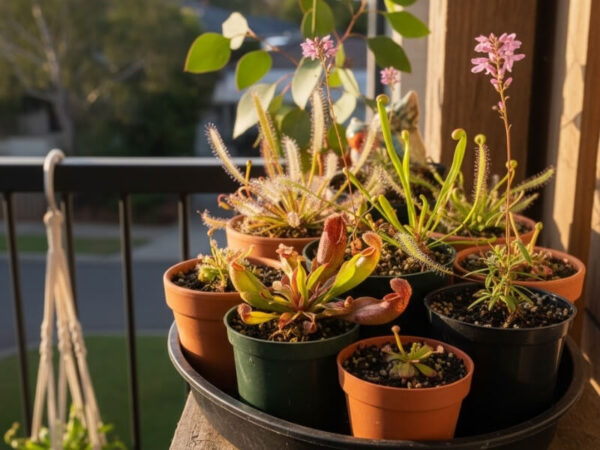
Growing these ingenious native plants is one of the most rewarding projects in gardening. There’s nothing quite like watching a sundew curl its tentacles around a captured insect, or seeing a perfect, tiny Cephalotus pitcher form. It’s a small-scale wildlife spectacle right on your balcony.
Start with one easy sundew, get your soil and water right, and you’ll be hooked. For another distinctive potted plant project, explore bold foliage plants for colour, texture, and low-maintenance impact. You’ll not only have a unique collection but become a custodian of some of Australia’s most extraordinary flora. Happy growing, mates.
For another botanical curiosity, explore unusual potted plants like carrion flowers.
0 Comments