


If you’re looking for a way to add texture, contrast, and permanence to your outdoor space, rocks are the answer. Unlike foliage, which changes with the seasons, landscaping rocks provide a stable visual anchor that requires zero watering and minimal maintenance.
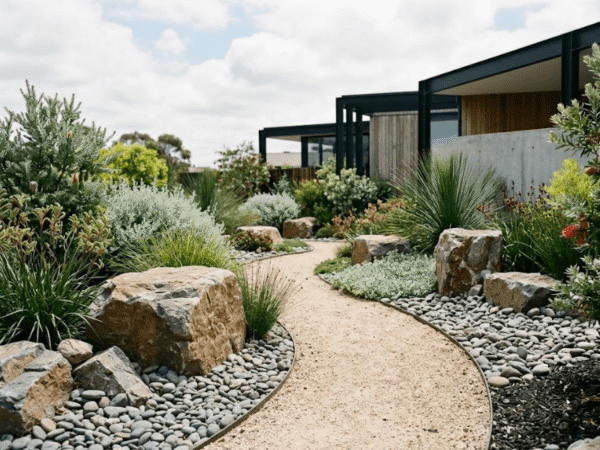
Whether you want to build a path, create a focal point, or simply reduce the amount of lawn you have to mow, rocks are incredibly versatile. Here is your guide to choosing and using the right rocks for your next landscaping project.
For more posts similar to this one, check out our Garden Pot & Planter Design resource hub.
How to Choose the Right Landscaping Rock
Before you head to the quarry or garden center, it helps to have a vision. The shape, color, and texture of your rock choice will set the tone for your entire landscape.
White or Light-Colored Rocks (e.g., Marble chips): Ideal for brightening up shaded areas or creating a crisp, clean contrast against green foliage.
Dark or Black Rocks: Perfect for modern, minimalist designs. They absorb heat and can make colors “pop.”
Earthy Tones (e.g., Terracotta, Sandstone): These blend seamlessly into tropical, desert, or rustic-themed landscapes.
If you want the design to feel more connected to place, native rocks for landscaping can help create a more natural, regionally grounded look.
6 Common Types of Landscaping Rocks
Here are the most popular and effective rock types used in landscaping today.
1. Riprap (or Rubble)
Riprap consists of rough, angular rocks of various sizes. Because it interlocks well, it is the go-to choice for controlling erosion on slopes or drainage ditches. It is also one of the best materials for building a sturdy, dry-stack rock wall.
2. Crushed Granite

This material offers a natural, informal look that is perfect for pathways and decomposed granite trails. It compacts well, providing a stable walking surface while still allowing water to drain through. It creates a soft transition between a structured patio and wild garden beds.
3. Boulders
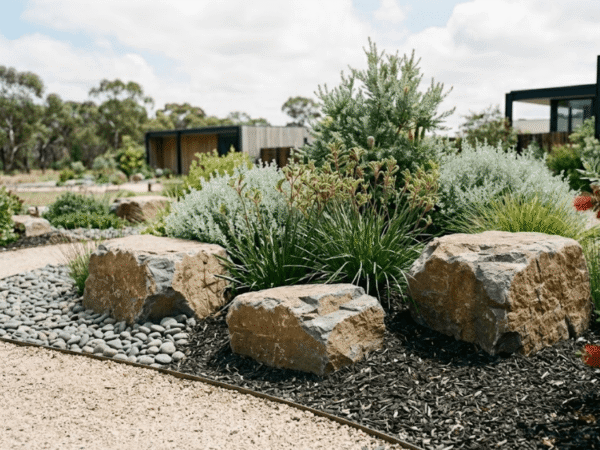
Boulders are the exclamation points of the landscape. When placed properly, they convey a sense of strength and permanence.
Placement Tip: Always bury your boulders so that one-third to one-half is underground. This makes them look like they have been there forever (rather than just dropped on the grass) and ensures they are stable and safe.
4. Lava Rock (Igneous Rock)
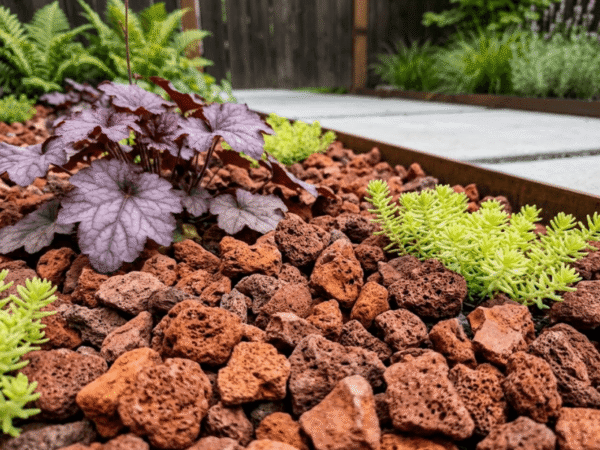
Lava rocks are lightweight and porous, formed from cooled volcanic magma. Their reddish hue adds a pop of color, and their porous nature makes them excellent for drainage and moisture retention. They are very low maintenance and are often used in gas fire pits because they can withstand high heat.
5. Flagstone
Flagstone refers to flat, thin slabs of stone (like sandstone or slate). It is a natural alternative to concrete for paving. Use it to create stepping stones, patios, or walkways. If installed properly over a compacted base, flagstone paths can last for decades.
6. River Rock
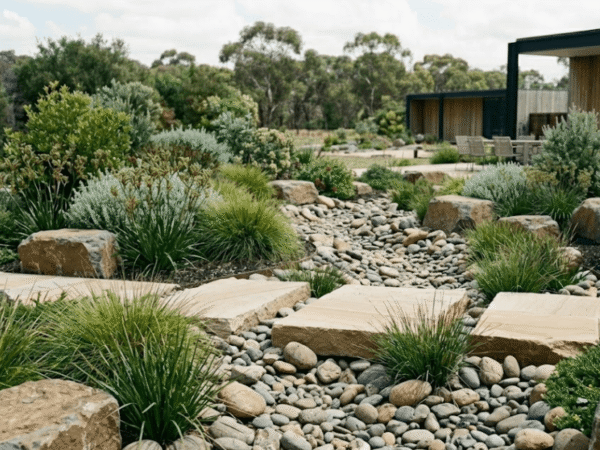
Smooth and round, river rocks have been tumbled by water over centuries. They are the quintessential choice for dry creek beds and water features. They also work well as a ground cover in areas where you want a “zen” aesthetic or to fill gaps between larger stepping stones. This use of carefully selected stone and restrained planting is central to Japanese-inspired courtyard design, such as a Tsubo-Niwa garden.
Using Rocks in Planters (Rock Mulch)
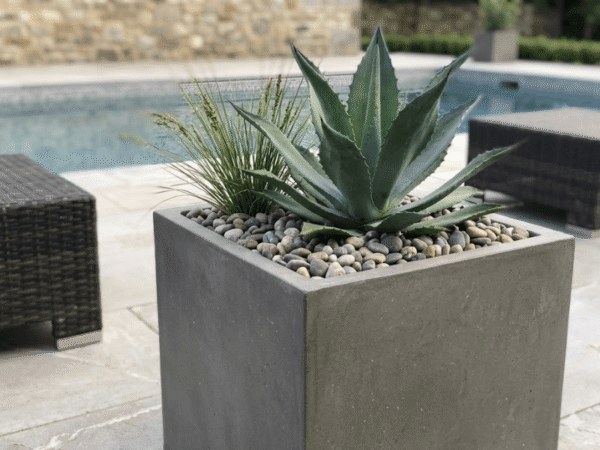
While large boulders and flagstones shape the structure of your yard, don’t overlook the power of small rocks and pebbles in your pots and planters.
Using a layer of rocks or pebbles on top of the soil in your containers—often called top dressing—serves several purposes:
- Moisture Retention: Just like in the garden, a layer of rock mulch helps reduce evaporation from the soil surface, keeping your potted plants hydrated longer.
- Weed Prevention: It blocks sunlight from reaching the soil, preventing weed seeds from germinating in your pots.
- Temperature Regulation: This is crucial during summer. A layer of pebbles acts as insulation, keeping the roots cooler during heat waves. Managing soil temperature during hot weather is especially important for potted plants exposed to strong afternoon sun.
- Aesthetics: It hides the bare dirt and gives your potted plants a clean, finished look.
Simply add a 1-2 inch layer of small pebbles or river rock over the soil surface of your planters to achieve this effect.
Conclusion
Rocks are more than just fillers; they are foundational design elements. Whether you are using large boulders to anchor a garden bed, crushed granite to soften a path, or small pebbles to dress up a planter, the right rocks add texture and contrast without piling on maintenance.
However, it is important to remember that while rocks offer great benefits like durability and heat retention, they aren’t always the right choice for every plant or climate. If you’re still unsure whether stone is the best option for your garden beds, the Clemson University Cooperative Extension offers excellent research on mulch vs. rock for landscaping to help you make an informed decision.
0 Comments