

Imagine a space in your home or commercial building that feels a little forgotten—a dim courtyard that never sees the sun, an indoor atrium shrouded by taller structures, or a windowless bathroom. The common belief is that designing with planters in these spaces are doomed to be barren, that plants simply won’t survive without abundant, direct sunlight. But this is a myth. Nature itself provides the blueprint for thriving in shade, where a select group of plants has evolved to prosper on the dim forest floor. These low-light champions are the essential key to converting your problem areas into serene, green oases.
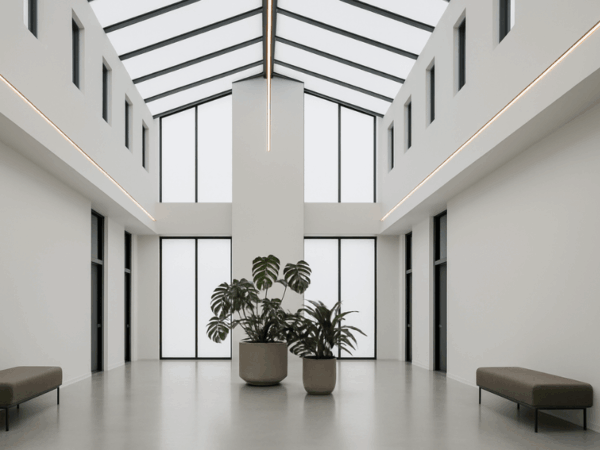
This dedicated guide moves beyond a simple list to explore the best plants for deep shade, providing you with the knowledge to make informed choices for your commercial or residential project. We will delve into their unique characteristics, precise care needs, and the design principles that make them shine, turning a potential limitation into a stunning design feature.
Why Low-Light Plants are More Than Just Survivors
Low-light plants are not merely tolerating their conditions; many are perfectly adapted to them. In their natural habitats, like the jungles of Southeast Asia or the forests of Africa, they grow under the dense canopy of larger trees. They have developed larger, broader leaves to capture more of the scarce, filtered light. This evolutionary trait often gives them the dramatic, architectural foliage that is so highly prized in interior landscaping.
For commercial spaces like hotel lobbies, office atriums, or shopping centres, these plants are invaluable. They require less intensive maintenance, are less prone to sun-scorch, and can bring consistent, year-round greenery to areas where natural light is an expensive or architectural impossibility. In homes, they purify the air, introduce a calming biophilic element, and bring life to rooms that otherwise feel static and disconnected from nature.
The Contenders: A Detailed Guide to Shade-Loving Plants
Let’s meet the champions. This list is curated for their proven performance in low-light conditions, their resilience, and their visual appeal.
1. The Unkillable: Cast Iron Plant (Aspidistra elatior)
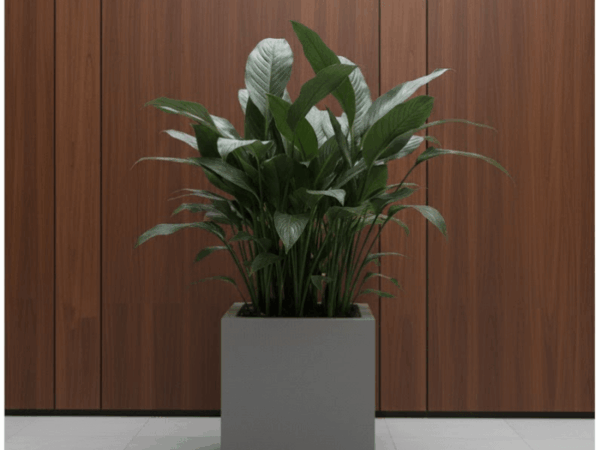
True to its name, the Cast Iron Plant is the benchmark for toughness. It was a Victorian favourite for a reason, capable of surviving the dim light, coal-dust-filled air, and general neglect of a 19th-century parlour.
- Appearance & Style: It features broad, upright, lance-shaped dark green leaves that grow directly from the soil. Its growth is clumping and steady, offering a dense, robust green presence. There are also variegated cultivars with white or yellow streaks for a touch of contrast.
- Ideal For: Commercial spaces requiring bullet-proof reliability, dark corners in homes, and under-stair plantings. It’s a plant that asks for nothing and gives a lot of structure.
- Care Notes: It dislikes direct sun, which will scorch its leaves. Water only when the soil is completely dry. Its main demand is well-draining potting mix to prevent root rot.
2. The Modern Classic: ZZ Plant (Zamioculcas zamiifolia)
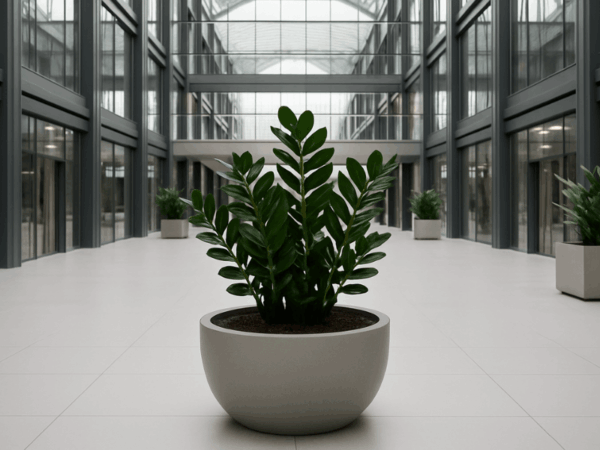
The ZZ Plant has surged in popularity for the modern era, thanks to its ultra-contemporary look and legendary drought tolerance. It’s a plant that seems to be made of plastic, both in appearance and resilience.
- Appearance & Style: Glossy, waxy, oval leaflets are arranged symmetrically on upright stems. This geometric perfection gives it a sharp, architectural quality that fits minimalist and corporate interiors perfectly.
- Ideal For: Offices, modern apartments, and any space where a sleek, structural element is desired. It’s exceptionally good for forgetful waterers.
- Care Notes: The secret to its survival is its potato-like rhizomes, which store water. Overwatering is its only real enemy. Allow the soil to dry out thoroughly between waterings. It will thrive in a shady spot for years.
3. The Trailing Beauty: Devil’s Ivy or Pothos (Epipremnum aureum)

For softness and movement, few plants can beat Devil’s Ivy. This vigorous trailing plant is one of the most adaptable houseplants in the world, capable of growing in soil or simply in a vase of water.
- Appearance & Style: It features heart-shaped leaves, often marbled or streaked with creamy white or yellow. Its vines can grow several meters long, creating beautiful cascades of foliage.
- Ideal For: Hanging baskets, high shelves in atriums, or training along walls. It’s perfect for adding a vertical green element without any structural support.
- Care Notes: It tolerates deep shade, though its variegation may fade. The leaves will tell you when it’s thirsty, becoming soft and slightly limp. A quick drink revives it within hours.
4. The Flowering Aristocrat: Peace Lily (Spathiphyllum)
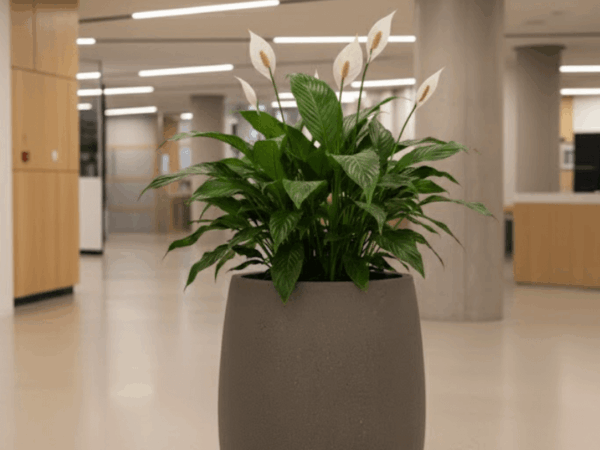
While many low-light plants are grown solely for their foliage, the Peace Lily offers the elegant bonus of flowers. Its graceful form and air-purifying qualities make it a perennial favourite.
- Appearance & Style: Deep green, glossy leaves arch gracefully, from which rise white, hood-like flowers (spathes) that can last for weeks. It provides a classic, refined look.
- Ideal For: Adding a touch of sophistication to reception desks, bathroom suites, or shaded side tables. It’s a natural air purifier, breaking down common volatile organic compounds (VOCs).
- Care Notes: It prefers consistently moist (but not soggy) soil and higher humidity. It is famously dramatic—when it needs water, it will droop spectacularly, then spring back to life after watering.
5. The Architectural Statement: Mother-in-Law’s Tongue (Sansevieria trifasciata)
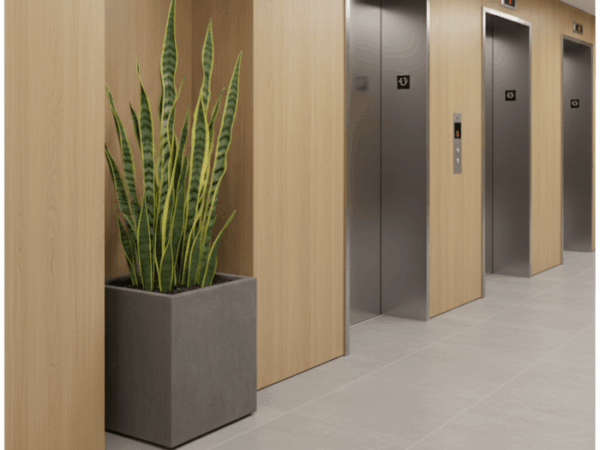
Also known as the Snake Plant, this is a plant of stark, sculptural beauty. Its upright, sword-like leaves break up space in a way that few other plants can, making it a powerful tool for interior designers.
- Appearance & Style: Leaves are stiff and upright, often with green banding and yellow or white edges. There are many cultivars, from the compact ‘Birds Nest’ to the tall, cylindrical ‘Sansevieria cylindrica’.
- Ideal For: Creating living screens, punctuating corners, or adding a strong vertical element. It’s also one of the best plants for improving indoor air quality, releasing oxygen at night.
- Care Notes: It is incredibly drought-tolerant. The primary cause of failure is overwatering and cold draughts. It truly thrives on neglect.
6. The Lush Classic: Swiss Cheese Plant (Monstera deliciosa)
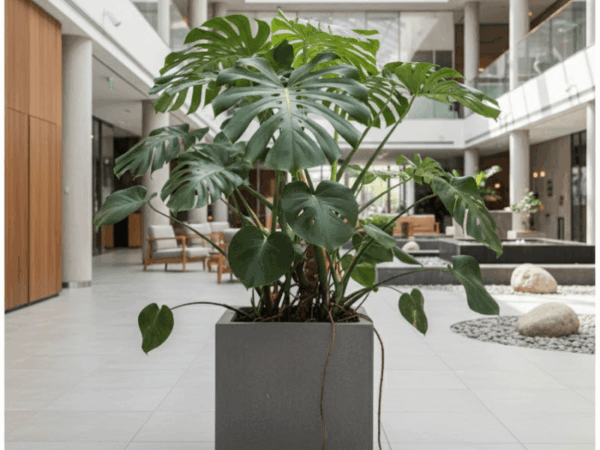
No list of foliage plants is complete without the iconic Monstera. While it enjoys bright, indirect light, it is far more tolerant of shade than many realise, though its growth may be slower.
- Appearance & Style: Famous for its large, heart-shaped leaves that develop deep splits and holes (fenestrations) as they mature. It brings a bold, tropical, and instantly recognisable vibe to any space.
- Ideal For: Making a major design statement in a residential living area or a commercial lobby. It can be trained up a moss pole to control its size and encourage larger leaf development.
- Care Notes: In lower light, water less frequently. Wipe its large leaves with a damp cloth occasionally to remove dust and allow for optimal light absorption.
Beyond the Pot: Mastering the Art of Shade Gardening
Selecting the right plants is only half the battle. How you group, pot, and care for them is what transforms a collection of pots into a cohesive, thriving display.
Working with Height and Texture
In a shaded space, you cannot rely on flower colour for visual interest. Instead, you must play with texture, shape, and varying shades of green. Create depth by placing taller, structural plants like the Snake Plant or a large Monstera at the back or centre. Layer in the mid-height softness of a Peace Lily or Cast Iron Plant. Finally, let trailing plants like Devil’s Ivy spill over the edges of pots and shelves to soften hard lines and draw the eye downwards.
Use the Right Potting Mix
This is the most non-negotiable aspect of low-light plant care. In shaded conditions, soil takes much longer to dry out. Using a standard garden soil or a cheap, dense potting mix is a recipe for root rot, the number one killer of indoor plants.
Always use a premium, well-draining potting mix. Look for mixes that contain ingredients like perlite, orchid bark, and coco coir, which create air pockets and improve drainage. Ensure every pot, no matter how beautiful, has adequate drainage holes. A layer of gravel at the bottom is not a substitute for a drainage hole.
Water Less Often
The mantra for watering in low light is simple: When in doubt, wait it out. The reduced light levels mean plants use water much more slowly. Stick your finger into the top two inches of soil. If it feels dry, it’s time to water. If it feels moist, wait. Plants like ZZ and Snake Plant prefer to dry out completely, while Peace Lilies and Monsteras like to stay slightly moist. Adjust your routine for each plant, but always err on the side of under-watering.
Go Easy on Fertiliser
Plants growing in deep shade have slower metabolisms and therefore require less fertiliser. Over-fertilising can lead to a build-up of salts in the soil and can damage the roots. During the main growing season (spring and summer), use a balanced, half-strength liquid fertiliser once a month. Refrain from feeding altogether during autumn and winter when plant growth naturally slows.
Conclusion: Embrace the Shade
A lack of direct sunlight is not a death sentence for your interior landscaping ambitions; it is an opportunity. It is a chance to work with some of the most graceful, resilient, and architecturally fascinating members of the plant world. By choosing the right low-light champions—from the steadfast Cast Iron Plant to the dramatic Monstera—and pairing them with intelligent care, you can cultivate a verdant, tranquil, and thriving environment in the most unexpected of places.
So, look at that shaded courtyard not as a problem, but as a blank canvas. See that dim indoor atrium as a potential greenhouse for the forest floor. With these low-light champions by your side, you have everything you need to create a stunning, living sanctuary.
0 Comments