

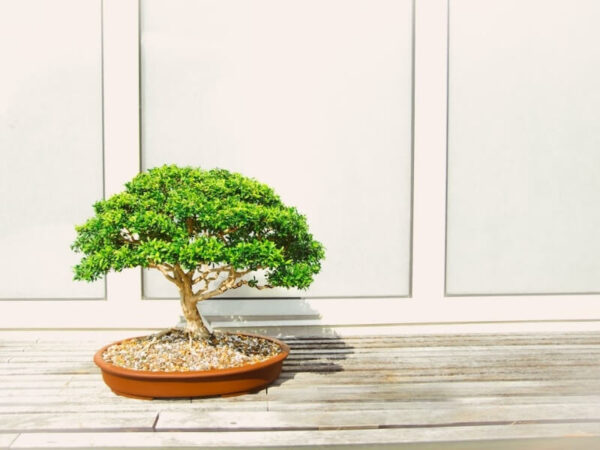
The ancient art of Bonsai can seem mysterious and complex, but it’s a deeply rewarding pursuit that any modern container gardener can embrace. It’s not about stunting a tree’s growth, but about artistically guiding it to create a miniature representation of nature’s grandeur. Your journey begins with choosing the right tree and the perfect pot to call its home.
Choosing Your First Bonsai Tree
Selecting a hardy, forgiving species is key to early success. Here are our top beginner-friendly recommendations.

Australian Native Species
- Australian Native Finger Lime: A tough native with small leaves and textured bark. It’s drought-tolerant and even produces tiny, decorative citrus pearls—perfect for unique Bonsai displays.
- Figwood (Ficus opposita): A resilient native fig with small foliage and an adaptable growth habit, ideal for indoor settings or sheltered outdoor positions.
- Dwarf Apple (Angophora hispida): Known for its striking, gnarled bark and small glossy leaves. Responds well to pruning and develops character quickly.
Exotic Species for Beginners
- Chinese Elm (Ulmus parvifolia): A classic beginner’s Bonsai—extremely hardy, adaptable, and capable of developing a refined, elegant branch structure.
- Japanese Maple (Acer palmatum): Loved for its seasonal colour changes. Prefers a protected, partially shaded position and rewards care with stunning foliage.
- Jade Plant (Crassula ovata): A drought-tolerant succulent that forms thick trunks and branches, creating an ancient, mature look with minimal effort.
The Art of the Pot: More Than Just a Container
In the world of Bonsai, the pot is never an afterthought; it is the essential frame for your living artwork. Its selection is a critical design choice that elevates a simple plant into a cohesive, harmonious composition. The pot grounds the tree, providing context and balance. A well-chosen vessel enhances the story you’re trying to tell, while a poorly chosen one can distract from even the most beautifully trained specimen.
Size and Depth

Size and depth form the foundation of stability. A reliable rule is that the pot’s depth should roughly match the diameter of the trunk base, creating a visual anchor that adds presence. Shallow pots are excellent for emphasising age and strength, making the trunk appear more powerful. In contrast, a pot that is too deep can overwhelm the tree, making it look immature and visually drowning its form.
Shape
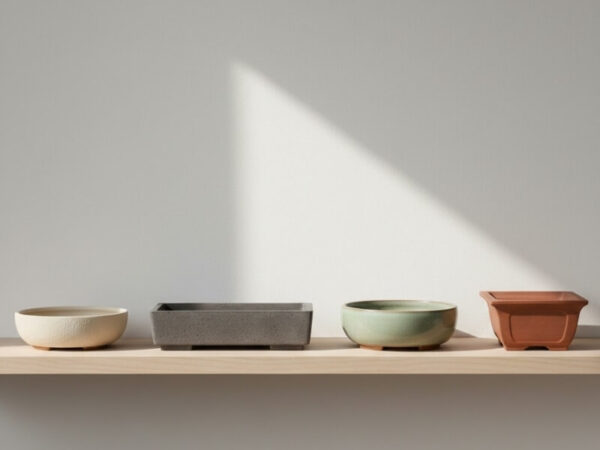
The shape of the pot further defines the tree’s character and movement. Oval and rectangular pots, with their grounding horizontal lines, suit informal upright and slanting styles. Round or square pots complement formal upright trees by reinforcing their symmetrical balance. For dramatic cascading styles, deeper pots provide the physical and visual counterweight needed.
Colour and Finish
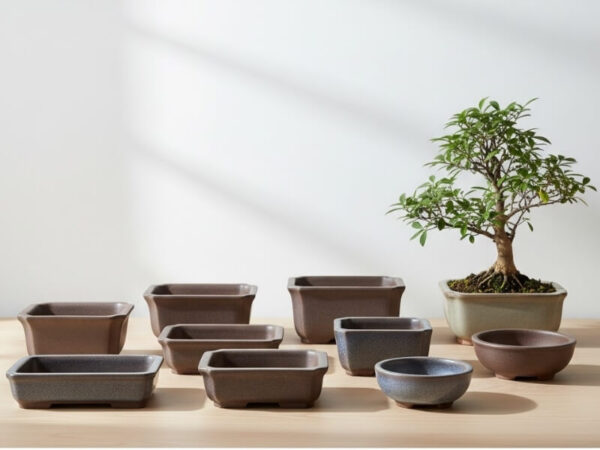
Colour and finish offer the subtle but powerful unifying touch to the composition. Choose a hue that complements the tree rather than competes with it. Earthy tones such as soft browns and muted greys create a natural backdrop for foliage and bark. Light glazes can work harmoniously, but the guiding principle remains: a restrained pot ensures the tree remains the focal point.
Bonsai Basics: Pruning, Wiring & Watering
Pruning
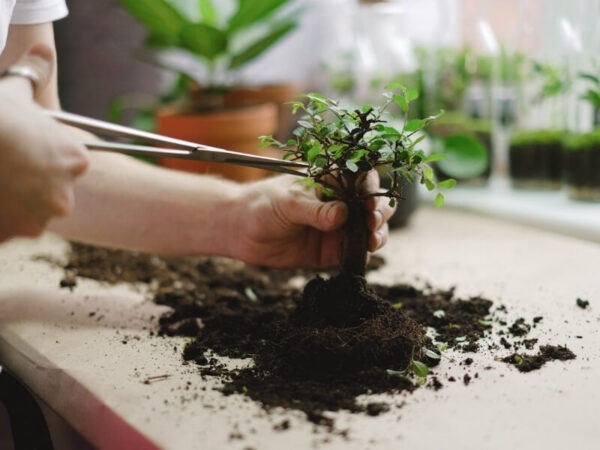
Pruning is how you shape your Bonsai and keep it healthy. Think of it as regular “tidying up” to guide growth.
- Pinch back soft new shoots to prevent the tree from getting leggy.
- Use clean scissors to remove branches that cross, grow inward, or disrupt flow.
- Thin crowded areas to improve light and air circulation.
- Highlight the trunk and create small gaps (negative space) for depth.
- Aim for natural balance, not perfect symmetry—real trees aren’t identical on both sides.
- Do major structural cuts in cooler months and small shaping cuts during active growth.
Wiring
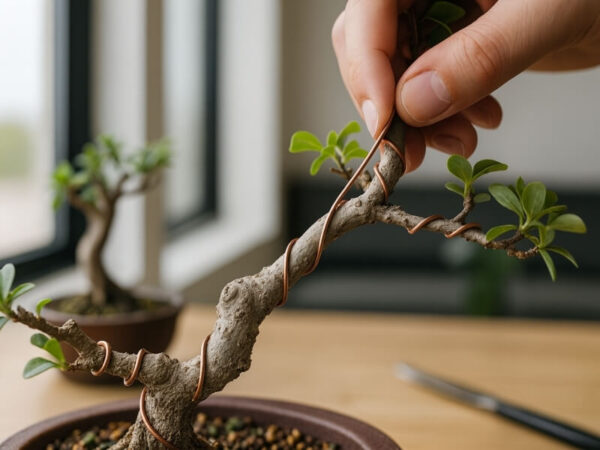
Wiring helps you gently guide branches into the shape you envision—like teaching the tree to pose.
- Use aluminium wire if you’re new; it’s easier to bend and safer for beginners.
- Wrap the wire at a 45° angle so it holds without squeezing the bark.
- Anchor the wire firmly, then bend branches slowly and carefully.
- Check wired branches weekly; fast growth can cause wire to bite in.
- Cut the wire off in small sections after a few months to avoid scarring.
Watering
Watering is the most important Bonsai skill—and the one that takes practice.
- Don’t water on a schedule; check the soil daily with your finger.
- Water thoroughly when the top feels dry, until it flows from the drainage holes.
- Never let the root ball dry out completely, but avoid waterlogged soil.
- Expect to water more in summer and less in winter.
- A lightweight pot often indicates the soil is dry.
- Using a well-draining Bonsai mix makes watering easier and prevents root rot.
Starting your Bonsai journey is a rewarding step into a living art form. With a resilient tree, a well-matched pot, and an understanding of these core techniques, you’re fully equipped to cultivate your own miniature landscape—one that grows in beauty and character with each passing season.
0 Comments