

In the design of vibrant public spaces Planter Boxes offer a multitude of solutions—from transport interchanges to university quadrangles—the primary challenge is often one of movement. How do we intuitively guide hundreds, sometimes thousands, of people safely and efficiently through a precinct? While signage, bollards, and fencing offer explicit direction, they can feel institutional, cluttering the visual landscape and creating a hardened, unwelcoming environment.
Enter the large-format Planter Box. Often celebrated for its aesthetic and ecological contributions, its role as a powerful, functional instrument for urban choreography is frequently understated. When strategically deployed, planters become an elegant, dual-purpose solution: shaping human movement while simultaneously enriching place character. This post explores how planters can be used to masterfully direct traffic flow, manage crowds, and define spaces without a single sign.

The Psychology of Planted Guidance
Human navigation is inherently influenced by spatial psychology. We subconsciously follow visual cues and physical boundaries that define a “path of least resistance.” A solid, substantial planter is perceived as a permanent, immovable object. It creates a soft barrier—more inviting than a fence, yet more authoritative than a painted line. Our brains read a line of planters as an edge, a channel, or a destination point, subtly directing us along intended routes while discouraging shortcuts across landscaped areas or into restricted zones.
Practical Applications For Planter Boxes Across the Public Realm
1. Planter Box Pathway Definition & Desire Line Management
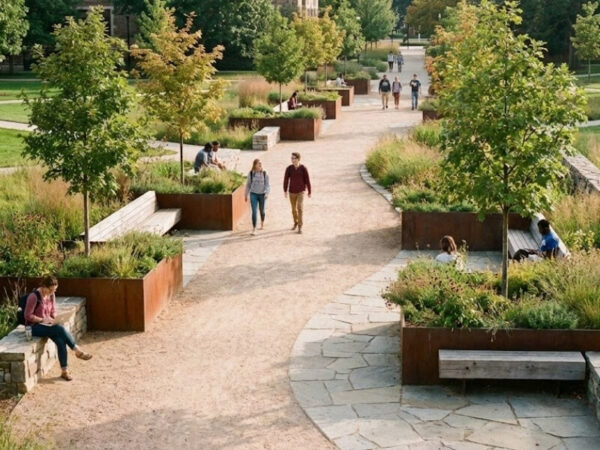
In parks and campus settings, unofficial “desire lines”—those worn tracks across grass—indicate where people naturally want to walk. Instead of fighting this behaviour, use planters to formalise and enhance these routes. Flanking a pedestrian corridor with alternating large planter boxes and seating creates a clear, attractive pathway that feels intentionally designed, protecting adjacent green space from erosion.
2. Queue Management at Transport Hubs & Venues
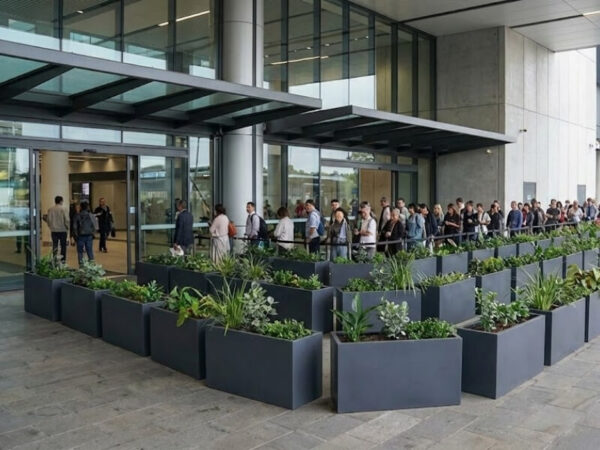
Temporary fencing for queue management is just that—temporary, and often unattractive. A curated arrangement of heavy-duty, anchored planters can create permanent, structured queue zones that are integrated into the fabric of the space. Outside a ticket office or at a bus boarding point, a serpentine line of planters organises crowds, reduces confusion, and improves safety, all year round. For high-traffic terminals, specifying heavy-duty commercial planter boxes ensures the units remain immovable and resilient against constant passenger flow.
3. Entry Sequencing and Threshold Creation using Planter Boxes
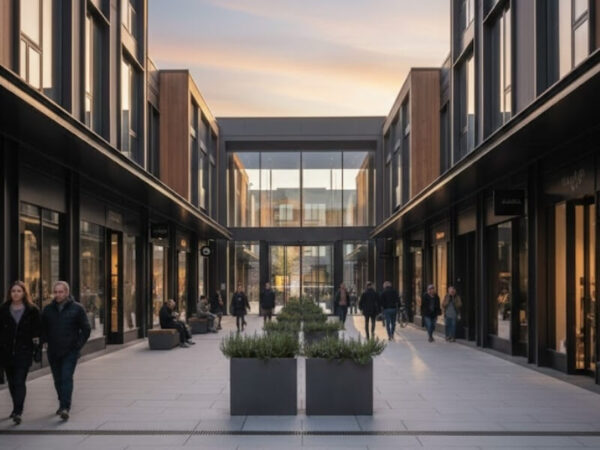
The approach to a building entrance matters. A series of progressively larger planter boxes can be used to funnel visitors towards a main door, creating a sense of arrival and sequence. This is particularly effective in shopping centres and mixed-use precincts, where they can gently steer foot traffic past retail frontages, improving exposure for tenants.
4. Crowd Calming and Speed Modulation

In high-traffic areas, large, strategically placed planters can act as gentle “chicanes,” naturally slowing pedestrian movement. This is crucial in areas where foot traffic merges, such as plaza entrances or near food vendor clusters. Slower movement improves safety, reduces collisions, and creates a more relaxed atmosphere.
5. Zone Delineation Without Hard Barriers
In a flexible public square, the need to separate outdoor dining from thoroughfares, or a play area from a cycle path, is common. A line of planter boxes provides a clear visual and physical demarcation that is more permeable and appealing than solid walls or fences, maintaining sight lines and a sense of openness while defining different use zones.
The Strategic Benefits of Planter Boxes Over Hard Infrastructure
- Flexibility & Adaptability: Unlike poured concrete or fixed fencing, planters can be reconfigured in response to changing needs, events, or seasonal patterns.
- Improved Amenity: They contribute cooling, greenery, and biophilic benefits, reducing the urban heat island effect and improving visitor wellbeing—something a steel barrier can never do.
- Placemaking Value: Planters are an opportunity to introduce colour, texture, and local endemic planting, reinforcing the unique identity of a place. They signal care and quality.
- Reduced Clutter: By replacing numerous signs, temporary barriers, and ad-hoc fencing, planters create a cleaner, more streamlined visual environment.
- Tactical Urbanism: They offer a relatively quick and cost-effective means to test circulation layouts before committing to permanent built structures. This approach aligns with the principles of tactical urbanism , allowing cities to prototype public spaces with minimal risk.
Key Considerations for High-Traffic Environments
- Size & Scale: Planter boxes must be substantial enough to command respect and deter casual moving. Large-format planters (1200mm+ in length/width) are typically required to have visual weight and stability.
- Placement & Spacing: Critical for effective wayfinding. Spacing should be close enough to prevent pedestrian cut-throughs, but open enough to allow for clear sightlines and accessibility compliance. Typically, a gap of 900-1200mm between planters is effective for channelling while remaining wheelchair accessible.
- Durability & Stability: In public areas, planters must be constructed from robust materials (e.g., precast concrete, heavy-duty polyethylene) and often need internal anchoring or fixing points to prevent theft or unauthorised relocation.
- Visibility: Ensure planting selections (form, height, density) do not create blind spots. Lower, sculptural foliage or small trees with raised canopies are often ideal.
- Maintenance: Specify integrated irrigation systems for efficiency and choose hardy, drought-tolerant species suited to the local climate to ensure the installation remains vibrant with minimal ongoing input.
Plant Selection for Wayfinding Performance

While planter box size and placement establish the physical framework for wayfinding, plant selection is what gives the system clarity, legibility, and long-term effectiveness. In high-traffic public spaces, plants must do more than look good—they must perform. Form, height, density, and seasonality all influence how people perceive space and movement.
Upright vs. Spreading Forms
Plants with strong vertical or upright habits naturally reinforce direction. Grasses, columnar shrubs, or clipped hedging visually “point” along a pathway, subtly encouraging forward movement. In contrast, low, spreading plants are better suited to edge definition, discouraging cut-throughs without creating visual barriers. Used together, upright planting can guide, while spreading forms contain.
Visual Contrast as a Navigational Cue
Changes in colour, texture, or planting rhythm signal transitions in space—entries, pauses, or changes in direction. A consistent palette along a main route reinforces continuity, while a contrasting species or form can mark decision points such as intersections or thresholds. This is particularly effective in large precincts where signage alone becomes visually overwhelming.
Canopy Height and Sightlines
In busy environments, visibility equals safety. Small trees or large shrubs with raised canopies allow clear sightlines beneath foliage while still providing shade and spatial definition. Dense planting at ground level should be avoided near corners, crossings, or entries to prevent blind spots and maintain passive surveillance.
Seasonal Consistency
Wayfinding elements must work year-round. Evergreen species are generally preferred for core circulation routes, ensuring that spatial cues remain legible regardless of season. Deciduous or flowering plants can be introduced as accents or focal points, adding interest without compromising navigational clarity.
Maintenance as Performance
A poorly maintained planter undermines its authority as a guiding element. Overgrown foliage can obscure paths, while plant failure creates gaps that invite informal shortcuts. Selecting hardy, drought-tolerant species suited to local conditions ensures the planter continues to function as intended with minimal intervention—critical in public realm settings. Our guide on How to Select the Right Sized Trough Planter for Your Commercial Landscape offers further insight into selecting durable vessels that support long-term performance.
In essence, effective wayfinding planting is deliberate and restrained. Every species choice contributes to how a space is read, navigated, and experienced. When plant behaviour is considered as carefully as planter placement, greenery becomes a precise spatial tool—guiding movement quietly, confidently, and intuitively.
Conclusion: A Synthesis of Form and Function
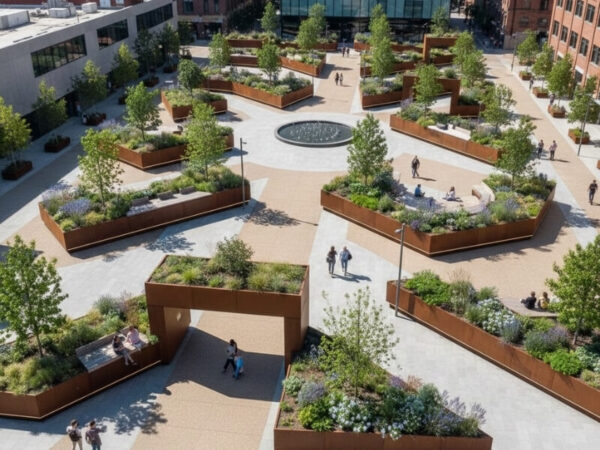
Large-format planter boxes are far more than vessels for greenery. They are a strategic urban design tool that operates at the intersection of landscape architecture, crowd management, and placemaking. By thoughtfully specifying and positioning planters—and the plants within them—designers and asset managers can solve complex circulation challenges, enhance public safety, and improve the overall user experience—all while elevating the visual and environmental quality of the space.
In essence, a well-considered planter strategy doesn’t just place objects in a space; it orchestrates the experience within it. It’s a testament to the principle that the most effective design solutions are those that are both purposeful and poetic.
0 Comments